A diagnosis of severe obstructive sleep apnea can feel especially difficult when CPAP has been prescribed but you cannot use it consistently. The goal is not to simply go without treatment. It is to identify a safe, medically supervised plan that matches your condition, health needs, and ability to follow therapy.
For some CPAP-intolerant adults, severe sleep apnea treatment options without cpap may include a custom, titratable oral appliance prescribed with sleep-physician involvement. Oral appliance therapy manages obstructive sleep apnea, does not cure it, and requires dental evaluation, adjustment, and objective follow-up testing.
Before considering an alternative, it helps to understand how severe sleep apnea is defined and how a sleep physician confirms the diagnosis.
What Is Severe Sleep Apnea and How Is It Diagnosed?
Severe obstructive sleep apnea is a more pronounced form of OSA, a sleep-related breathing disorder in which the upper airway repeatedly narrows or closes during sleep. These interruptions can reduce airflow and disturb normal sleep. The word severe describes the level of breathing disruption found during testing. It is not a diagnosis you can make from symptoms alone.
The central measurement used in a sleep study is the apnea-hypopnea index, or AHI. In accessible terms, AHI represents the average number of times per hour that breathing stops or becomes substantially restricted during sleep. A sleep physician reviews this measurement alongside the complete test, your symptoms, medical history, and other findings. One number by itself does not explain every patient’s condition or determine which treatment is appropriate.
Why a sleep physician must make the diagnosis
Snoring, waking with a dry mouth, morning headaches, restless sleep, or daytime fatigue can have several causes. They may occur with sleep apnea, but they do not establish whether OSA is present or how serious it is. A physician must diagnose sleep apnea before dental treatment is provided. Spark Sleep Solution coordinates treatment with sleep physicians for this reason.
Diagnosis usually begins with a clinical evaluation and a sleep test selected by the treating provider. Depending on the situation, testing may take place at home or in a sleep center. The study gathers information about breathing and sleep-related events, allowing the physician to interpret the AHI and other relevant data. Your physician may also consider whether the findings indicate obstructive sleep apnea rather than another sleep or breathing disorder.
For a plain-language overview of the process, see how sleep apnea is diagnosed. Bring your sleep-study report to every treatment discussion. If you are exploring severe sleep apnea treatment options without CPAP, the report helps your sleep physician and dental sleep team assess the situation responsibly. Spark’s role is to provide dental treatment after diagnosis and in coordination with the physician, not to diagnose sleep apnea or replace medical sleep care.
Can You Explore Severe Sleep Apnea Treatment Options Without CPAP?
Yes, you can discuss severe sleep apnea treatment options without cpap with your treating sleep physician, but that does not mean leaving obstructive sleep apnea untreated. CPAP remains the most common treatment because it delivers continuous air pressure through the nose, mouth, or both to help keep the airway open during sleep. For many people, it is an effective and important part of care.
The practical challenge is that some patients cannot tolerate CPAP or do not want to continue using it despite reasonable efforts to improve comfort and adherence. Mask leaks, congestion, dry mouth, pressure discomfort, or anxiety around the equipment can make consistent use difficult. If CPAP is not workable for you, tell your sleep physician rather than stopping treatment on your own. The next step may be to assess whether another medically supervised approach is appropriate.
For adults with obstructive sleep apnea who are intolerant of CPAP or prefer an alternate therapy. The American Academy of Sleep Medicine recommends that sleep physicians consider a prescribed oral appliance rather than no treatment. This is an option to evaluate, not a guarantee that an oral device will replace CPAP in every severe case. Treatment decisions depend on your diagnosis, sleep-study findings, airway anatomy, overall health, and response to therapy.
Why oral appliance therapy may be considered
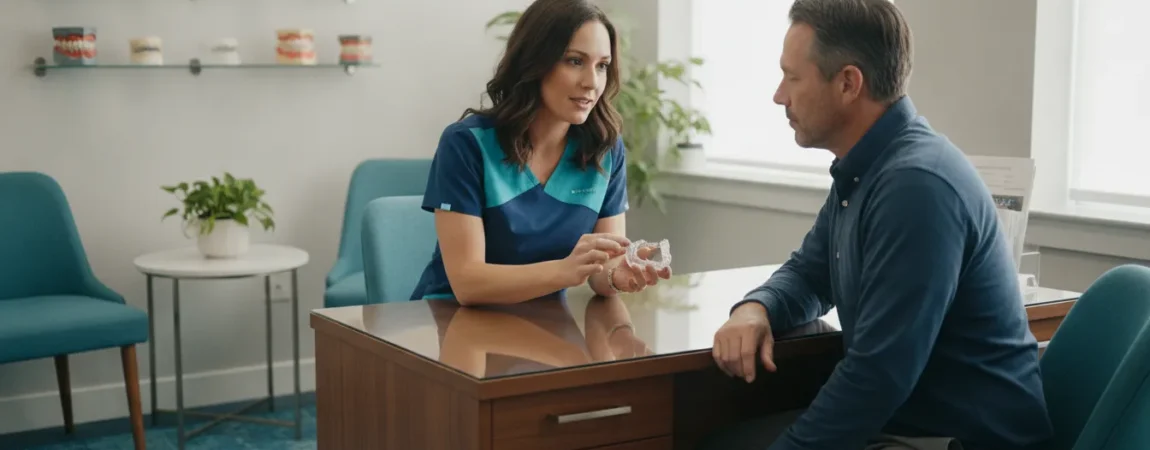
A custom oral appliance works by repositioning structures such as the lower jaw and tongue to help maintain airway space during sleep. The device should be selected and adjusted by a qualified dental sleep professional after it has been prescribed or recommended within a physician-led treatment plan. A custom, titratable appliance is different from a generic product purchased without clinical evaluation.
Severe OSA can require especially careful coordination. A sleep physician should remain involved, and objective follow-up is important to determine whether the selected treatment is managing your breathing adequately. Oral appliance therapy manages obstructive sleep apnea; it is not a cure. If you are having CPAP-related dry mouth or dental concerns, discuss them with both your treating sleep doctor and dental team. Spark Sleep Solution coordinates dental treatment with sleep physicians for appropriately evaluated patients.
How lifestyle measures fit into the plan
Healthy habits can support prescribed treatment, but they are not a substitute for CPAP or another clinician-recommended therapy in severe OSA. Regular physical activity, healthy sleep habits, maintaining a healthy weight, limiting alcohol and caffeine before bed, and quitting smoking may complement a broader plan. Ask your care team which changes are safe and realistic for you, and continue the treatment and follow-up they recommend.
The goal is not simply to avoid CPAP. It is to find a safe, sustainable way to manage your OSA with appropriate medical supervision.
When Is Oral Appliance Therapy Appropriate for Severe OSA?
Severe obstructive sleep apnea requires a treatment plan guided by objective testing and medical oversight. CPAP remains an important and commonly prescribed therapy, but some patients cannot use it consistently because of discomfort, mask difficulties, air pressure, or other concerns. In that situation, a sleep physician may discuss alternative treatment rather than leaving the condition untreated. The American Academy of Sleep Medicine recognizes prescription oral appliances as an option for adults who are intolerant of CPAP or prefer an alternate approach. With the decision made as part of individualized care.
Start with your sleep physician’s diagnosis and prescription
An oral appliance should not be selected as a self-directed substitute for medical care. Your sleep physician must diagnose obstructive sleep apnea and review the severity of your condition, prior treatment, symptoms, and sleep-study findings. If you have tried CPAP and cannot tolerate it, ask your treating sleep physician whether a custom oral device should be considered. Spark Sleep Solution coordinates dental treatment with sleep physicians, so the appliance plan can fit within your broader OSA care.
What makes someone a possible candidate?
Candidacy depends on more than an AHI category. Your dental and jaw health, airway anatomy, ability to wear an appliance, previous CPAP experience, and willingness to attend follow-up visits all matter. A qualified dentist should evaluate whether your teeth and jaw can support treatment and whether an oral appliance is appropriate for your pattern of obstructive breathing. Severe OSA does not automatically rule out oral appliance therapy, particularly when CPAP has been unsuccessful, but it does make careful selection and follow-up especially important.
When prescribed for adult OSA, AASM and AADSM guidance favors a custom, titratable appliance over a non-custom device. Unlike a generic product, a titratable appliance can be adjusted professionally to help identify a position that supports your treatment goals. Oral appliances work by repositioning structures such as the lower jaw, tongue, soft palate, and uvula, helping improve airway openness during sleep. They manage obstructive sleep apnea; they do not cure it.
Spark offers more than 100 FDA-approved custom oral appliance options. This broad selection allows the dental sleep medicine team to consider the device design that best fits your clinical and dental needs. Rather than treating every patient with the same appliance. Dr. Srujal Shah’s DABDSM and DASBA certifications support Spark’s specialized focus on dental sleep medicine.
For a deeper discussion of how this approach may fit selected patients, read about oral appliances for severe sleep apnea. Because oral appliance effectiveness may be lower than CPAP for severe disease, the appropriate goal is not to claim superiority. It is to find a medically supervised option that you can use, then confirm its effectiveness through the follow-up process recommended by your sleep physician.
Other Severe Sleep Apnea Treatment Options Without CPAP
When CPAP is not workable, the next step is not to stop treating obstructive sleep apnea. A sleep physician can review your diagnosis, airway anatomy, health history, and prior treatment experience to determine which alternatives may be appropriate. In some cases, one approach is used alongside another rather than as a stand-alone replacement.
| Approach | How it may fit into care |
|---|---|
| Positional support | May help when breathing worsens in a particular sleep position, based on testing and clinician guidance. |
| Lifestyle support | Healthy sleep habits, activity, weight goals, and limiting alcohol may complement prescribed treatment. |
| Oral appliance therapy | A custom, titratable device may be considered for selected CPAP-intolerant adults with physician involvement. |
| Surgery or nerve stimulation | Physician-managed options for selected patients who meet the relevant clinical and anatomical criteria. |
Positional support and lifestyle measures
Some people experience more airway obstruction when sleeping on their back. A treating clinician may discuss positional support, which is designed to encourage side sleeping or reduce time spent in a position that worsens breathing. Its usefulness depends on your individual sleep study and pattern of obstruction. It should not be assumed to address every form or severity of obstructive sleep apnea.
Healthy lifestyle measures can also support a broader treatment plan. Depending on your health needs, these may include maintaining a regular sleep schedule. Avoiding alcohol near bedtime, staying physically active, and working toward a weight goal recommended by your clinician. The National Heart, Lung, and Blood Institute describes lifestyle changes as part of sleep apnea care, but they complement prescribed treatment rather than replace it. Discuss any change with your care team, especially if you are still having breathing interruptions or significant daytime symptoms.
Surgery and nerve stimulation
For selected patients, a sleep physician may refer them for an evaluation of surgical options. Surgery can address specific anatomical factors that contribute to airway narrowing, but it is not appropriate for everyone. The decision requires a specialist assessment, a clear understanding of potential benefits and risks, and a plan for follow-up.
Nerve stimulation is another physician-managed option that may be considered for certain patients who meet defined clinical and anatomical criteria. It is not a universal substitute for CPAP, and candidacy cannot be determined from symptoms alone. Your sleep physician can explain whether this type of therapy belongs in your treatment discussion.
Combination treatment and continued monitoring
A clinician may recommend combining therapies, such as an oral appliance with positional support or another prescribed approach. Combination care should be coordinated rather than self-directed. Changing or stopping treatment without medical guidance can leave obstructive sleep apnea inadequately managed.
Because severe sleep apnea can require careful oversight, objective follow-up is important whenever treatment changes. Your sleep physician may use follow-up testing and symptom review to determine whether the selected approach is controlling breathing events. The safest plan is individualized, based on your diagnosis and anatomy, and adjusted with your treating team over time.
Source: National Heart, Lung, and Blood Institute sleep apnea treatment guidance.
Why Follow-Up Sleep Studies Matter After Starting Treatment
Starting a new treatment is an important step, but it does not confirm that your obstructive sleep apnea is adequately managed. This is especially important when severe OSA is being treated with a custom oral appliance after CPAP has been unsuccessful or difficult to tolerate. Oral appliance therapy requires monitoring and follow-up with a sleep physician so the care team can evaluate whether the treatment is effective.
- Complete the dental fitting and adjustment process. A custom appliance is not a one-size-fits-all device. A qualified dentist can adjust its position, fit, and advancement over time, a process commonly called titration. These adjustments are intended to balance airway support with comfort and dental or jaw health. Tell your dental sleep team about discomfort, bite changes, jaw symptoms, or persistent snoring rather than stopping treatment on your own.
- Arrange objective follow-up testing. Feeling better is encouraging, but symptoms alone cannot show how much obstructive breathing remains during sleep. A follow-up sleep study can give your treating sleep physician objective information about the appliance at its current setting. The results may support continued use, indicate that further titration is needed, or show that another treatment plan should be considered. Oral appliance therapy manages sleep apnea; it is not a cure.
- Keep your sleep physician involved. Severe OSA should remain under the supervision of the physician who diagnoses and treats your sleep condition. Spark Sleep Solution coordinates treatment with sleep physicians, while the dental team evaluates and manages the oral device. Share your original sleep study, treatment history, medication changes, and any ongoing symptoms with both teams. Do not replace prescribed care with lifestyle changes or an oral appliance without medical guidance.
- Ask focused questions at each visit. Before an appointment, write down whether you still snore, wake with headaches, experience daytime sleepiness, or notice breathing pauses reported by a partner. Ask: When should my follow-up sleep study occur? Will it evaluate the appliance in place? What results would lead to another adjustment? How will we decide whether this treatment is adequately managing my severe OSA? If CPAP side effects or intolerance prompted the change, ask how those concerns affect your complete treatment plan.
Discuss your candidacy and follow-up plan with your treating sleep physician and a qualified dental sleep medicine team.
Frequently Asked Questions
Can severe obstructive sleep apnea be treated without CPAP?
Possibly, but treatment should remain medically supervised. If you cannot tolerate CPAP, your sleep physician may discuss alternatives, including a prescribed oral appliance, surgery, nerve stimulation, or a combination approach. The goal is effective management, not leaving severe obstructive sleep apnea untreated. The National Heart, Lung, and Blood Institute identifies oral devices as an option for patients who cannot tolerate or do not want CPAP.
Can an oral appliance help someone with severe sleep apnea?
It may help selected patients, particularly those who have tried CPAP unsuccessfully, but candidacy must be evaluated by the treating sleep physician and a qualified dental sleep specialist. A custom, titratable appliance repositions structures such as the jaw and tongue to help keep the airway open. For severe cases, follow-up testing and professional adjustments are important because response varies and oral appliance therapy is not universally equivalent to CPAP. AASM guidance supports considering oral appliances rather than no treatment for adults who are CPAP-intolerant or prefer an alternate therapy.
Is oral appliance therapy a cure for sleep apnea?
No. Oral appliance therapy is a treatment that manages obstructive sleep apnea and may help improve airway function during sleep. It does not eliminate the underlying condition permanently. Continue follow-up with your sleep physician, and do not stop prescribed therapy or monitoring without medical guidance.
Who diagnoses severe sleep apnea?
A sleep physician or other qualified medical provider diagnoses sleep apnea and determines its severity. A dental sleep specialist then evaluates oral appliance candidacy and provides dental treatment when appropriate. Spark Sleep Solution coordinates with sleep physicians, so bring your sleep study and treatment history to the evaluation.
Ready to Discuss Your Treatment Options?
Severe obstructive sleep apnea requires thoughtful, medically supervised care. If CPAP has been difficult to tolerate, a consultation can help you understand whether oral appliance therapy or another coordinated treatment approach may be appropriate for your situation.