
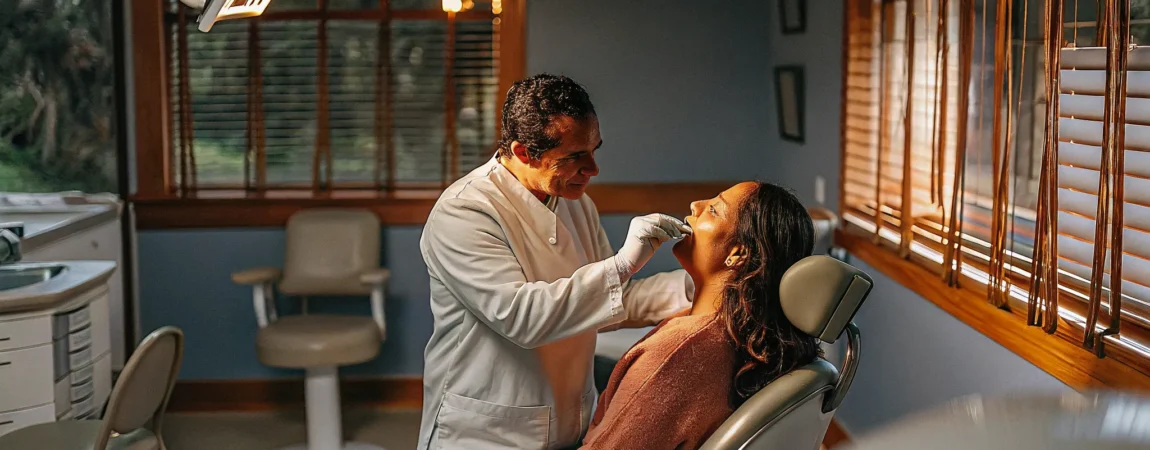
Waking up with a stiff, aching jaw makes simple morning talk painful. This deep discomfort often stems from a temporomandibular joint disorder. Without proper care, jaw tension can spread and cause daily headaches.
Learn how TMJ disorders and sleep apnea can overlap
Effective tmj disorder treatment options range from simple home care to custom oral appliances and specialized medical treatments. For most people, care starts with simple steps like eating soft foods, applying gentle heat, and doing daily jaw exercises. If home care fails to relieve your pain, custom-made oral splints are a highly successful, gentle way to ease joint stress. According to clinical research, these custom dental devices help lower jaw stress and stop you from grinding your teeth at night. Severe joint pain may need advanced medical care like joint shots, physical therapy, or other clinic treatments. Working with a sleep and joint specialist helps you find the right combination of these treatments to get relief.
If you are dealing with chronic jaw pain, you probably want to know what causes it and how to find lasting relief. A specialized practice like Spark Sleep Solutions can guide you through your treatment options. Learning about this joint issue is the first step toward getting real relief.
What Is TMJ Disorder? Understanding Temporomandibular Joint Conditions
Your jaw joints work hard every single day to help you talk, chew, and smile. But when these joints do not work right, simple tasks can hurt. Learning how these joints fail is the first step toward finding real relief. You can explore several non-surgical treatment options with a specialist to find what works best for your needs.
The anatomy of your jaw joint
The temporomandibular joint connects your lower jaw bone directly to your skull. You have two of these jaw joints, one on each side of your face. They sit right in front of your ears. These joints are unique because they can slide back and forth and hinge at the same time.
This complex movement lets you move your lower jaw up and down and side to side. A small disk of cartilage sits between the bones to keep the movement smooth. If the disk slips or the joint gets inflamed, joint pain can start quickly. Nearby muscles in your face can also tighten and spasm.
The key difference between TMJ and TMD
Many people use the common term TMJ to describe their chronic jaw pain. But there is a clear difference in how medical experts use these words. TMJ refers strictly to the physical jaw joint itself. On the other hand, TMD stands for temporomandibular disorders.
This term TMD describes the actual medical problems that affect the joint and jaw. These issues can range from muscle fatigue to arthritis in the bone. Spark Sleep Solutions is a Bay Area practice that specializes in dental sleep medicine and jaw care. They treat these painful issues with custom oral appliance therapy instead of general dental work.
Who is most affected by jaw joint pain?
Jaw joint pain is a widespread and common problem. The National Institute of Dental and Craniofacial Research recently shared new data about this chronic pain. Their study shows that about 11 to 12 million adults in the United States have pain in this joint region.
This research shows that jaw disorders are twice as common in women as in men. This chronic pain is most frequent in women between 35 and 44 years old. This joint pain also overlaps with broader orofacial pain in many patients. When you look at tmj disorder treatment options, finding early relief can help you protect your long-term health.
Recognizing TMJ Disorder Symptoms and Common Causes
You may feel a dull ache in your jaw, or hear a loud click when you chew. These signs are often the first clues of a joint issue. Knowing how to spot these problems early can help you find relief. Taking care of your jaw now can stop more pain from starting.
Common Symptoms and Warning Signs
A jaw joint issue can show up in many ways, with most people feeling pain in the jaw muscles or joint. You might also hear clicking, popping, or grating sounds when you open your mouth. Sometimes the jaw can lock in place, making it hard to speak or chew. These symptoms make daily tasks difficult without proper care.
Pain can also spread past your jaw, causing dull headaches, ear pain, and a sore face. This pain can make you think you have an ear infection when the joint is the real cause. If you notice these early TMJ symptoms, you should talk to a specialist. Spotting these signs can stop them from getting worse.
Primary Causes and Triggers
What causes these painful jaw issues? Often, it is a mix of things like jaw injuries, joint arthritis, or a bad bite. A blow to the face or whiplash can also damage the joint. Studies by the National Institute of Dental and Craniofacial Research show that jaw joint disorders affect millions of adults.
Grinding or clenching your teeth, called bruxism, is also a big cause that often happens when you sleep. High stress can make you clench your teeth and tense your jaw muscles. Over time, this constant force wears down your joint. This tension is a main source of stress-related TMJ pain that ruins your sleep.
Health Risks of Leaving TMJ Untreated
Not treating jaw pain can lead to big problems over time when the strain on your joints gets worse. This can lead to wear on your teeth, chronic headaches, and neck pain. Some people even face joint damage that makes it hard to chew. Knowing the risks of untreated TMJ disorder is key to protecting your health.
Finding the right tmj disorder treatment options starts with a clear checkup. A dental sleep specialist can find the source of your pain and plan your care. They will look at your bite and joint movement to find the best path forward. Taking action now will help you speak, chew, and sleep without pain.
Conservative and Non-Surgical TMJ Treatment Options
If you suffer from jaw pain, you need to know your tmj disorder treatment options. Most experts suggest a step-by-step path for care. Indeed, tmj disorder treatment options are hierarchical, starting with simple, conservative methods before moving to surgery. This means you do not have to start with big surgery. Most people find real relief with safe choices that are easy to try at home. These non-surgical options focus on reducing muscle tension and resting the jaw joint.
Self-care steps and lifestyle changes
You can manage mild jaw pain by making small changes in your daily life. Eating soft foods like soup or pasta gives your sore jaw a rest. Avoid hard, chewy foods. These force your mouth to open wide. Chewing gum is also a bad habit that can make your pain worse. You can also try to cut down on foods that need a lot of chewing, such as steak or raw carrots.
Applying heat or ice to the side of your face can also ease joint muscle pain. A warm towel helps tight muscles relax. On the other hand, an ice pack can reduce swelling and numb the ache. You can also try gentle self-massage of the jaw and neck. Some people benefit from counseling to find out if they clench their teeth when they feel stress. Learning to spot these habits can help you stop them before they cause pain.
Physical therapy and muscle exercises
A physical therapist can help you find long term relief. They teach you special jaw exercises that stretch and strengthen your jaw muscles. These movements help increase how far you can open your mouth. Clinical studies prove that muscle exercises reduce pain and restore joint function. A physical therapist may also use ultrasound heat therapy to improve blood flow to the joint.
They can guide you through gentle posture training as well. Poor neck or back posture can strain your jaw and make your pain worse. Through effective orofacial pain therapy, you can learn to move your jaw in a natural, pain-free way. These sessions can help you gain control over your symptoms without drugs.
Oral splints and medications
For many patients, custom devices worn at night are the key to relief. These splints fit over your top or bottom teeth to keep them apart. They stop you from grinding your teeth. This action relieves pressure on the joint. Experts agree that oral splints are a safe, non-invasive option to manage your pain. A custom fit ensures the device is comfortable to wear.
When self-care is not enough, medications can help. Over-the-counter pain relievers can reduce swelling and ease mild aches. If your muscles are very tight, a doctor can prescribe a short-term muscle relaxant. Low doses of tricyclic drugs can also help block chronic pain. These options work best when you combine them with a soft diet and daily jaw rest.
Minimally Invasive TMJ Treatments: Injections, Arthrocentesis, and More
When simple home care does not ease jaw pain, you may need expert care. If you are looking at non-surgical treatment options, these methods offer safe paths to relief. These are key tmj disorder treatment options for people who need fast relief. They help you avoid the risks of jaw surgery. These therapies treat the source of your pain right in the joint with no need for large cuts.
| Treatment Level | Examples | Recovery Time | Invasive? |
|---|---|---|---|
| Conservative. | Self-care, physical therapy, oral splints, NSAIDs. | Days to weeks. | No. |
| Minimally Invasive. | Injections, arthrocentesis, TENS, acupuncture. | Days. | Minimal (needle only). |
| Surgical. | Arthroscopy, condylotomy, open-joint surgery. | Weeks to months. | Yes. |
Therapeutic Injections for Joint Pain
Doctors often use joint injections to treat severe swelling and pain. For example, shots of corticosteroids or hyaluronic acid go right into the jaw joint. Medical studies show that corticosteroid and hyaluronic acid injections reduce jaw pain in the short term. These drugs help soothe inflamed tissues and lubricate the moving parts of the joint.
Botox shots can also help by relaxing the tight muscles around your jaw. This treatment stops you from clenching your teeth, which lowers the strain on the joint. These injections do not cure the problem, but they can give you the relief you need to start other therapies. Many patients find that muscle relaxation helps them speak and chew with much less discomfort.
Arthrocentesis and Joint Washouts
Arthrocentesis is a simple procedure that washes out the jaw joint. A doctor puts small needles into the joint space to flush it with sterile fluid. This wash removes harmful waste and helps free a stuck joint disc. It also helps to stretch the tight joint capsule, which can quickly ease lockjaw.
Doctors can also inject platelet-rich plasma, or PRP, during this wash. Research shows that PRP combined with arthrocentesis reduces pain over several months for people with joint osteoarthritis. If the joint remains tight, a doctor can use a thin tube with a camera, called an arthroscopy. Evidence shows that arthroscopy procedures help improve how wide you can open your mouth.
Alternative and Supportive Therapies
Other non-surgical treatments can also support your healing. For example, transcutaneous electric nerve stimulation, or TENS, uses low-voltage electric currents to block pain signals. This therapy relaxes tight jaw muscles and boosts local blood flow, which helps speed up healing. It is a gentle option that you can easily combine with other treatments.
Acupuncture can also help ease tight muscles and joint pain. These safe methods are helpful because they bridge the gap between simple home care and major surgery. They allow you to get targeted relief without the long rest times or high costs of a surgical stay. If simple care fails, these options should be your next step before thinking about open surgery.
Custom Oral Appliances for TMJ Relief: A Non-Surgical Approach
Many people look for tmj disorder treatment options to stop chronic jaw pain and clicking. Among these choices, studies show that oral splints are a non-invasive, reversible way to manage jaw pain without changing your bite forever. These devices fit over your teeth to ease joint strain and let your jaw muscles relax and heal. This therapy gives you a safe, highly effective path to find relief before you ever need to think about surgery.
How Custom Oral Splints Stabilize the Jaw
Custom devices do far more than just rest your teeth by guiding your jaw into a balanced place. If you clench or grind your teeth at night, a habit called bruxism, you put extreme force on your joints and wear down your enamel. Research shows that custom-made oral splints are a specialized tool to manage these symptoms and protect your smile. Holding your jaw in a natural spot, these devices unload joints to reduce muscle tension.
The Hazard of Over-the-Counter Mouthguards
Many people try to treat their jaw pain with cheap, store-bought night guards from a local store. While they seem like a quick fix, these soft plastic devices can actually make your pain much worse. A soft guard acts like a chew toy for your mouth, which invites you to clench and grind even harder at night. This extra chewing motion strains your joints because the device lacks the rigid, smooth surface needed to let your jaw slide freely.
Advanced Scanning and Diagnostic Technology
To get the best results, you need a custom device made just for your unique mouth and bite. At Spark Sleep Solutions, we use 3D intraoral scanning and advanced tools like Eccovision to map your oral structures and airway. Our team uses these highly precise scans to build an appliance that fits you perfectly. Your care is guided by Dr. Srujal Shah, whose dual board certifications in dental sleep medicine ensure your device fits well to ease pain.
At Spark Sleep Solutions, we offer more than one hundred FDA-approved custom oral devices to find your exact fit and style. Once you get your new appliance, our team monitors your progress to ensure your jaw muscles and joints adjust well. Wearing your device every night is key to success, so we use regular checkups to track your jaw function over time. This consistent care keeps your treatment on track and helps you live a healthy, pain-free life.
When Is TMJ Surgery Considered?
Most people with jaw pain do not need surgery. In fact, about 80% to 90% of those with jaw joint pain find relief through simple home care and therapy. Medical studies show that tmj disorder treatment options range from simple home care to jaw surgery. You must try non-surgical methods first because specialized doctors only suggest surgery when other treatments fail to help.
When is jaw surgery needed?
You may want to think about surgery if your jaw pain is constant and severe. If you cannot open or close your mouth, or if your jaw is locked, a doctor may check you for joint disease. You should first try non-surgical treatment options like custom oral splints or physical therapy. If these therapies do not help after several months, surgery might be the next step.
The path from initial pain to surgery follows a clear sequence. Most patients will move through these steps before doctors consider any type of surgical procedure.
- Start with self-care: soft foods, heat or ice, jaw rest, and stress reduction for 2 to 4 weeks.
- Try a custom oral appliance or physical therapy with a trained specialist.
- Try minimally invasive options like joint injections or arthrocentesis.
- Only then consider surgery if your symptoms do not improve after 6 months of therapy.
Types of surgical procedures
There are three main types of surgery for the jaw joint. The first is a minor type called arthroscopy. In this method, a surgeon puts a small tube with a camera into the joint to see and clean the area. A major clinical study shows that arthroscopy improves mouth opening for people who have severe jaw joint damage.
The second option is a modified condylotomy, where a surgeon makes a cut in the jaw bone near the joint. This cut helps relieve pressure and correct the bite. If the joint has severe wear or a tumor, you may need open-joint surgery. This is a major surgery to repair or replace the joint with a new part.
Surgical risks and recovery
Like any surgery, jaw surgery carries risks. These risks include nerve damage, bleeding, infection, and lasting changes to your bite. In some cases, a joint surgery might not relieve your pain or joint stiffness. You must think about these risks and understand how your joint works before you choose a surgical path.
Recovery times depend on the type of surgery you receive. A minor arthroscopy may need only a few days of rest, but an open-joint surgery can take several months. You will need to eat soft foods, limit jaw movement, and do physical therapy to get your joint moving again. Make sure to talk with your doctor to find out if surgery is right for you.
TMJ Disorder Treatment Options at Spark Sleep Solutions
Finding the right tmj disorder treatment options can be a challenge. At Spark Sleep Solutions, we focus on expert care to help you find lasting relief. We do not offer general dental services, focusing instead on oral appliance therapy for jaw pain and sleep disorders. Our goal is to find the cause of your pain and treat it without surgery.
Science shows that jaw care is a step-by-step process. A study in PubMed explains that TMJ treatment options range from simple home care to complex joint surgery. Most patients do well with simple, non-surgical steps. That is why we focus on custom oral devices that avoid the risks of surgery.
Personalized care and jaw exams
Each patient needs a unique plan. We start with a deep check of your jaw, face, and airway. We use advanced tools to see how your jaw moves.
Our team uses 3D intraoral scanning and Eccovision airway tests to make a map of your mouth. These tests help us build custom oral devices that fit you perfectly. A custom device keeps your jaw in a safe place to stop pain and protect your teeth.
Studies show that custom oral devices are highly helpful. Research from the National Institutes of Health shows that oral splints are a safe, non-invasive choice to treat jaw pain. This therapy also protects your teeth from wear if you grind them at night. Our high-tech scans ensure your device fits well and works fast.
Working with other experts for care
We work with other medical experts to give you the best care. Our team works with sleep doctors and other specialists to confirm your diagnosis. This helps us ensure that your tmj disorder treatment options fit your medical needs.
Dr. Srujal Shah leads our practice. He is one of the few doctors in the region who is board-certified in two areas of sleep medicine. You can learn more about our team on the Spark about page.
Medical insurance and regional locations
We believe that care should be easy to get, so we bill our services through medical insurance instead of dental plans. Our office works with most major PPO and HMO plans to cover your care. We are also a Kaiser Permanente provider. This makes it simple to get your custom oral device covered by your health plan.
You can find our offices across the Bay Area, with six handy locations to serve you. Our clinics are in San Jose, Los Gatos, Santa Cruz, San Ramon, Sunnyvale, and Monterey. You can visit any of these offices to meet our team and discuss your care. Contact us today to check your plan and start your path to pain-free sleep.
Frequently Asked Questions
What medicine is used for TMJ pain?
To manage TMJ pain, doctors often start with over-the-counter anti-inflammatory drugs like ibuprofen. If pain continues, doctors may prescribe muscle relaxants or low-dose antidepressants to help with muscle spasms. For joint inflammation, direct corticosteroid injections can help. According to research, these injections reduce pain in the short term. Always talk to a doctor before starting new medicines.
Can a custom oral appliance help with TMJ disorder?
Yes, custom oral devices are very helpful for managing jaw joint pain. These devices are made to fit your bite using precise 3D scans. They work by keeping your jaw in a relaxed position. This reduces teeth clenching and joint strain. Unlike cheap store-bought guards, clinical studies show custom oral splints protect teeth and manage symptoms safely. A specialist can adjust the device to ensure your comfort.
What happens if TMJ disorder is left untreated?
Leaving TMJ untreated can cause symptoms to get much worse. Over time, constant stress on the jaw joint can lead to permanent damage. This can cause ongoing facial pain and chronic headaches. It can also cause severe tooth wear from teeth grinding. According to the practice blog on TMJ health risks, early treatment is key to avoiding these long-term issues. Getting help early protects both your jaw and your teeth.
Does medical insurance cover TMJ treatment?
Yes, medical insurance often covers TMJ care because doctors view it as a medical issue rather than a dental one. Your coverage will depend on your specific plan and treatment needs. Specialist clinics like Spark Sleep Solutions work with major medical plans, PPO plans, and Medicare. They will check your benefits and handle pre-approval before you begin. This helps you understand your out-of-pocket costs upfront.
Ready to Find the Right TMJ Disorder Treatment Options in the Bay Area?
Leaving your painful TMJ symptoms untreated can cause chronic headaches, wear down your teeth, and lead to much worse joint discomfort over time. If you start a custom oral appliance therapy plan today, you can stop this joint damage and get back to speaking and chewing with ease. At Spark Sleep Solutions, our Bay Area team works closely with other experts to provide you with custom TMJ treatment built for your needs. We are here to help you live without constant jaw pain and make eating and speaking comfortable once again.
Ready to request an appointment? Call (408) 490-0182 to request an appointment for TMJ disorder evaluation and treatment at our local Bay Area clinics.