Continuous exhaustion that persists despite eight hours of bed rest points to obstructed nighttime breathing. When CPAP masks feel too bulky or restrictive, finding a comfortable therapy is crucial for your long-term health.
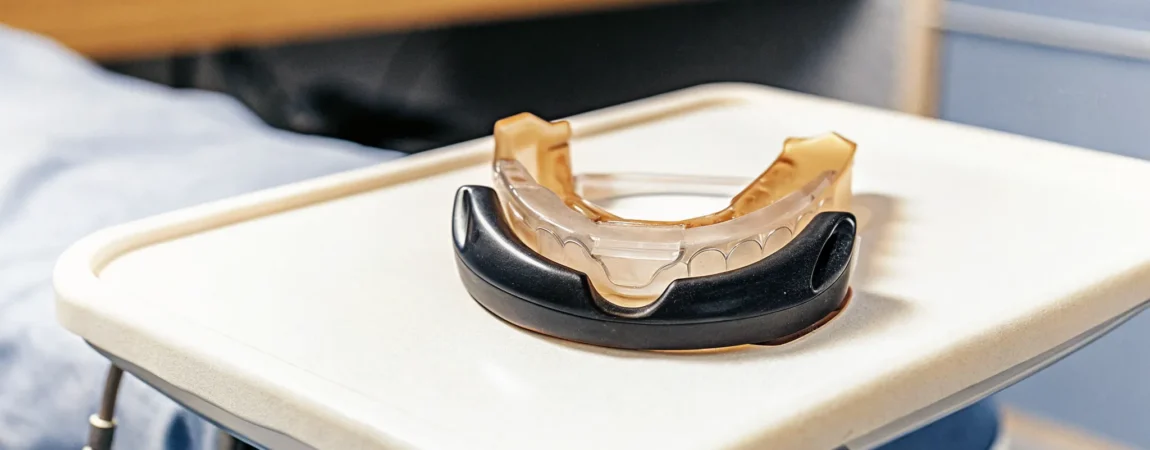
Understanding what is oral appliance therapy for sleep apnea starts with its primary benefit: a comfortable, custom-fitted device that prevents nighttime breathing pauses. This FDA-approved treatment is the leading CPAP alternative, especially for mild to moderate obstructive sleep apnea. An academic review on oral appliance therapy shows these custom devices work by gently moving your lower jaw forward to keep your throat open. Because they fit like a retainer, patients find them much easier to wear than bulky CPAP masks, which leads to high compliance. The treatment requires professional 3D scanning, custom fabrication, and ongoing management by a board-certified dental sleep specialist to ensure a precise, comfortable fit. Most major medical insurance plans cover the treatment, making it a highly accessible option for patients who cannot tolerate standard CPAP therapy.
If you are exploring this treatment, you likely have questions about its specific design and how it protects your health. To find the right path for your sleep health, we must first define the basics. The therapy begins with What Is Oral Appliance Therapy (OAT)?
What Is Oral Appliance Therapy For Sleep Apnea: What Is Oral Appliance Therapy (OAT)?
A Non-Invasive Path to Better Sleep
Many adults in the United States face breathing issues at night. According to a Harvard Health report, about 25% of men and 10% of women have obstructive sleep apnea (OSA). This condition occurs when your airway collapses, which blocks your breath and wakes you up during the night. If you leave this sleep disorder untreated, it can impact your overall health and lower your daytime energy.
For many years, continuous positive airway pressure (CPAP) was the only main choice for patients. Today, oral appliance therapy (OAT) is a widely recognized, FDA-approved treatment for adults. OAT is a simple, non-invasive method that uses a custom-fit medical device worn only while you sleep. This highly effective option helps you breathe with ease, manages mild to moderate sleep apnea, and stops loud snoring.
How Custom Devices Relieve Sleep Apnea
An oral appliance works by gently shifting your lower jaw forward during sleep. This movement keeps your tongue and throat tissue from blocking your airway and causing breathing pauses. In clinical terms, a custom device postures the mandible forward and downward to prevent upper airway collapse. This gentle adjustment ensures a clear path for air so you can sleep peacefully all through the night.
At Spark Sleep Solutions, we focus on custom oral devices made with 3D intraoral scans. These medical-grade devices are far more comfortable than over-the-counter guards bought at a retail store. This precision fit helps you sleep well and prevents jaw pain. Our board-certified team ensures your device fits perfectly to manage your obstructive sleep apnea and snoring.
A Proven CPAP Alternative
Many patients struggle to use a CPAP machine every night because the mask feels too tight. In fact, clinical studies show that 50% to 70% of people cannot tolerate CPAP therapy. For these patients, OAT is the primary CPAP alternative to keep their breathing clear. This treatment uses custom oral devices that are quiet, small, and very easy to travel with.
According to clinical guidelines, oral appliance therapy for sleep apnea is highly effective for mild to moderate cases. It gives the same key health benefits as CPAP, such as better heart health and lower blood pressure. This non-surgical treatment is also covered by most major medical insurance plans. This means you can get the custom care you need without worrying about high out-of-pocket costs.
How Does an Oral Appliance Keep the Airway Open?
When patients ask what is oral appliance therapy for sleep apnea, they want to know how it works. They want to see how a simple mouth device can treat a serious breathing issue. The answer lies in the physics of your airway. During sleep, your throat muscles relax. This can lead to a blocked airway, which stops your breathing and disrupts your sleep.
Preventing upper airway collapse
For those with obstructive sleep apnea, relaxed muscles cause a repeated collapse of the pharyngeal airway. To prevent this collapse, a custom oral device supports your lower jaw and gently postures the mandible in a forward and downward position. This shift pulls your tongue and throat tissues forward, keeping the airway clear.
When you are awake, your brain keeps your airway muscles active to ensure clear breathing. During deep sleep, this active muscle support drops. For someone with sleep apnea, the tongue falls back toward the throat, and the soft tissues drop. This block cuts off the flow of air, which forces your brain to wake you up to take a breath. By keeping the jaw and tongue from falling back, an oral appliance prevents these sudden blocks. This allows you to stay in a deep, restful sleep without frequent waking.
How OAT compares to CPAP therapy
It is helpful to compare oral devices to continuous positive airway pressure (CPAP) therapy. A CPAP machine uses a steady stream of air pressure to keep your throat open during sleep. This method is called pneumatic splinting. While CPAP is effective, many people struggle to sleep with a mask, a hose, and a loud motor. In contrast, an oral appliance fits over your teeth just like an orthodontic retainer. It is quiet, small, and does not need a power cord, making it much easier to use each night.
A custom fit with 3D scanning
To ensure your device is both safe and effective, it must have a precise fit. Store-bought devices are not custom-made. These basic devices can hurt your jaw and often fail to keep your airway open.
At Spark Sleep Solutions, we do not use messy dental trays to make molds of your teeth. Instead, our team uses advanced 3D intraoral scanning to capture a clear 3D map of your mouth. This map helps us build a device with a perfect fit. You can learn more about Spark Sleep Solutions and our modern, gentle sleep care.
What Types of Oral Appliances Are FDA-Approved?
When doctors review what is oral appliance therapy for sleep apnea, they look at devices approved by the Food and Drug Administration. These medical tools fit in your mouth to keep your airway open during sleep.
Mandibular advancement devices
The first class of tools is the mandibular advancement device, or MAD. These are the most common type of dental sleep devices, as noted by the mandibular advancement devices guide. An MAD fits over your top and bottom teeth. It works by moving your lower jaw forward and down.
This slight jaw movement pulls the muscles and tissues in your throat tight. It keeps your tongue and soft palate from falling back. As a result, air can flow freely without making you gasp or snore. Many models can be adjusted over time to find the best fit for your jaw.
Tongue-stabilizing devices
The second class is the tongue-stabilizing device, or TSD. This option is also called a tongue-retaining device. Instead of moving your jaw, a TSD works by holding your tongue forward. It has a small bulb that sits in front of your teeth.
You squeeze the bulb to create a gentle vacuum that pulls your tongue forward. By keeping your tongue forward, the device prevents it from blocking your throat. TSDs are less common than MADs, but they are useful if you have few teeth or joint pain in your jaw.
| Device type | How it works | Best for | Main benefit | Common issue |
|---|---|---|---|---|
| Mandibular advancement device (MAD) | Moves the lower jaw forward and down. | Patients with strong, natural teeth. | Highly adjustable and easy to wear. | May cause temporary jaw or tooth soreness. |
| Tongue-stabilizing device (TSD) | Holds the tongue forward with a gentle suction bulb. | Patients with bridge work, dentures, or few teeth. | Does not put stress on the jaw joint. | Can take time to get used to the tongue suction. |
Custom fit versus over-the-counter options
When choosing an appliance, custom-made devices are much better than over-the-counter options. Cheap mouthguards you buy at the store are not cleared by the FDA to treat sleep apnea. The American Academy of Sleep Medicine endorses OAT in their clinical practice guidelines. A proper fit keeps your airway open so you can sleep well.
Spark Sleep Solutions offers more than 100 FDA-approved custom oral devices. Our team uses 3D scanning to design a device that fits your teeth well. These medical tools can also be adjusted, or titrated, to change the jaw position slowly over time. This careful process makes your sleep apnea treatment safe, helpful, and easy to use.
Who Is a Good Candidate for Oral Appliance Therapy?
If you want to know what is oral appliance therapy for sleep apnea and if you qualify, you are not alone. This treatment helps many patients get better sleep without a mask. But it is not for everyone.
Patients with mild to moderate sleep apnea
A custom oral appliance is a helpful tool to manage mild to moderate obstructive sleep apnea. It is also a great fit for people who snore. Doctors often suggest this therapy as a first choice for these stages. According to the Cleveland Clinic, these devices are designed to keep the airway open during sleep.
To use this therapy, you must first get a sleep study and a formal diagnosis from a sleep physician. Spark Sleep Solutions does not diagnose sleep apnea; we work with sleep doctors to guide your treatment. If your doctor finds that you have mild or moderate sleep apnea, a custom device can be a great option.
People who cannot tolerate CPAP therapy
Continuous positive airway pressure, or CPAP, is the standard treatment for sleep apnea. But many people find the mask and air pressure hard to live with. In fact, clinical studies show that about 50% to 70% of sleep apnea patients struggle to use CPAP. A study in the National Institutes of Health database confirms that oral appliances are the leading choice for those who cannot tolerate CPAP. If you struggle with a loud machine, dry mouth, or a tight mask, a custom oral device can help.
A good candidate must have a healthy mouth and teeth. First, you need enough healthy teeth to hold the device in place. The appliance fits over your upper and lower teeth to hold your jaw forward during the night. So, you must have good dental health and enough strong teeth to support it.
Chronic snorers and TMJ patients
If you snore loudly but do not have sleep apnea, an oral appliance can still help. Snoring occurs when tissue in your throat vibrates as air passes by. A custom device keeps your airway wide open, which stops the snoring and helps your partner sleep better.
We also treat patients who suffer from temporomandibular joint, or TMJ, disorders and chronic jaw pain. Many sleep apnea patients also grind their teeth or have jaw joint pain. At Spark Sleep Solutions, we understand the close link between sleep breathing issues and jaw pain. Our custom devices are gently fit to support your jaw without making TMJ pain worse.
To find out if you qualify for this treatment, the first step is to meet with an expert. Our team will check your dental health, look at your teeth, and review your sleep study. We can then design a custom care plan that fits your exact needs. You can request an appointment at one of our Bay Area offices to start your path to better sleep.
How Effective Is OAT Compared to CPAP?
When patients learn what is oral appliance therapy for sleep apnea, they often ask if it works. Studies show that CPAP remains the gold standard for sleep apnea treatment. While many people struggle to use CPAP masks every night, a custom oral appliance can offer the same health benefits for mild-to-moderate obstructive sleep apnea (OSA). You can explore CPAP alternative options to find a way that fits your life.
Efficacy in Opening the Airway
A CPAP machine is highly effective at lowering the apnea-hypopnea index (AHI) because it uses air pressure to keep the airway open. A custom oral device is less effective at lowering the total AHI score. But clinical studies from the Cleveland Clinic show that oral devices work by moving your jaw forward to keep your airway open. This support helps prevent breathing pauses during the night.
Adherence Rates and Patient Compliance
The true value of any sleep apnea treatment is how often you use it. Studies show that patients wear custom oral devices far more regularly than CPAP masks. A custom device is quiet, small, and comfortable, which helps patients adhere to oral therapy with ease. If you need a comfortable sleep apnea treatment in the Bay Area, a custom device may be your best option.
Long-Term Health Benefits
Using a custom oral appliance offers vital help for your health. Treating your sleep apnea is vital to lower your risk of major health issues. Updated clinical guidelines in the Journal of Clinical Sleep Medicine show that treatment lowers your risk of heart disease, stroke, and diabetes. By keeping your airway open, you protect your heart and help your body manage blood sugar levels.
To help you compare these two treatments, the table below outlines the core details of clinical results, daily comfort, and patient use. These factors play a major role in choosing the best therapy for your daily routine.
| Comparison Feature | Custom Oral Appliance Therapy (OAT) | Continuous Positive Airway Pressure (CPAP) |
|---|---|---|
| Clinical Efficacy | Highly effective for mild-to-moderate obstructive sleep apnea. | Highly effective for all levels of sleep apnea severity. |
| Daily Comfort | High comfort; fits like a small, custom-made retainer. | Low to moderate comfort; requires a face mask and hose. |
| Adherence Rates | Excellent compliance; patients wear the device most of the night. | Lower compliance; many patients stop using it within a year. |
| Portability | Very easy; fits in a pocket or small travel case. | Harder to travel with; requires power and distilled water. |
| Best Suited For | Patients with mild-to-moderate OSA or CPAP intolerance. | Patients with severe OSA who need high air pressure. |
What Does the Treatment Process Look Like?
When patients ask what is oral appliance therapy for sleep apnea, they want to know how the treatment works. This clinical path needs close teamwork between you, your sleep doctor, and our dental sleep team. Our main goal is to treat your sleep apnea with custom oral devices that keep you safe and healthy. This care helps you breathe well and get deep rest each night.
Because this is a medical treatment, we bill your medical insurance instead of dental plans. Most major plans cover custom sleep devices under medical billing code E0486, including PPO, HMO, Kaiser, and Medicare. You can work with our office to check your insurance coverage before you begin. Our team handles the claims to make your care simple and easy.
Why custom devices matter
It is vital to know that true therapy requires custom fitment. Cheap, store-bought mouthguards are not designed for sleep apnea. They can cause tooth damage and jaw pain without treating your airway collapse. A custom-fit device from a board-certified team ensures both safety and success.
How treatment works
The path from your first visit to daily sleep apnea relief follows a clear, step-by-step process. Each stage is designed to ensure your device works safely and fits comfortably.
- Sleep study and diagnosis: First, you must have a clinical sleep study. A board-certified sleep physician must diagnose your obstructive sleep apnea before we can begin.
- Clinical visit: Next, you will meet with our team at Spark Sleep Solutions. We will review your sleep study results and check your jaw joints to confirm a custom device is right for you.
- 3D intraoral scanning: We use advanced digital scanners to take a precise 3D model of your teeth. This replaces messy impressions and ensures a perfect, custom fit.
- Custom device fabrication: We send your 3D digital model to an expert dental lab. The lab then crafts your FDA-approved device.
- Fitting and initial use: Once your custom device is ready, you will return to our office. Our clinical provider will adjust the appliance for a secure, snug fit and teach you how to use it.
- Follow-up titration: Over the next few weeks, you will have follow-up visits to adjust, or titrate, the device. Moving the jaw forward in small steps helps find the best position to keep your airway open.
- Ongoing checks: You will visit our board-certified team for regular checks. This ongoing care ensures your device, which typically lasts for several years, keeps working well.
Frequently Asked Questions
Do oral appliances for sleep apnea really work?
Yes, these devices work very well. Research in the National Institutes of Health database shows that custom oral devices prevent airway collapse. This makes them a proven choice for mild to moderate sleep apnea. They also help people who cannot use a CPAP machine.
Does medical insurance cover oral appliances for sleep apnea?
Yes, most medical insurance plans cover custom oral devices for sleep apnea. Because sleep apnea is a medical condition, treatment is billed through medical insurance instead of dental insurance. This coverage often includes PPO plans, Kaiser, and Medicare. Our team will work with your insurer to find your exact benefits.
What are the side effects of oral appliance therapy?
Most side effects are mild and temporary. When you first start using the device, you may have temporary jaw discomfort or tooth soreness. Some patients also notice dry mouth or extra saliva. According to the Cleveland Clinic, these issues usually go away after a short adjustment period. A custom fit from a specialist minimizes these risks.
How long does a custom oral appliance for sleep apnea last?
With proper care, a custom oral appliance typically lasts between three and five years. The exact lifespan depends on the materials used and how well you clean the device. To make your device last, you should brush it daily and store it in a protective case. Our dental sleep specialist will check your device during regular follow-up visits.
Can I use oral appliance therapy for sleep apnea?
You can use this therapy if you have mild to moderate obstructive sleep apnea, or if you snore. It is also a great choice if you cannot tolerate a CPAP machine. However, you must first get a sleep apnea diagnosis from a sleep physician. Our team will coordinate with your doctor to begin your treatment.
Ready to treat your sleep apnea and protect your health?
Ignoring obstructive sleep apnea can hurt your heart, raise your risk of stroke, and cause high blood pressure. Waiting for help only prolongs your poor sleep and puts a heavy, dangerous strain on your body. Starting therapy with our custom oral devices today will protect your health, stop your snoring, and help you wake up refreshed.
Our dedicated team of board-certified specialists is ready to help you find a comfortable CPAP alternative. We coordinate with sleep physicians and bill through medical insurance to make your care simple and affordable. Ready to sleep better? Call (408) 490-0182 today to request an appointment at one of our six Bay Area clinics.