
When obstructive sleep apnea relaxes the tissues in your throat, the upper airway can narrow or collapse repeatedly while you sleep. That disruption may affect breathing, oxygen levels, and sleep quality, leaving you tired even after a full night in bed.
So, how does a mandibular advancement device work? A custom device gently positions the lower jaw forward during sleep, bringing the attached tongue and surrounding tissues forward to help reduce airway collapse. It is a non-invasive oral appliance therapy option for obstructive sleep apnea, including for some patients who cannot tolerate CPAP. Clinical evidence describes this forward positioning as the primary mechanism.
A mandibular advancement device is not a cure, and suitability depends on your diagnosis, airway, dental health, and treatment goals. Understanding what the device is and how it fits in your mouth is the first step toward evaluating whether this CPAP alternative may be appropriate for you.
What Is a Mandibular Advancement Device (MAD)?
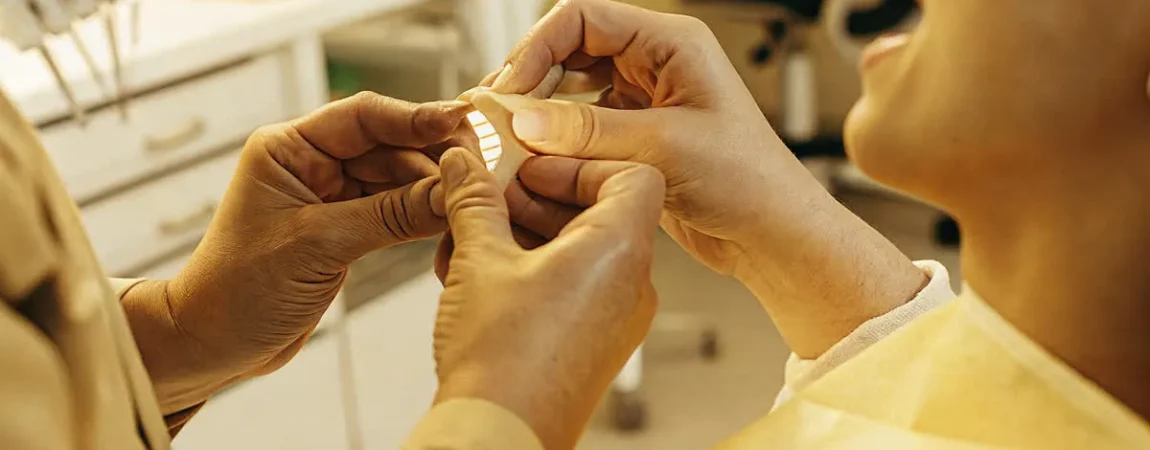
A mandibular advancement device (MAD) is a custom oral appliance worn during sleep to help manage obstructive sleep apnea (OSA) and snoring. It temporarily positions the lower jaw, or mandible, slightly forward. This forward position also helps bring the tongue and nearby soft tissues forward, reducing the chance that they will narrow or collapse the throat while you sleep.
In practical terms, a MAD works with your existing anatomy rather than forcing air through a mask or hose. The appliance is designed to hold the jaw in a carefully selected position, creating more room behind the tongue. The amount of advancement matters. It should be sufficient to support airway opening while remaining comfortable enough for consistent use. Your dentist and sleep physician can determine whether this approach is appropriate based on your diagnosis, airway, bite, and overall health.
The two main types of oral appliances
Oral devices are generally grouped into two main categories for OSA:
- Mandibular advancement devices (MADs): These appliances advance the lower jaw and the attached tongue forward. MADs are the most common type of oral appliance used to treat OSA.
- Tongue-stabilizing devices (TSDs): These devices hold the tongue in a forward position without advancing the lower jaw. They may be considered in situations where jaw movement is not suitable.
Both categories are intended to modify the position of structures in the upper airway to relieve snoring or obstructive sleep apnea. They are not a cure for sleep apnea, and they should be used as part of a treatment plan guided by qualified medical and dental professionals.
For many patients, the next question is straightforward: oral appliance therapy for sleep apnea may be a reasonable option when CPAP is difficult to tolerate or when a sleep specialist recommends an oral approach. A sleep physician must diagnose OSA, while a trained dental sleep medicine provider evaluates the appliance fit and jaw position. The device can then be adjusted gradually as your treatment team works toward a position that supports your breathing and your comfort.
How Does a Mandibular Advancement Device Work to Keep the Airway Open?
During sleep, the muscles that help support the throat naturally relax. In a person with obstructive sleep apnea (OSA), this relaxation can allow the pharynx, or upper airway, to narrow or collapse partially or completely. Airflow becomes restricted, which can contribute to repeated oxygen dips and disrupted sleep. The mechanism behind a mandibular advancement device (MAD) is to help maintain space in this vulnerable area while you sleep.
What happens when the lower jaw moves forward?
A MAD gently holds the mandible, or lower jaw, in a forward position. The jaw is connected to soft tissues in and around the tongue, so this forward positioning can draw the tongue and nearby soft palate tissues forward as well. That creates more room behind the tongue, where soft tissue can otherwise crowd the airway. In practical terms, the appliance supports airway stability rather than forcing air through the throat.
This is a temporary, sleep-time change in jaw position, not a permanent alteration to your bite or facial structure. The goal is to reduce the likelihood of pharyngeal collapse during the hours when relaxed tissues are most likely to obstruct airflow. The NCBI review of oral devices for sleep-disordered breathing describes this forward positioning of the mandible as the primary action of many oral appliances.
The role of the tongue and genioglossus muscle
The genioglossus is a major muscle within the tongue and one of the structures involved in keeping the upper airway open. Because it attaches near the front of the lower jaw, advancing the mandible can place forward tension on the tongue and its supporting tissues. This may help the tongue sit farther from the back wall of the throat, while also helping the surrounding airway tissues remain more stable.
That is why an MAD is more than a device that simply reduces snoring sounds. It changes the position of structures that influence airflow. You can learn more about how anti-snoring devices work, including how oral appliances affect the airway.
The amount of advancement should be individualized. A qualified dental sleep medicine provider can adjust the device gradually and coordinate follow-up testing with your sleep physician to determine whether the airway is opening effectively. An MAD manages obstructive sleep apnea; it does not cure the condition, and suitability depends on your diagnosis, anatomy, jaw health, and treatment plan.
Custom-Fitted MAD vs Over-the-Counter Options
For people exploring how a mandibular advancement device works, the fit and design of the appliance matter as much as the basic mechanism. Both options sit in the mouth during sleep, but they are not equivalent treatment tools. A custom-fitted MAD is designed and managed by a dental professional for your teeth, jaw, airway, and treatment needs. Ready-made boil-and-bite devices are intended to fit a broad range of mouths, not one specific patient.
Custom-fitted MADs compared with over-the-counter devices Differences in fit, design, and clinical oversight are summarized below.
Custom-fitted MAD
- How it is made: Fabricated for you by a dental professional using digital impressions and an evaluation of your oral structures.
- Purpose and clearance: A medical oral appliance selected for obstructive sleep apnea or snoring, with FDA-approved device options available.
- Adjustment: Includes an adjustable mechanism that allows gradual advancement of the lower jaw as clinically appropriate.
- Comfort and fit: Designed around your bite and anatomy, which can improve comfort and support consistent use.
- Clinical oversight: Fitted and monitored by a qualified dental sleep medicine provider, with follow-up care as needed.
Over-the-counter boil-and-bite device
- How it is made: Heated at home and molded from a general, one-size-fits-all design.
- Purpose and clearance: Not FDA-cleared for sleep apnea treatment. It should not be treated as a substitute for a clinically managed appliance.
- Adjustment: Usually offers no precise titration, making it difficult to identify and maintain the position that supports your airway.
- Comfort and fit: A less precise fit may feel bulky, uncomfortable, or unstable during sleep.
- Clinical oversight: Purchased without an individualized airway, dental, or jaw evaluation.
Custom-made oral appliances are designed by dental professionals, while ready-made devices offer different advantages and limitations, as described in the NCBI clinical review. At Spark Sleep Solution, board-certified dentist Dr. Srujal Shah evaluates whether a custom oral appliance is appropriate and helps coordinate treatment with your sleep physician. If you are considering an appliance, learn how to get a custom oral appliance rather than relying on an unmonitored fit.
How Is the Device Adjusted and Titrated for Your Airway?
A mandibular advancement device is not simply placed in your mouth and left unchanged. Titration is a controlled process that helps your care team find a jaw position that supports your airway while remaining comfortable enough for consistent use. This approach is especially important because obstructive sleep apnea involves partial or complete upper-airway collapse during sleep. And oral devices are used to position the mandible and attached tongue forward to help prevent that collapse (clinical review).
-
Begin with a precise digital fit
Your provider evaluates your teeth, bite, jaw joints, and treatment needs before creating the appliance. Digital intraoral scanning captures the shape of your mouth without messy impression material. The resulting custom device is designed for your anatomy rather than relying on a generic fit. Since symptoms such as loud snoring and gasping can be associated with obstructive sleep apnea, treatment should follow an appropriate diagnosis and coordination with your sleep physician (Harvard Health).
-
Advance the lower jaw gradually
Over the next several weeks, the device is adjusted in small increments to move the lower jaw forward. This mandibular advancement also brings the attached tongue forward, helping create more space behind the tongue during sleep. Gradual changes allow your provider to balance airway support with comfort and monitor how your jaw and muscles respond. Dr. Srujal Shah uses MATRx to help assess the advancement position with greater precision.
-
Verify airway response and refine treatment
Follow-up appointments help determine whether the current setting is improving your breathing and whether further adjustment is appropriate. Follow-up sleep studies can verify airway opening and measure treatment response rather than relying only on how you feel. Spark Sleep Solution also uses Eccovision Pharyngometer and Rhinometer technology to verify airway changes instantly during clinical evaluation. These measurements support individualized titration and can help guide the next step.
Oral appliance therapy may be considered as a first-line option for some patients or as an alternative when CPAP cannot be tolerated. But the appropriate treatment depends on your diagnosis and clinical evaluation (NCBI Bookshelf).
What Results Can You Expect From a MAD?
Results vary with your diagnosis, anatomy, appliance design, and consistency of use. But many patients notice meaningful changes within the first few weeks of wearing a mandibular advancement device. The goal is not simply a quieter night. Effective treatment can reduce the frequency of breathing interruptions, reflected in a lower apnea-hypopnea index (AHI), while helping maintain healthier oxygen saturation during sleep.
Patients and bed partners may also notice less or no snoring. As breathing becomes more stable, you may experience fewer nighttime awakenings, better sleep quality, and more energy during the day. These improvements are especially important because obstructive sleep apnea is common: Harvard Health reports that approximately 25% of men and nearly 10% of women have OSA. Which may involve loud snoring, gasping, and disrupted sleep. Harvard Health explains the prevalence and symptoms of OSA.
A MAD is most likely to help when it is custom-fitted and carefully titrated. Your sleep dentist gradually adjusts the device to find a position that supports your airway without unnecessarily stressing your jaw or teeth. Follow-up evaluation, including a sleep study when appropriate, helps confirm whether your AHI and oxygen levels have improved rather than relying on symptoms alone. Research and clinical experience show benefits for snoring and for mild, moderate, and some severe obstructive sleep apnea. Although your sleep physician and dental sleep medicine provider must determine whether it is appropriate for you.
Adherence is another practical part of treatment success. Oral appliance therapy typically has reported adherence rates of about 70% to 85%, compared with approximately 50% to 70% for CPAP. A device that you can comfortably use night after night may provide more real-world benefit than a treatment you cannot consistently tolerate. For patients seeking a CPAP alternative, a custom MAD can be discussed as part of a coordinated treatment plan. It manages obstructive sleep apnea; it does not permanently cure the condition.
Frequently Asked Questions
How do mandibular advancement devices work for sleep apnea?
A mandibular advancement device gently holds your lower jaw forward while you sleep. This also brings the attached tongue and nearby soft tissues forward, helping enlarge the space behind the tongue and reduce upper-airway collapse. The device manages obstructive sleep apnea while it is worn; it does not cure the underlying condition. Learn more about the mechanism of oral devices.
Are mandibular advancement devices effective?
They can be effective for snoring and obstructive sleep apnea, but results vary by anatomy, diagnosis, severity, and consistent use. A sleep physician should diagnose your condition, and your dental sleep medicine provider can adjust the device and coordinate follow-up testing to confirm whether your breathing has improved. A mandibular advancement device is also commonly considered when CPAP is difficult to tolerate.
What is the difference between a mandibular advancement device and a tongue-stabilizing device?
A mandibular advancement device uses the lower jaw to guide the tongue and surrounding tissues forward. A tongue-stabilizing device holds the tongue itself in a forward position without advancing the jaw. Both are oral appliance approaches for obstructive sleep apnea, but the best option depends on your airway, dental health, jaw comfort, and treatment needs.
Who might benefit from a mandibular advancement device?
Adults with diagnosed obstructive sleep apnea or disruptive snoring may be candidates, especially those who cannot tolerate or consistently use CPAP. A custom device requires an evaluation of your teeth, jaw joints, bite, and airway. Patients with TMJ concerns may also be evaluated for specialized designs that limit aggressive jaw advancement. Discuss candidacy with your sleep physician and a qualified dental sleep medicine provider.
Ready to Explore Oral Appliance Therapy?
A consultation can help you understand whether a custom mandibular advancement device fits your sleep apnea treatment plan and comfort needs. Discuss your options with the Spark Sleep Solution team and coordinate next steps with your treating sleep physician. To request an appointment, Request An Appointment.