
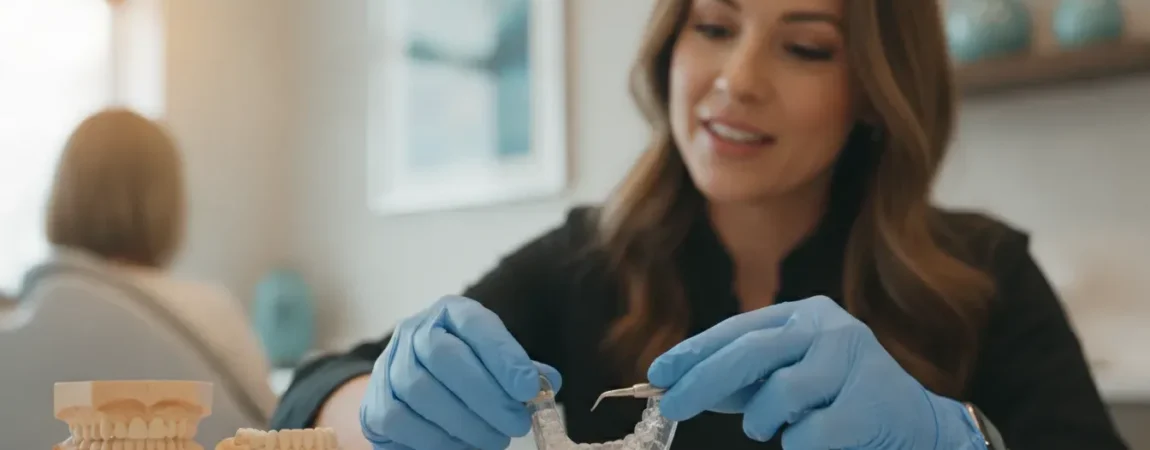
If you use a custom oral appliance for sleep apnea or snoring, it is reasonable to wonder whether wearing it for years could affect how your teeth meet. The short answer is that dental changes are possible, but they are not inevitable, and they should be evaluated through ongoing dental sleep medicine follow-up.
Research on oral appliance therapy teeth shifting long term has found measurable changes in bite and dental alignment in some patients after prolonged use. That does not predict what will happen in your mouth. A baseline examination, individualized device selection, and regular monitoring can help your clinician identify concerns and guide appropriate adjustments.
Your initial assessment should consider dental health, jaw function, and TMJ status, not just appliance fit. If you notice a persistent bite change, tooth discomfort, or new jaw symptoms, contact your treating clinician rather than changing or stopping treatment on your own. Learn more about TMJ disorders and orofacial pain treatment options as you consider the signs worth discussing. The evidence and practical monitoring steps below can put long-term changes into context.
Oral Appliance Therapy Teeth Shifting Long Term: What Changes Are Possible?
Changes are possible, but they are not inevitable
Yes, oral appliance therapy can be associated with changes in how the teeth meet over time. That possibility does not mean every patient will experience noticeable shifting, or that treatment should be stopped without clinical guidance. Bite changes depend on factors such as the person’s dental health, jaw function, anatomy, appliance design, and treatment needs. A careful baseline evaluation helps the dental sleep medicine clinician understand the starting point before selecting a custom oral device.
Why a study result is not an individual diagnosis
These findings describe patterns in one long-term study, not a prediction of what will happen to a particular person’s teeth. They also do not establish that every oral appliance produces the same effects. Your clinician needs to consider your oral cavity, TMJ and jaw function, dental health, sleep apnea severity, anatomy, preferences, and the adjustability and clinical indications of the device. Spark’s initial assessment includes these considerations along with a review of sleep testing. If you notice a persistent bite change, tooth discomfort, jaw symptoms, or a change in fit, contact your treating dental sleep medicine clinician for an individualized assessment. Do not adjust or discontinue treatment on your own.
Oral Appliance Therapy Teeth Shifting Long Term: How Monitoring Works
Monitoring is an ongoing part of oral appliance therapy, not a one-time fitting. A dental sleep medicine practice establishes a baseline, reviews how the appliance feels and functions, and watches for changes that may affect comfort, dental health, or treatment goals. This approach helps distinguish a brief morning bite sensation from a persistent change that deserves assessment.
Starting with a detailed baseline
Before selecting an appliance, the clinician may examine the teeth and oral tissues, evaluate the temporomandibular joints and jaw function, and review the patient’s sleep testing. This provides a reference point for the bite, tooth contacts, jaw movement, and symptoms before treatment begins. Candidacy and device selection also take dental health, anatomy, sleep apnea severity, patient preferences, adjustability, bruxism, and TMJ status into account.
Sleep apnea diagnosis remains physician-led. The dental sleep medicine clinician coordinates with the treating physician so that the oral appliance plan fits the patient’s diagnosis and broader care. Patients can learn more about the practice’s approach to oral appliance therapy.
Checking fit, symptoms, and bite over time
Follow-up visits allow the clinician to review the appliance fit and make controlled adjustments when appropriate. The patient may be asked about tooth pressure, jaw soreness, morning bite changes, chewing comfort, dry mouth, snoring, and sleep quality. A patient-reported change does not automatically mean that permanent movement has occurred, but it is useful information that can guide a closer examination.
Regular adjustment appointments and monitoring protocols help the clinician track whether the device remains comfortable and appropriate. If you notice tooth discomfort, a persistent bite change, or a change in how the appliance fits, contact the treating dental sleep medicine clinician. Do not adjust the device or stop treatment on your own.
Using objective information to guide care
Monitoring may include adjustment records, patient-reported outcomes, objective compliance data, and follow-up sleep testing to verify efficacy. These sources answer different questions: how consistently the appliance is being used, how the patient feels, and whether sleep-related breathing goals are being addressed. Reviewing them together supports individualized decisions rather than assuming that one fitting or one symptom tells the whole story.
Can Morning Exercises Counteract Minor Bite Changes?
What morning tightness may mean
Some people notice that their bite feels different immediately after removing an oral appliance. The sensation may reflect temporary jaw muscle tension or the way the teeth and jaw settle after overnight wear. It does not, by itself, show that teeth have moved permanently. Persistent changes in how your teeth meet, tooth discomfort, or a new appliance-fit concern deserves a professional assessment rather than self-treatment.
What gentle settling can and cannot do
A treating dental sleep medicine clinician may approve a gentle morning routine to relax the jaw and help you observe whether the sensation settles. These movements should never be presented as a way to reverse structural dental movement. Exercises cannot be assumed to restore an altered overbite, overjet, or tooth position, and the appropriate routine depends on your dental health, jaw function, and appliance.
A cautious morning checklist
Use the following as a discussion framework, not individualized treatment instructions. Stop if a movement causes pain, and contact your treating clinician if symptoms persist or worsen.
- Remove the appliance as directed and allow your jaw to rest without clenching. Notice whether your bite, tooth contacts, jaw comfort, or appliance fit feels different from usual.
- With clinician approval, keep your lips together without forcing your teeth together, breathe comfortably, and let the jaw relax for a short period. Do not push the lower jaw forward, pull it backward, or force a bite position.
- Record recurring bite changes, tooth soreness, jaw symptoms, or fit changes and share those observations at follow-up. Contact the treating dental sleep medicine clinician for assessment, as Spark recommends for these concerns (oral appliance therapy).
Do not adjust the appliance yourself or stop treatment without clinician guidance. Changing or discontinuing therapy can affect both comfort and sleep apnea management. Your clinician can determine whether the appliance, your dental health, or another factor needs attention.
What Long-Term Clinical Evidence Says About Dental Alignment
What the long-term study measured
A retrospective study published in the Journal of Clinical Sleep Medicine examined adults who used mandibular advancement splints for primary snoring or obstructive sleep apnea for at least eight years. The researchers reviewed dental casts and used digital measurements to assess overbite, overjet, mandibular crowding, dental arch width, and relationships between the upper and lower arches. The study included 77 patients, with an average treatment duration of 11.1 years. Read the PubMed study.
What the researchers found
| Measure | Reported finding | Average change | What it means |
|---|---|---|---|
| Overbite | Reduction | 2.3 +/- 1.6 mm | The vertical overlap of the front teeth changed on average. |
| Overjet | Reduction | 1.9 +/- 1.9 mm | The horizontal overlap of the front teeth changed on average. |
| Mandibular crowding | Reduction | 1.3 +/- 1.8 mm | Lower-tooth alignment measurements changed in the study group. |
| Dental arch width | Increase | 0.7 to 1.1 mm | Lower intercanine and intermolar widths increased on average. |
The researchers also observed anterior crossbite and posterior open bite during long-term treatment. They reported that clinically significant occlusal changes were progressive and did not appear to reach a clear endpoint while splint use continued.
What this evidence does and does not prove
These findings support taking dental alignment seriously during long-term oral appliance therapy. They describe group-level changes in one retrospective study, not a prediction for every patient or every custom oral device. The results do not establish that all patients will experience shifting, that the same degree of change will occur, or that one appliance is appropriate for everyone. Your treating dental sleep medicine clinician can evaluate your bite, dental health, jaw function, and appliance fit over time, then guide any treatment changes. Do not adjust or discontinue treatment without that guidance.
How to Raise Bite Concerns With Your Sleep Dentist
A change in your bite, tooth comfort, jaw symptoms, or appliance fit is worth discussing with your treating dental sleep medicine clinician. It does not automatically mean that treatment is unsafe or that a permanent change has occurred. Your clinician can compare your current symptoms with your baseline examination and determine whether the device, your dental health, or your TMJ status needs closer review.
Describe what changed and when
Before the appointment, note what you are experiencing and when it happens. Useful details may include whether your teeth feel different only when you first wake up or throughout the day, whether your appliance feels tighter or looser, and whether you have noticed tooth tenderness, jaw fatigue, clicking, limited opening, or facial discomfort. Also mention changes in chewing, speech, or the way your upper and lower teeth meet. A brief symptom record can help your clinician identify patterns without relying on memory alone.
Bring the appliance and your questions
Bring the custom oral appliance to the visit, even if the concern seems minor. Ask whether its fit, advancement, or condition should be assessed, and ask how your bite and jaw function will be monitored over time. Device selection and follow-up should account for dental health and TMJ status, not just sleep-related goals. If jaw discomfort is part of your concern, Spark’s guide to TMJ disorders and orofacial pain treatment options provides broader context. You can also review information about oral appliance and TMJ comfort.
Do not make treatment changes on your own
Do not adjust the appliance, change its advancement, or discontinue treatment without guidance from the clinician managing your care. Contact the practice for assessment if you notice bite changes, tooth discomfort, or a change in fit. Your dental sleep medicine clinician can decide whether an adjustment, additional monitoring, or another evaluation is appropriate. Sleep apnea diagnosis and follow-up sleep testing remain coordinated with the treating physician, while the dental team evaluates the oral and jaw-related aspects of appliance care.
Frequently Asked Questions
Can oral appliance therapy change your bite over time?
It can. Long-term research has reported changes in overbite, overjet, crowding, and dental arch width after extended mandibular advancement splint use. A study of 77 adults treated for an average of 11.1 years found group-level occlusal changes, but those findings do not predict what will happen to every patient. Read the long-term study.
Are bite or tooth changes from an oral appliance permanent?
Some changes may persist, and the available evidence does not establish that every change will reverse after treatment ends. Because effects can depend on the person, appliance, dental health, and duration of use, a persistent bite difference needs an individual assessment rather than a general prediction.
Can morning exercises prevent or reverse tooth movement?
Gentle, clinician-approved jaw relaxation or bite-settling routines may help with temporary morning tightness for some patients. But they have not been shown here to reverse structural tooth or bite changes. Ask your treating clinician which exercises, if any, are appropriate for you. Do not adjust or stop treatment on your own.
When should you contact a dental sleep medicine clinician?
Contact your treating clinician if you notice a persistent bite change, tooth discomfort, jaw symptoms, or a new change in how the appliance fits. Early assessment can help the clinician review your symptoms, dental health, TMJ status, and appliance settings.
How are possible bite changes monitored?
Monitoring may include a baseline oral and TMJ evaluation, follow-up examinations, adjustment tracking, and your reports about comfort and bite. Your clinician may also review compliance information or follow-up sleep testing. Sleep apnea diagnosis and testing remain coordinated with your treating physician.
Schedule a Personalized Bite-Change Evaluation
If you have noticed a persistent bite or fit change during oral appliance therapy, a clinician-guided review can help clarify what you are experiencing and what adjustments may be appropriate. Do not self-adjust the device. Call Spark Sleep Solutions to discuss your concerns and next steps.