

Orofacial pain and TMJ disorder are related terms, but they do not describe exactly the same thing. Orofacial pain is a broad description of pain in the mouth, jaw, face, or nearby areas. TMJ disorder, more accurately called a temporomandibular disorder or TMD, refers to a group of conditions involving the jaw joints, chewing muscles, or related structures. Understanding the difference can help you seek the right evaluation without trying to diagnose yourself.
What Is Orofacial Pain?
Orofacial pain is pain felt in the mouth, teeth, jaw, face, or surrounding head and neck structures. It is a symptom category, not a single diagnosis. Dental problems, muscle tension, headaches, nerve conditions, sinus disease, injury, and temporomandibular disorders can all produce orofacial pain, which is why careful evaluation matters.
The word “orofacial” combines oral and facial. Clinicians may use it when a patient reports discomfort in the jaw, cheek, lips, tongue, teeth, temples, ears, or face, especially when the source is not immediately clear. Pain can be short term, recurring, or persistent. It may feel dull, sharp, burning, throbbing, tight, or pressure-like.
Orofacial pain describes where the problem is experienced rather than proving what caused it. For example, a person with a cracked tooth, migraine, irritated nerve, sinus inflammation, or a painful jaw joint may all describe pain in the face. The evaluation must distinguish among these possibilities before treatment is chosen.
That broad starting point is important for patients who have visited more than one provider without receiving a clear explanation. The goal is not to assign every facial pain complaint to the jaw. The goal is to identify the most likely source and coordinate care when another medical or dental specialist is needed.
What Does TMJ Disorder Mean?
TMJ disorder is a common patient term for a temporomandibular disorder, or TMD. TMDs are a group of conditions affecting one or both jaw joints, the muscles used for chewing, or headaches associated with those structures. The TMJ itself is the joint, while TMD is the disorder affecting the joint or related tissues.
The National Institute of Dental and Craniofacial Research describes TMDs as a group of more than 30 conditions. They are commonly grouped into joint and disc disorders, masticatory muscle disorders, and headaches associated with TMD. A person can have more than one type at the same time.
Possible TMD-related findings include jaw pain, tenderness in the chewing muscles, stiffness, reduced opening, locking, and painful clicking or grating. Pain may spread toward the face, ear, temple, or neck. However, a painless click or pop does not automatically mean that someone has a disorder or needs treatment.
Another useful distinction is that TMJ disorder is not a diagnosis based on one symptom. Jaw soreness after a stressful day, facial pain from a tooth, and a painful joint problem can feel similar at first. A clinician considers the complete history, examination findings, movement pattern, and, when appropriate, imaging or referral information.
How Is Orofacial Pain Different From TMJ Disorder?
The main difference is scope: orofacial pain is the broad symptom area, while TMJ disorder is one group of conditions that can cause pain in that area. In other words, TMJ disorder may be a cause of orofacial pain, but not every case of orofacial pain comes from the TMJ or chewing muscles.
| Term | What it describes | Why the distinction matters |
|---|---|---|
| Orofacial pain | Pain in the mouth, jaw, face, or nearby head and neck regions | Signals that a broader differential evaluation may be needed |
| TMJ | The temporomandibular joint on either side of the jaw | Names an anatomic structure, not a diagnosis by itself |
| TMJ disorder or TMD | A group of joint, disc, muscle, and related headache conditions | Points toward a specific musculoskeletal or joint-related evaluation |
| Dental pain | Pain arising from a tooth or supporting tissues | May require a general dentist or endodontic evaluation instead of TMD care |
Patients often use “TMJ” to mean jaw pain or a TMJ disorder. That shorthand is understandable, but it can make the diagnostic conversation less precise. A specialist will usually ask whether the pain is in the joint, the chewing muscles, the teeth, the nerves, the sinuses, or another nearby structure.
The distinction also prevents treatment from getting ahead of diagnosis. A custom oral device may be appropriate for selected patients with specific dental sleep medicine or jaw-related needs, but it is not a universal answer for every facial pain condition. Treatment should match the cause and the patient’s medical and dental history.
Explore Spark Sleep Solutions’ orofacial pain and TMJ care
Why Can the Symptoms Overlap?
Orofacial pain and TMJ disorder symptoms overlap because the jaw joints, chewing muscles, teeth, ears, temples, and neck are close together and share connected nerves and movement patterns. Pain can also be referred, meaning the source and the place where pain is felt are not always identical.
Common overlapping complaints may include:
- Jaw or cheek soreness while chewing, speaking, or yawning
- Morning jaw fatigue or tightness
- Headaches around the temples or forehead
- Ear pressure, ringing, or discomfort without a primary ear problem
- Neck or facial muscle tenderness
- Limited or uncomfortable jaw movement
- Pain that becomes more noticeable during stress or periods of poor sleep
These symptoms can be real and disruptive without proving a particular diagnosis. For instance, temple pain may be related to a chewing muscle, a primary headache disorder, or another condition. Ear fullness may occur alongside jaw problems, but it should not be assumed to originate from the jaw without an appropriate evaluation.
Sleep can add another layer. Poor sleep, nighttime clenching, stress, and sleep-disordered breathing may affect how a person experiences pain and how well the muscles recover. Spark Sleep Solutions evaluates sleep apnea, snoring, and orofacial pain as connected but distinct clinical concerns. A patient may need coordinated care rather than one explanation for every symptom.
What Else Can Cause Pain in the Face and Jaw?
Other causes of facial or jaw pain can include dental infection, tooth damage, sinus conditions, primary headaches, nerve pain, salivary gland problems, muscle disorders, injury, and less common medical conditions. A TMD evaluation should therefore consider both jaw-related findings and symptoms that point outside the temporomandibular system.
A clinician may consider several categories during a differential evaluation:
- Dental sources: Cavities, cracked teeth, gum disease, or an abscess can cause localized or radiating pain.
- Headache disorders: Migraine and other headache conditions can cause facial, temple, or jaw-area symptoms.
- Nerve-related pain: Irritation of facial sensory nerves can produce brief, severe, burning, or electric-like pain.
- Sinus or ear conditions: Inflammation or infection may create pressure or pain that feels close to the jaw.
- Muscle and joint conditions: TMDs can involve the chewing muscles, joint surfaces, discs, or associated headaches.
- Injury or systemic conditions: Trauma and certain broader health conditions may alter jaw function or pain sensitivity.
This list is not a self-diagnostic checklist. Symptoms can overlap, and more than one issue can be present. A medical or dental professional may refer you to another provider when the findings do not fit a jaw-related pattern.
Seek prompt medical care for facial swelling, fever, rapidly worsening pain, trouble breathing or swallowing, a new neurologic symptom, or an injury that changes your bite or limits jaw movement. These signs require timely evaluation and should not be managed solely through an online article or routine appointment request.
How Does a Specialist Evaluate the Difference?
A specialist evaluates the difference by combining your symptom history with a focused examination of the jaw, muscles, teeth, bite, movement, and related structures. Imaging or referrals may be appropriate when the history and examination suggest a joint problem, another medical cause, or a condition requiring additional expertise.
An evaluation may include the following steps:
- Clarify the pain: You may be asked when it began, where it is located, what it feels like, how long it lasts, and what makes it better or worse.
- Review related symptoms: Headaches, tooth sensitivity, ear symptoms, neck discomfort, clenching, sleep quality, and prior injuries can help shape the differential.
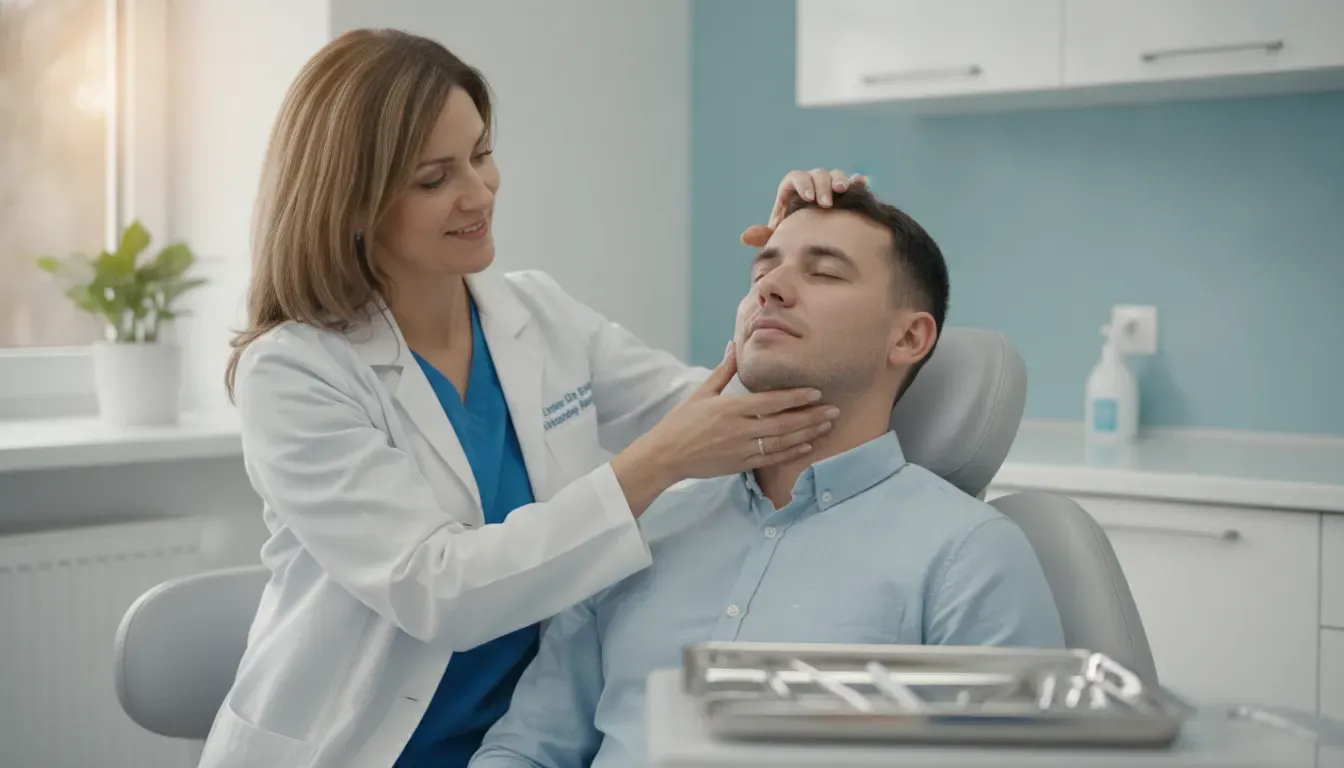
- Assess jaw function: The clinician observes opening, closing, side-to-side movement, deviation, locking, and painful or limited motion.
- Examine muscles and joints: Gentle palpation can identify tenderness or familiar pain in the chewing muscles and around the TMJs.
- Check dental and medical context: Existing dental findings, medications, health conditions, and previous evaluations may change the next step.
- Coordinate testing or referral: Imaging, a physician evaluation, a general dental evaluation, physical therapy, or another referral may be recommended when clinically appropriate.
The purpose of this process is not to force a label. It is to decide whether the symptoms fit a TMD pattern, whether another cause needs attention first, or whether multiple conditions should be addressed together. The National Institute of Dental and Craniofacial Research notes that there is no single definitive test for every TMD, so history and examination remain central.
When Should You Seek a Specialist for Orofacial Pain?
Consider a specialist evaluation when jaw or facial pain persists, returns frequently, limits eating or speaking, causes painful jaw movement, or remains unexplained after an initial visit. An evaluation is also reasonable when symptoms overlap with sleep problems, snoring, headaches, or nighttime clenching and you need help determining which concern to address first.
Bring a short symptom record to the visit. Note the location, duration, intensity, triggers, sleep pattern, recent dental work, injuries, medications, and any jaw locking or movement changes. If another provider has already evaluated you, bring relevant reports or imaging when available.
Do not rely on a diagnosis based only on a social media post, a jaw sound, or a generic symptom matcher. The same symptom can have different causes, and an accurate diagnosis protects you from pursuing a treatment that does not address the source of your pain.
How Can Spark Sleep Solutions Help?
Spark Sleep Solutions provides specialized evaluation for orofacial pain, TMJ disorders, and dental sleep medicine. The practice can help clarify whether symptoms fit a jaw-related pattern, whether sleep-disordered breathing may be part of the clinical picture, and when coordination with a physician, general dentist, or another specialist is appropriate.
Spark Sleep Solutions is focused on dental sleep medicine and TMJ-related care rather than treating sleep appliances as a side service in a general dental practice. Dr. Srujal H. Shah holds dual diplomate credentials with the American Board of Dental Sleep Medicine and American Sleep & Breathing Academy, along with specialized training in orofacial pain and TMJ disorders.
During a consultation, share the full picture rather than focusing only on the label “TMJ.” The most useful next step may be jaw-focused care, dental care, medical evaluation, sleep assessment, or coordinated management. If a custom oral device is considered, candidacy should be determined from your diagnosis, dental health, jaw function, and sleep physician’s recommendations when sleep apnea is involved.
For an overview of the practice’s broader approach, read Spark Sleep Solutions’ orofacial pain and TMJ treatment information. You can also review TMJ disorder treatment options after your diagnostic questions have been addressed.
Request your orofacial pain consultation
Frequently Asked Questions
Is orofacial pain the same as TMJ disorder?
No. Orofacial pain is a broad symptom category involving the mouth, jaw, face, or nearby areas. TMJ disorder, more accurately called TMD, is one group of conditions involving the jaw joints, chewing muscles, or related headaches. TMD can cause orofacial pain, but other dental, nerve, sinus, and headache conditions can as well.
Can a dentist diagnose the cause of facial pain?
A dentist with appropriate training can evaluate many dental and jaw-related causes of facial pain, but not every cause. Depending on the findings, you may need care from a physician, neurologist, ear specialist, physical therapist, or another clinician. Referral and coordination are part of responsible diagnosis when symptoms do not fit one category.
Does a clicking jaw mean I have TMJ disorder?
Not necessarily. Jaw clicking or popping without pain, limited movement, or other functional problems can be common and does not by itself establish a disorder. Painful sounds, locking, stiffness, reduced opening, or changes in function deserve an appropriate evaluation rather than a self-diagnosis.
Can sleep problems make jaw orofacial pain worse?
Sleep disruption, nighttime clenching, stress, and sleep-disordered breathing may affect muscle recovery and pain sensitivity, but they do not prove a specific cause. Discuss persistent symptoms with a qualified clinician. Spark Sleep Solutions can evaluate the dental sleep medicine and jaw-related aspects while coordinating with the treating sleep physician when needed.
Should I see a TMJ specialist or a general dentist first?
The best starting point depends on your symptoms. Tooth sensitivity, swelling, or a suspected cracked tooth may call for a general dentist. Persistent jaw-joint or chewing-muscle pain, locking, limited movement, or unexplained facial pain may justify an orofacial pain or TMJ-focused evaluation. A specialist can also help coordinate referrals when the source is uncertain.
Sources: National Institute of Dental and Craniofacial Research: TMD; Diagnostic Criteria for Temporomandibular Disorders.