Waking up gasping for air is a clear sign of airway collapse during sleep. For many in the San Francisco Bay Area, finding expert care is the first step toward quiet nights.
A specialized sleep apnea dentist bay area patients trust can provide custom oral devices to keep your airway open while you sleep. These FDA-approved devices gently move your lower jaw forward to prevent airway collapse, making them a very comfortable CPAP alternative. According to research in the National Institutes of Health database, these custom appliances are a well-established option for mild to moderate obstructive sleep apnea. They also provide an effective treatment for patients with severe sleep apnea who cannot use or tolerate a CPAP machine. By working with a specialized dentist, you can get a custom-fit device that protects your health, reduces snoring, and helps you sleep without noisy equipment.
Understanding the role of a specialist is the key to getting safe and effective treatment.
Sleep Apnea Dentist Bay Area: What Is a Sleep Apnea Dentist and Why Does Specialization Matter?
When you are struggling with poor sleep, a general dentist is usually not the first person you think of visiting. However, in the field of dental sleep medicine, a specialized sleep apnea dentist plays a vital role. This medical branch focuses on using custom-fit oral appliances to manage sleep-related breathing disorders, including obstructive sleep apnea (OSA) and chronic snoring. While general dentists focus on teeth cleaning, fillings, and crowns, a specialized sleep apnea dentist focuses entirely on the complex relationship between your airway, jaw, and sleep health.
It is important to understand that a sleep apnea dentist does not replace your primary care physician or sleep specialist. In fact, medical regulations require a clear division of care. A sleep physician must evaluate your sleep patterns through a formal sleep study and provide the official diagnosis of obstructive sleep apnea. Once diagnosed, the sleep apnea dentist takes over the dental treatment phase, designing and fitting a custom oral appliance to manage the condition. This multidisciplinary cooperation ensures you receive safe, complete, and legally compliant medical care.
The Danger of Untreated Obstructive Sleep Apnea
Obstructive sleep apnea is not just a loud snoring problem; it is a life-threatening disorder characterized by airway collapse during sleep, resulting in airflow interruptions. When you sleep, your throat muscles relax. For those with OSA, this relaxation causes the soft tissues in the back of the throat to sag and completely or partially block the airway. This blockage cuts off oxygen to your brain, forcing your body to wake up briefly to gasp for air. These awakenings can happen dozens of times per hour, preventing deep sleep and placing immense stress on your heart and cardiovascular system.
Specialization in this field is critical because managing an airway requires deep clinical knowledge of jaw mechanics and joint health. A general dentist who occasionally orders pre-made snoring mouthguards does not have the training to protect your jaw joints from long-term damage. At Spark Sleep Solutions, our practice is focused exclusively on the treatment of sleep apnea, chronic snoring, and TMJ disorders in the San Francisco Bay Area. This exclusive focus means every tool, technology, and clinical protocol in our offices is optimized to protect your airway and maintain your long-term jaw comfort.
Why Do Patients Choose Oral Appliance Therapy Over CPAP?
For decades, the Continuous Positive Airway Pressure (CPAP) machine has been the standard treatment for sleep apnea. While CPAP machines are highly effective when used correctly, they suffer from a major clinical challenge: patient compliance. The bulky mask, loud air pump, and restrictive hose cause many patients to abandon the therapy entirely. In fact, clinical data shows that 50% to 70% of sleep apnea patients find themselves unable to tolerate CPAP therapy over the long term. This compliance gap leaves millions of people untreated and vulnerable to the serious health risks of sleep apnea.
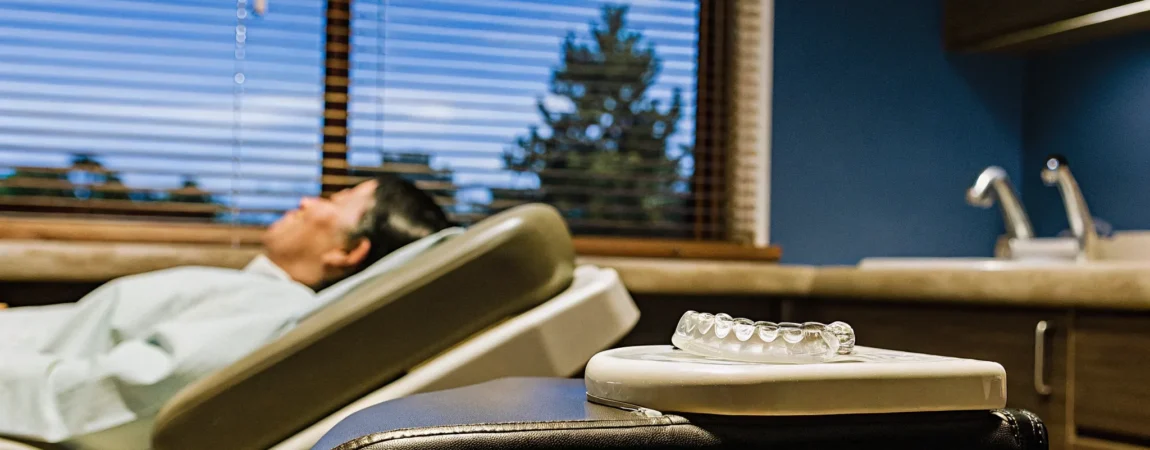
This is where custom oral appliance therapy (OAT) provides a welcome solution. An oral appliance is a small, retainer-like device that you wear only while sleeping. It is completely silent, requires no electricity, fits easily in a travel bag, and allows you to sleep in any position. Because they are comfortable and non-invasive, patients are far more likely to wear them consistently all night, leading to better clinical outcomes and improved daily energy. This convenience makes OAT the leading CPAP alternative in the Bay Area for patients seeking a more practical way to manage their sleep health.
| Feature | CPAP Machine | Custom Oral Appliance |
|---|---|---|
| How it works | Motorized pump blows air through a mask | Holds jaw forward to keep airway open |
| Noise | Constant motor hum | Silent |
| Portability | Requires power, bulky | Small, fits in pocket |
| Compliance | 30-50% long-term | 50-70% among CPAP-intolerant patients |
| Sleep position | Must sleep on back | Any position |
| Dental side effects | Dry mouth, cavities | Minimal jaw adjustment |
How Oral Appliances Keep Your Airway Open
Custom oral appliances, technically known as Mandibular Advancement Devices (MADs), work by maintaining a patent airway through forward advancement of the mandible during sleep. When you wear the device, it gently holds your lower jaw and tongue in a slightly forward position. This subtle movement pulls the soft tissues at the back of your throat forward, keeping them tight and preventing them from sagging into your airway. By preventing this tissue collapse, the device keeps your breathing path open and clear, eliminating heavy snoring and breathing interruptions.
According to research in PubMed Central, oral appliance therapy is a medically recognized, effective alternative for patients who cannot tolerate CPAP therapy. It provides a highly effective treatment for mild to moderate obstructive sleep apnea. And it is a vital option for patients with severe sleep apnea who have failed to adapt to a CPAP mask.
Addressing CPAP-Induced Dental Issues
Beyond comfort, there are specific oral health reasons to consider an alternative to CPAP. CPAP machines have been reported to cause dental issues, including cavities, due to chronic dry mouth if not properly managed. The continuous flow of pressurized air from a CPAP machine can dry out your saliva. Because saliva is your mouth’s natural defense against bacteria. A dry mouth allows plaque and harmful acids to build up quickly, increasing your risk of tooth decay and gum inflammation. If you are experiencing dry mouth from your CPAP, you should discuss this problem with your treating sleep doctor and evaluate your candidacy for a custom oral device. Especially for cases of mild and moderate sleep apnea or snoring.
How to Find a Board-Certified Sleep Apnea Dentist in the Bay Area
Because dental sleep medicine has grown in popularity, many general dentists have started offering oral appliances in their offices. However, treating obstructive sleep apnea is a medical responsibility that requires specialized training. An ill-fitting appliance can cause permanent changes to your bite, damage your jaw joints, or fail to keep your airway open. To protect your health and get the best results, you must know how to identify a qualified clinical specialist.
The gold standard of qualification in this field is board certification. When looking for a provider. You should look for a dentist who is a Diplomate of the American Board of Dental Sleep Medicine (ABDSM) or the American Sleep and Breathing Association. These credentials indicate that the dentist has completed years of advanced training, passed rigorous clinical exams, and is dedicated exclusively to the practice of sleep medicine.
A Rare Level of Clinical Expertise
At Spark Sleep Solutions, Dr. Srujal H. Shah is double board-certified (DABDSM, DASBA), marking a rare level of expertise in dental sleep medicine. Dr. Shah is one of the few dental sleep specialists in the country to hold board certifications from both the American Board of Dental Sleep Medicine and the American Sleep and Breathing Association. This double certification represents his deep commitment to clinical excellence and ensures that your airway management is planned by a nationally recognized expert.
Furthermore, the American Academy of Sleep Medicine (AASM) recognizes oral appliance therapy as a valid first-line treatment for mild to moderate obstructive sleep apnea. And as a primary option for severe OSA patients who are CPAP-intolerant. A board-certified sleep dentist understands how to select the right device from over 100 FDA-approved oral appliances available today. This deep familiarity with different device designs ensures that your appliance is chosen based on your unique dental anatomy, jaw joint condition, and sleep patterns.
Comprehensive Sleep Apnea Care Across Six Bay Area Locations
Easy Access Near Your Home
Finding a skilled sleep apnea dentist Bay Area patients trust is easy with six local offices. Spark Sleep Solutions serves people who live in and around San Jose, Los Gatos, and Santa Cruz. We also have offices in San Ramon, Sunnyvale, and Monterey. These six sites make it simple to get treatment close to your home. You do not have to drive far to find expert care for sleep apnea or heavy snoring. Each office has a team that cares for sleep health. We work with your sleep doctor to help you sleep better. Our goal is to make your treatment path smooth and simple.
Advanced Tech for Custom Fits
Our local teams use advanced technology to plan your care. We do not use the old, messy paste to take molds of your teeth. Instead, we use 3D intraoral scanning to take clear pictures of your teeth. This technology is fast and clean, and it maps your mouth in real-time. Our doctors use these scans to make custom oral sleep appliances that fit your mouth perfectly. A good fit is vital to keep your jaw in the right position.
We also use a tool called MATRx testing. This is a special sleep study performed in your own bed. It shows us if an oral device will help you and finds the exact jaw position to keep your airway open. This test removes the guesswork before we build your custom device. It helps our dentists find the best fit right from the start.
Over 100 FDA-Approved Options
There is no single device that fits all people. Every mouth has a unique shape and size. This is why Spark Sleep Solutions has access to over 100 FDA-approved oral appliances. Our sleep dentists look at your teeth, jaw, and airway during your visit and choose the device that works best for your needs. Some devices are thin to give you more tongue room. Others provide deep airway support. This wide range ensures you get a device you can wear night after night without pain.
Does Medical Insurance Cover Oral Appliance Therapy?
One of the most common questions patients ask is how much custom oral appliance therapy costs and whether it is covered by insurance. Many patients assume that because the treatment is provided by a dentist, it must be billed through dental insurance. However, obstructive sleep apnea is a serious medical condition, which means that custom oral appliances are billed directly through your medical insurance plan.
At Spark Sleep Solutions, our team has extensive experience navigating the medical billing process. We work diligently to help our patients secure maximum medical insurance coverage for their treatment. Because oral appliance therapy is a clinically recognized medical treatment, it is covered by most major medical insurance plans, including PPO plans, HMO plans, Kaiser Permanente, and Medicare. This medical billing approach ensures that this vital therapy remains accessible and affordable for families across the Bay Area.
Coordinating with Your Sleep Physician
To qualify for medical insurance coverage, specific clinical protocols must be followed. Because sleep apnea is a medical disease. Your insurance provider will require a formal diagnosis of obstructive sleep apnea from a board-certified sleep physician before they approve coverage for a custom oral device. This is why Spark Sleep Solutions coordinates closely with your sleep physician to obtain your diagnostic sleep study results and prescription.
According to clinical guidelines in the National Institutes of Health database, mandibular advancement devices are medically indicated for the treatment of OSA in patients who have failed or are intolerant to CPAP therapy. And for patients who prefer an alternative to CPAP therapy. By documenting your diagnostic severity and your clinical need for a CPAP alternative. Our team can build a strong medical case for your insurance provider to cover your therapy.
Our insurance coordinators handle all of the pre-authorization paperwork and medical coding on your behalf. We believe that financial stress should never stand between you and a healthy night’s sleep.
What to Expect During Your Sleep Apnea Treatment Journey
Embarking on treatment for obstructive sleep apnea is a journey toward better health. And knowing what to expect at each step can help you feel confident in your care. At Spark Sleep Solutions, we guide you through a structured, patient-centric process that combines clinical precision with advanced technology.
Step 1: Consultation and Digital Scanning
Your journey begins with a comprehensive evaluation in our office. If you already have a sleep study and a diagnosis from a sleep physician, we will review your results. If you do not yet have a diagnosis but suffer from chronic snoring or daytime fatigue. We will help coordinate with a qualified sleep physician for an evaluation and diagnosis, as a physician must diagnose sleep apnea before dental treatment can begin.
During your initial visit, we perform a thorough exam of your airway, teeth, and jaw joints. Next, we use advanced 3D intraoral scanning to capture a detailed digital map of your mouth. This scanning technology is fast, clean, and completely comfortable, eliminating the need for the traditional messy paste impressions that can cause patients to gag. This precise digital model is used to design an appliance that fits your unique anatomy perfectly.
Step 2: MATRx Testing for Personalized Calibration
To ensure your oral appliance works from the very first night, we use MATRx testing. This is a specialized, temporary sleep study that you perform in the comfort of your own bed. While you sleep, the MATRx system gently adjusts your jaw position in micro-increments to find the exact spot that keeps your airway open. This test removes the guesswork from treatment, proving whether an oral device will work for you and finding the precise calibration needed for your custom device.
Step 3: Custom Fabrication and Fitting
Once your MATRx results are analyzed, we custom-fabricate your oral appliance. Patients with mild-to-moderate obstructive sleep apnea are excellent candidates for this therapy as a first-line treatment. And we also customize devices for patients with severe sleep apnea who cannot use CPAP. When your device is ready, you return to our clinic for a fitting. Your sleep dentist will adjust the device to ensure a comfortable fit and show you how to place and care for it at home.
Step 4: Ongoing Monitoring and Follow-Up
After your fitting, your treatment continues with routine monitoring. Ongoing management and follow-up are necessary for patients using oral appliances to ensure therapeutic success and protect your jaw joint health. We schedule regular visits to check the device, monitor your bite, and make any needed adjustments. We also coordinate with your sleep physician to perform a follow-up sleep study with your device in place, confirming that your airway is fully protected.
Understanding the Link Between Sleep Apnea and TMJ Disorders
Many patients are surprised to learn that sleep-disordered breathing and jaw pain are often deeply connected. Temporomandibular joint (TMJ) disorders, which cause pain, clicking, or stiffness in the jaw joint, frequently co-occur with obstructive sleep apnea. When you have a narrow or unstable airway, your body may naturally try to protect itself during sleep by clenching or grinding your teeth. This nocturnal clenching is a subconscious effort to pull the lower jaw forward and prevent the airway from collapsing. While this clenching helps you breathe, it places extreme continuous stress on your jaw joints and facial muscles, leading to TMJ pain and morning headaches.
Because of this close connection, treating these conditions in isolation often leads to incomplete results. A general dentist might make a simple nightguard to protect your teeth from grinding. But a standard nightguard can actually make sleep apnea worse by allowing the jaw to fall backward during sleep. Conversely, a board-certified dental sleep specialist can design an integrated treatment approach that addresses both issues simultaneously. Using custom oral appliances that keep the airway open while supporting the jaw in a resting position that relieves pressure on the TMJ.
Snoring Treatment and Airway Wellness
It is also important to know that chronic snoring can be a primary indication for treatment, even in the absence of a formal obstructive sleep apnea diagnosis. Snoring is the sound of friction caused by air forcing its way through a partially blocked throat. Even if your breathing does not completely stop, the extra effort required to breathe can fragment your sleep, stress your jaw joints, and leave you feeling exhausted. If you or your partner suffer from loud, disruptive snoring, custom oral appliances can help stabilize your jaw, quiet your breathing, and restore peace to your bedroom.
By treating the underlying airway issue, we can help resolve the clenching and grinding that damages your jaw, providing comprehensive relief for both sleep apnea and TMJ symptoms.
Frequently Asked Questions About Sleep Apnea Treatment
Does medical insurance cover sleep apnea oral appliances?
Yes, custom oral appliances for obstructive sleep apnea are medically necessary devices and are typically covered by medical insurance plans rather than dental plans. Most major medical insurance plans, including PPO, HMO, Kaiser Permanente, and Medicare, offer coverage when prescribed for sleep apnea treatment.
What is the difference between a CPAP machine and a custom oral appliance?
A CPAP machine uses a motorized pump to blow pressurized air through a mask to force your airway open. A custom oral appliance is a small, quiet, non-electric device worn in your mouth that physically holds your lower jaw slightly forward to prevent airway collapse.
Can a dentist diagnose obstructive sleep apnea?
No, a dentist cannot diagnose sleep apnea. Only a board-certified sleep physician can evaluate your sleep study and provide a formal diagnosis. However, a sleep apnea dentist coordinates with your physician to design and fit the oral appliance once a diagnosis is confirmed.
How do I find a board-certified sleep apnea dentist in the Bay Area?
Look for a dentist who is a Diplomate of the American Board of Dental Sleep Medicine (ABDSM) or holds similar national credentials. Dr. Srujal H. Shah at Spark Sleep Solutions is double board-certified (DABDSM and DASBA), representing the highest level of specialized clinical expertise in the Bay Area.
Are oral appliances effective for mild to moderate sleep apnea?
Yes. Clinical studies recognized by the American Academy of Sleep Medicine show that custom oral appliances are highly effective as a first-line treatment for mild to moderate obstructive sleep apnea. They also provide effective treatment for patients with severe sleep apnea who cannot tolerate CPAP.
What are the common dental side effects of CPAP therapy?
The pressurized air from a CPAP machine often causes dry mouth by reducing saliva flow. This dryness removes your mouth’s natural protection against bacteria, increasing your risk of developing cavities and gum disease. Discuss this problem with your treating sleep doctor and evaluate your candidacy for a custom oral device.
How long does it take to get a custom oral appliance?
The process typically takes 3 to 4 weeks. This includes your consultation and digital 3D intraoral scanning, a home MATRx test to find the optimal jaw position. Custom fabrication of your appliance, and your final fitting and calibration appointment.