Choosing care for sleep apnea can feel complicated, especially when you are comparing medical guidance, treatment options, and insurance requirements. Start with an accurate physician-led diagnosis and an individualized plan for managing obstructive sleep apnea.
For appropriate adults, options for sleep apnea treatment san jose may include custom oral appliance therapy, particularly when they cannot tolerate CPAP or prefer an alternative. A sleep physician diagnoses the condition, while a qualified dental sleep specialist evaluates candidacy, coordinates care, and monitors treatment. Sleep studies help identify the type and severity of sleep apnea.
The right starting point is understanding how testing, physician collaboration, and dental evaluation fit together. That pathway helps San Jose patients approach treatment with clear expectations and appropriate follow-up.
What San Jose Patients Should Know About Sleep Apnea Treatment
Effective sleep apnea treatment in San Jose begins with the right diagnosis. Sleep apnea is not diagnosed by a dentist. A physician leads the diagnostic process, determines whether testing is appropriate, and interprets the results. Depending on your needs, testing may take place at home with a portable device or in a sleep center through an overnight study.
Diagnosis comes before dental treatment
Sleep studies can help identify the type and severity of sleep apnea. They may also help your healthcare team understand how breathing changes during sleep. The National Heart, Lung, and Blood Institute explains how sleep apnea is diagnosed, including when a provider may refer you to a sleep specialist or sleep center.
That physician-led pathway matters because oral appliance therapy is intended for appropriate patients with obstructive sleep apnea, not for every sleep-related breathing concern. Spark Sleep Solutions coordinates with physicians before dental treatment and can help coordinate either home sleep testing or an in-lab polysomnography pathway according to the patient’s needs.
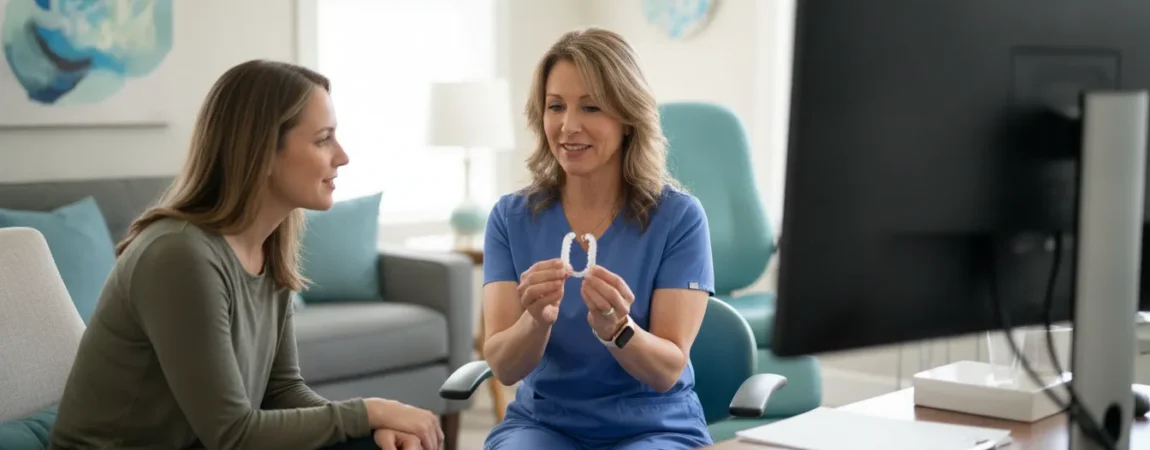
After diagnosis, a dental sleep medicine evaluation can determine whether custom oral appliance treatment fits your clinical situation. The evaluation may include a review of your sleep study, medical history, airway and oral examination, and other relevant assessments. If treatment is appropriate, Spark provides specialized dental care rather than replacing the role of your sleep physician.
For a clearer overview of the first stage, review how sleep apnea is diagnosed. Bringing your test results and physician recommendations to the dental consultation can help the care team discuss suitable next steps with you.
Oral Appliance Therapy for Sleep Apnea Near San Jose
Oral appliance therapy can offer an alternative for appropriate adults with obstructive sleep apnea.
It may also help some patients who cannot tolerate CPAP or prefer another prescribed treatment.
Who May Be a Candidate?
A sleep physician should diagnose obstructive sleep apnea and determine whether an oral appliance is appropriate.
The American Academy of Sleep Medicine recommends considering oral appliances for adults who cannot tolerate CPAP or prefer alternate therapy.
This decision depends on your diagnosis, sleep apnea severity, anatomy, dental health, preferences, and clinical indications.
For that reason, oral appliance therapy is not a universal replacement for CPAP and does not cure sleep apnea.
Instead, it provides a carefully selected treatment pathway for patients whose clinical needs and preferences support it.
Learn more about oral appliance therapy for sleep apnea and how it may fit into a physician-coordinated care plan.
Why Customization and Follow-Up Matter
When prescribed by a sleep physician, the AASM guideline suggests a qualified dentist use a custom, titratable appliance.
A titratable design allows measured adjustments as your treatment progresses.
Spark evaluates relevant clinical factors before selecting among more than 100 FDA-approved custom oral device options.
Dental oversight helps monitor dental side effects and bite changes during treatment.
Follow-up appointments may include device adjustments and communication with your medical providers.
The sleep physician may also arrange follow-up sleep testing to confirm or improve treatment effectiveness.
This monitoring helps your care team evaluate whether the appliance is addressing your diagnosed condition.
Explore custom oral devices to understand how individualized selection supports sleep apnea care near San Jose.
Why Choose a Specialized Sleep Dentist in San Jose
Sleep-disordered breathing requires more than selecting an appliance from a catalog. A specialized dental sleep medicine practice evaluates your health, anatomy, goals, and existing sleep study before recommending dental treatment.
An individualized evaluation supports thoughtful treatment planning
At Spark Sleep Solutions, evaluation may include your medical history, airway and oral examinations, TMJ assessment, airway testing, and sleep-study review. These steps help the team understand factors that may affect device selection and comfort.
Device recommendations consider sleep apnea severity, anatomy, dental health, patient preferences, and other clinical indications. This individualized process matters because oral appliance therapy is not appropriate for every patient or every type of sleep-disordered breathing.
Technology can add useful information to the evaluation. Eccovision airway assessment technology supports airway evaluation. Three-dimensional intraoral scanning helps create a detailed digital record for custom device fabrication.
These tools complement clinical judgment. They do not replace physician diagnosis or the treating physician’s role in determining the appropriate sleep care pathway.
Sleep apnea diagnosis is physician-led. Spark coordinates with sleep physicians before dental treatment and can support home sleep testing or in-lab polysomnography pathways according to patient needs. Patients seeking a Bay Area sleep apnea dentist can review how specialized care connects with physician collaboration.
Specialized care also continues after delivery. Follow-up visits allow the team to assess comfort, make device adjustments, and coordinate with medical doctors. Follow-up sleep testing may help the sleep physician confirm or improve treatment effectiveness.
Credentials provide another point of context. Dr. Srujal H. Shah holds dual diplomate credentials as DABDSM and DASBA, reflecting focused training in dental sleep medicine and airway-related care. Learn more about Spark’s dental sleep medicine doctors and their clinical focus.
Services Offered at Our San Jose Location
Your care begins with a detailed review of your health history, symptoms, and previous sleep-related care. The evaluation may include an oral and airway examination, a TMJ assessment, airway testing, review of available sleep-study results, and medical insurance verification. This helps the team understand your needs before discussing whether dental sleep treatment is appropriate.
A coordinated evaluation and treatment process
A sleep physician leads the diagnosis of sleep apnea. If testing is still needed, Spark can coordinate a home sleep testing pathway or an in-lab polysomnography pathway, depending on your physician’s direction and clinical needs. Learn more about how sleep apnea is diagnosed and what information may be needed before oral appliance treatment.
After diagnosis and physician collaboration, the dental evaluation can guide device selection. Factors may include the severity of obstructive sleep apnea, your anatomy, dental health, preferences, and other clinical considerations. When an oral device is appropriate, 3D intraoral scanning can support precise custom fabrication. Eccovision airway assessment technology may also provide additional information during the evaluation. You can explore the available custom oral devices without assuming that one design fits every patient.
Care does not end when the device is delivered. Follow-up appointments allow the team to assess comfort, make adjustments, and coordinate with your medical providers. Follow-up sleep testing may also be part of confirming how well treatment is working. This step-by-step partnership gives San Jose patients a clearer path while keeping diagnosis, dental treatment, and ongoing monitoring connected.
Insurance Coverage: What San Jose Patients Need to Know
Understanding coverage can make the next step in sleep apnea care easier. Spark Sleep Solutions works with medical insurance, not dental insurance, for eligible oral appliance treatment.
Participation may include PPO plans, select HMO plans, Medicare, and Kaiser Permanente. Coverage differs by plan, diagnosis, prescription, network status, and authorization requirements. Verification is specific to each patient and does not guarantee payment.
What Your Coverage Review May Include
| Area | What it means | What to confirm |
|---|---|---|
| Medical plan | Coverage may be available through PPO, select HMO, Medicare, or Kaiser Permanente arrangements. | Confirm that the plan and provider are eligible for your care. |
| Medical coding | E0486 is the medical code used for oral devices for sleep apnea. | Ask whether your plan requires specific documentation or authorization. |
| Clinical records | A physician-led diagnosis and treatment plan help establish medical necessity. | Confirm which sleep-study results, prescription, and records must be submitted. |
The E0486 code identifies the service. It does not promise coverage or a particular benefit. Spark can coordinate with medical doctors and insurance providers during the process.
The American Academy of Sleep Medicine recommends considering prescription oral appliances for adults with obstructive sleep apnea who cannot tolerate CPAP or prefer an alternate therapy. Read the AASM oral appliance guideline for the clinical recommendation.
Insurance questions should be addressed before treatment begins. Ask about eligibility, deductibles, authorization, documentation, and any patient responsibility. Spark’s medical insurance coverage for sleep care page provides additional guidance.
How to Start Sleep Apnea Care in San Jose
A practical path from evaluation to follow-up
Starting care becomes clearer when diagnosis and dental treatment remain separate. A physician diagnoses sleep apnea, while a qualified dental team provides oral appliance treatment.
- Complete a physician-directed sleep evaluation. Discuss symptoms and concerns with your healthcare provider. A doctor decides whether testing belongs in a sleep center or at home with a portable device. Sleep studies can help identify the type and severity of sleep apnea. Learn more about how sleep apnea is diagnosed.
- Schedule a dental sleep medicine consultation. Bring your sleep study results and relevant medical information. Spark’s evaluation may include medical history, airway and oral examinations, TMJ assessment, airway testing, sleep-study review, and insurance verification.
- Review candidacy and device options. The dental team considers your clinical information, dental health, anatomy, and preferences. If oral appliance therapy is appropriate, the team selects a custom device and explains how treatment fits your physician’s care plan.
- Attend adjustments and follow-up visits. Spark provides personalized follow-up and device adjustments while coordinating with medical doctors. Your care team can also determine whether additional sleep testing is appropriate after treatment begins.
This process supports informed decisions without replacing physician care. It also gives San Jose patients a structured way to discuss sleep apnea treatment with both medical and dental professionals.
Frequently Asked Questions
Who diagnoses sleep apnea before treatment begins?
A physician leads the diagnosis, often using a sleep study to identify the type and severity of sleep apnea. The doctor determines whether testing should occur at home with a portable device or in a sleep center. Spark coordinates with your physician and provides dental treatment after diagnosis. The NHLBI explains the role of sleep studies in diagnosis.
Could oral appliance therapy be an option if I cannot tolerate CPAP?
It may be an option for an adult with obstructive sleep apnea who cannot tolerate CPAP or prefers an appropriate alternative. A sleep physician should prescribe the therapy, and a qualified dentist should fit a custom, titratable device. Candidacy depends on factors such as severity, anatomy, dental health, and clinical needs.
What happens during an evaluation for sleep apnea treatment in San Jose?
The evaluation may include a review of your medical history and sleep study, an oral and airway examination, TMJ assessment, airway testing, and insurance verification. If oral appliance therapy is appropriate, the care team selects and adjusts a custom device and coordinates follow-up with your medical providers.
Does medical insurance cover oral appliance therapy?
Coverage varies by plan, eligibility, and authorization requirements. Spark participates in PPO, select HMO plans, Medicare, and Kaiser Permanente arrangements, but each patient’s benefits should be verified. Billing uses medical insurance and medical codes, including E0486 in applicable cases, and the code itself does not guarantee coverage.
Ready to Discuss Sleep Apnea Treatment in San Jose?
A personalized evaluation can help clarify which treatment options may fit your diagnosis, sleep needs, and comfort preferences. Spark Sleep Solutions can coordinate with your sleep physician as you explore oral appliance therapy and other appropriate care pathways.