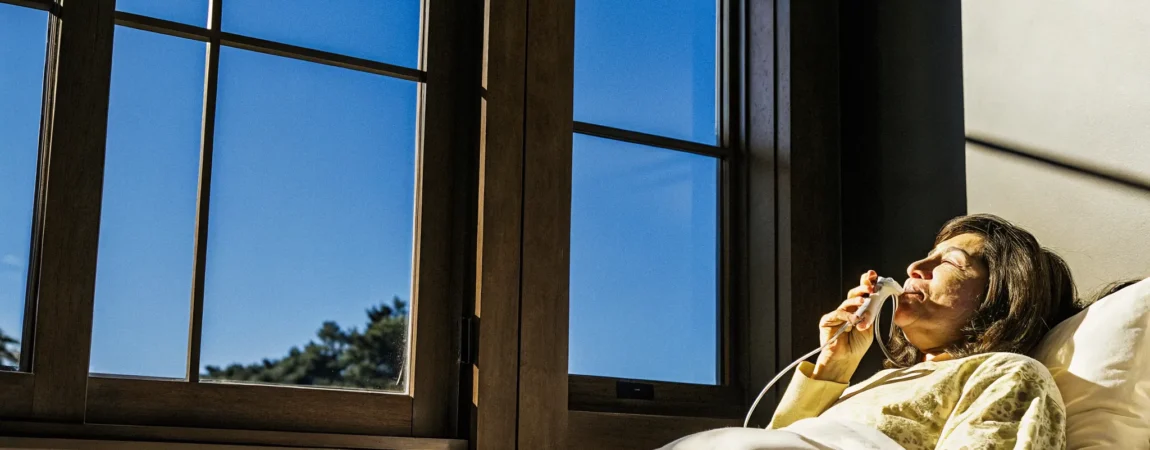
When a CPAP mask, airflow, or nighttime noise keeps you from using treatment consistently, you are not out of options. Difficulty tolerating CPAP is common, with approximately 50% to 70% of patients reporting challenges with compliance. The next step is not to stop treatment, but to identify an approach you can use safely and consistently.
Sleep apnea treatment without cpap may include a custom oral appliance prescribed by a qualified dental sleep medicine provider. Particularly for people with mild to moderate obstructive sleep apnea or those who cannot tolerate CPAP. A sleep physician must confirm the diagnosis first, and oral appliances manage obstructive sleep apnea rather than cure it. Learn more about oral appliance therapy as a CPAP alternative.
Safety depends on the type and severity of sleep apnea, your health history, and follow-up testing. Understanding those factors can help you discuss alternatives with your sleep physician and determine whether a dentist-prescribed device is appropriate.
Is It Safe to Treat Sleep Apnea Without CPAP?
Yes, sleep apnea treatment without CPAP can be safe and medically supported when it begins with an accurate diagnosis and a professional treatment plan. The goal is not to stop treatment. It is to find an approach you can use consistently to manage obstructive sleep apnea (OSA) and protect your sleep and overall health.
CPAP remains an important and effective treatment for many patients. However, difficulty tolerating the equipment is common. Spark Sleep Solution reports that approximately 50% to 70% of sleep apnea patients struggle with CPAP compliance. Problems such as mask discomfort, air pressure, noise, dryness, or difficulty traveling with the equipment may make nightly use challenging. If CPAP is not workable for you, leaving OSA untreated is not the only alternative.
Start with the right diagnosis
Before considering an oral appliance or another non-CPAP option, work with a sleep physician to confirm the diagnosis and type of sleep apnea. Oral appliances are designed for obstructive sleep apnea, not central sleep apnea. And the appropriate treatment depends on factors such as severity, airway anatomy, health history, and prior treatment experience. A physician-led evaluation helps ensure that your plan addresses the actual cause of your disrupted breathing.
Untreated OSA can affect sleep quality, daytime alertness, and broader cardiovascular and metabolic health. That does not mean every patient faces the same risk or that treatment should be approached with fear. It means persistent symptoms deserve measured, professional attention rather than being dismissed.
What the guidelines say about oral appliances
The American Academy of Sleep Medicine supports oral appliance therapy as a treatment option for adults with mild-to-moderate OSA and as an alternative for patients with severe OSA who cannot tolerate CPAP. The guideline emphasizes collaboration between a qualified dentist and sleep physician, along with follow-up to assess whether treatment is working. Read the clinical evidence and guideline discussion.
At Spark Sleep Solution, Dr. Srujal H. Shah brings dual board certifications in dental sleep medicine, DABDSM and DASBA, to the evaluation of patients seeking CPAP alternatives. To compare the considerations involved, review oral appliance therapy as a CPAP alternative. The safest choice is the one selected for your diagnosis and monitored over time, not a device chosen without clinical guidance.
Custom Oral Appliances: The Dentist-Prescribed CPAP Alternative
Custom oral appliances are a leading option for people seeking sleep apnea treatment without CPAP, particularly those with mild-to-moderate obstructive sleep apnea (OSA) or those who cannot tolerate CPAP. Mandibular advancement devices gently position the lower jaw forward during sleep, helping maintain space in the upper airway. They manage OSA rather than cure it, and candidacy should be determined with a sleep physician and qualified dental sleep medicine provider.
Research supports mandibular advancement devices for mild-to-moderate OSA, including meaningful reductions in the Apnea-Hypopnea Index (AHI) for many patients. Certain oral appliances are FDA-cleared for mild-to-moderate OSA and for some patients with severe OSA when CPAP has failed. You can review the evidence in our guide to how effective oral appliances are for sleep apnea.
| Consideration | CPAP | Custom oral appliance |
|---|---|---|
| Comfort | Uses a mask and pressurized airflow. Fit, pressure, and mask sensation can affect tolerance. | A dentist-prescribed device fits over the teeth and is designed for an individual patient. It may be easier for some CPAP-intolerant patients to wear consistently. |
| Portability | Requires a machine, tubing, power, and related supplies. | Small and portable, making it convenient for travel and nights away from home. |
| Noise | The machine and airflow may be noticeable in a shared bedroom. | Quiet during sleep, without a motor or airflow system. |
| Maintenance | Requires regular cleaning of the mask, tubing, humidifier, and machine components. | Requires daily cleaning, periodic dental assessment, and professional checks of fit, oral health, and treatment response. |
| Adherence | Highly effective when used as prescribed, but comfort and equipment burden can make consistent use difficult for some patients. | Its compact, quiet design may support regular use for appropriate candidates. Follow-up helps confirm that treatment remains effective. |
Not all oral appliances are equivalent. A custom-fitted device is made from dental records and adjusted for your anatomy, unlike a generic boil-and-bite product. At Spark Sleep Solution, patients can be evaluated for more than 100 FDA-approved device options. Advanced diagnostics, including Eccovision, MATRx, and 3D intraoral scanning, help inform a personalized treatment plan. For a broader overview, see our guide to an alternative to CPAP machines and our comparison of oral appliance therapy as a CPAP alternative.
When Is Surgery a Necessary Option for Sleep Apnea?
Surgery may be considered when obstructive sleep apnea is severe, conservative treatments have not worked, and testing shows that an operation could address the patient’s specific airway obstruction. The decision is made with a sleep physician and an appropriately qualified surgeon. It should not be based on symptoms alone, because the type and severity of sleep apnea must be confirmed through medical evaluation.
Which surgical options may be discussed?
Depending on the anatomy and treatment history, a specialist may discuss procedures such as uvulopalatopharyngoplasty (UPPP). Which reshapes tissue in the throat, or maxillomandibular advancement (MMA), which repositions the jaw to enlarge the airway. Inspire, an implanted hypoglossal nerve stimulation system, may also be considered for carefully selected adults who meet clinical eligibility requirements and cannot use CPAP. Each option involves its own evaluation, risks, recovery, and long-term follow-up.
Inspire and other operations are invasive and can involve substantial costs. Inspire treatment may exceed $30,000 before insurance considerations, while a custom oral appliance is often quoted in the range of $1,500 to $2,500. Actual patient responsibility varies by eligibility, benefits, and medical coverage, so cost should be confirmed directly with the treating providers and insurer.
Why consider oral appliance therapy first?
For many people with mild to moderate obstructive sleep apnea, or for those who cannot tolerate CPAP, a custom oral appliance can be evaluated before surgery. The device is non-invasive and works by repositioning the jaw to help keep the airway open during sleep. It may also be appropriate for some patients with more severe obstructive sleep apnea when CPAP has failed. But candidacy must be determined by a sleep physician and trained dental sleep medicine provider.
Choosing a non-CPAP treatment does not mean avoiding medical care. Diagnosis, treatment selection, and follow-up sleep testing remain important whether the next step is an oral appliance, CPAP adjustment, or surgical consultation.
Lifestyle Interventions That Reduce Sleep Apnea Severity
Lifestyle changes can support better sleep and may reduce obstructive sleep apnea severity for some people. They should complement, not replace, professional evaluation and treatment. If you suspect sleep apnea, coordinate with a sleep physician for diagnosis before relying on self-directed changes.
- Work toward a healthy weight when appropriate. If excess weight contributes to airway narrowing, gradual weight management may help reduce symptoms and improve overall health. Your physician can help set realistic goals and determine whether additional treatment is still needed as your health changes.
- Try positional therapy. Some people have more breathing events when sleeping on their back. Sleeping on your side, using a body pillow, or discussing a positional therapy device with your care team may help limit back-sleeping. This approach is not appropriate as a stand-alone plan for everyone.
- Avoid alcohol close to bedtime. Alcohol can relax the muscles that help keep the upper airway open and may make nighttime breathing more difficult. Ask your treating clinician how timing and amount may affect your individual symptoms and treatment plan.
- Practice clinician-recommended myofunctional exercises. Exercises for the tongue, jaw, lips, and facial muscles may support better airway function in some patients. Work with a qualified professional so the exercises are selected and performed correctly, rather than assuming any online routine is suitable.
- Keep regular sleep hours. A consistent bedtime and wake time can support more predictable, restorative sleep. Protecting enough time for sleep also makes it easier to notice persistent snoring, pauses in breathing, morning headaches, or daytime sleepiness that warrant medical attention.
These measures may be useful alongside an individualized plan, including oral appliance therapy, when clinically appropriate. They do not fully treat obstructive sleep apnea on their own, and they are not a substitute for follow-up. For context on why addressing the condition matters, see our guide to the health benefits of sleep apnea treatment.
Non-CPAP Treatment Covered by Medical Insurance
For many patients, the cost of a non-CPAP option is not handled through dental insurance. Oral appliance therapy for diagnosed obstructive sleep apnea is typically processed through medical insurance as medically necessary treatment. PPO and HMO plans, Kaiser Permanente, and Medicare may provide coverage, although eligibility, authorizations, deductibles, and benefits vary by plan. Spark Sleep Solution can help you check your insurance coverage before treatment begins.
This distinction matters when you are comparing sleep apnea treatment without cpap. A custom oral appliance is a medical treatment for a diagnosed sleep disorder, not a routine dental device. Spark coordinates directly with medical insurance providers and handles the required paperwork, helping reduce the administrative burden for patients. Depending on your plan and clinical eligibility, coverage can make treatment accessible with minimal out-of-pocket expense. Your care team can explain any remaining patient responsibility before you move forward.
Which medical plans may cover oral appliance therapy?
Coverage commonly includes PPO, HMO, Kaiser Permanente, and Medicare plans. Spark Sleep Solution is also a Kaiser Permanente preferred provider, which may make the verification and care process more straightforward for eligible Kaiser members. Even when a plan lists oral appliance therapy as a covered benefit, the insurer may require a sleep study, physician diagnosis, documentation of CPAP intolerance, or prior authorization. These requirements are normal parts of medical treatment verification.
How to verify your benefits
Start by requesting an appointment and sharing your insurance information. Spark can verify benefits, coordinate with your treating sleep physician, and clarify what documentation your plan requires. Because oral appliances treat obstructive sleep apnea, an appropriate medical diagnosis is essential. Ask about your expected coverage and out-of-pocket responsibility before the appliance is ordered, then review the plan with your care team as your treatment progresses.
Request an appointment to check your medical insurance coverage and discuss whether a custom oral appliance may be appropriate for you.
Starting Non-CPAP Treatment: Your First Steps
Beginning a dentist-prescribed approach to obstructive sleep apnea should be organized, evidence-informed, and coordinated with your medical team. These steps help determine whether a custom oral appliance is appropriate for your diagnosis, anatomy, and treatment goals.
-
Obtain a sleep study and physician-led diagnosis
Start with a sleep study arranged or interpreted by a qualified sleep physician. The results help identify whether you have obstructive sleep apnea, rather than another sleep-related condition, and show the severity of your apnea. A physician-led diagnosis is essential before pursuing dental sleep medicine treatment. Oral appliances are intended for obstructive sleep apnea, not central sleep apnea, so your dental sleep specialist should coordinate care with your treating physician.
-
Schedule a consultation with a dental sleep specialist
Bring your sleep study, treatment history, and any concerns about CPAP to the consultation. A clinician who focuses on dental sleep medicine can discuss whether oral appliance therapy is a reasonable option and explain how it fits into your broader care plan. At Spark Sleep Solution, Dr. Srujal H. Shah holds dual board certifications in dental sleep medicine, DABDSM and DASBA, a rare distinction that reflects specialized training in airway-focused care.
-
Complete a personalized examination and diagnostic evaluation
A personalized dental examination is the first step toward an effective custom-fitted appliance. The evaluation may include an assessment of your teeth, jaw joints, bite, airway, and range of motion. Advanced diagnostics, such as Eccovision airway testing and 3D intraoral scanning, can give the care team detailed information for treatment planning and appliance design. Share any history of TMJ symptoms, dental restorations, or jaw discomfort so the plan can account for your oral health.
-
Receive a custom device and complete titration
Once you are determined to be a candidate, digital records support the design of an appliance fitted to your mouth. The device is delivered with instructions for gradual adjustment, often called titration. This process advances the jaw in measured increments while your comfort and symptoms are monitored. Follow the specialist’s instructions rather than adjusting the appliance independently or relying on a generic boil-and-bite device. For a closer look at the patient journey, read how to get an oral appliance.
-
Attend follow-up visits and confirm ongoing effectiveness
Follow-up care is part of treatment, not an optional final check. Your dental sleep specialist can evaluate comfort, bite changes, jaw health, and appliance fit, while your sleep physician may recommend follow-up testing to assess treatment response. Regular follow-up and physician coordination help ensure the appliance continues to provide effective care over time, as supported by clinical literature on oral appliance therapy (clinical review).
Frequently Asked Questions
Who may be a candidate for an oral appliance?
Oral appliance therapy may be appropriate for adults with diagnosed obstructive sleep apnea who have mild-to-moderate disease or cannot tolerate CPAP. A sleep physician should confirm the diagnosis and severity first, then a qualified dental sleep medicine provider can evaluate your teeth, jaw, airway, and treatment goals. Oral appliances are not intended to treat central sleep apnea.
How does an oral appliance work while I sleep?
A custom mandibular advancement device gently holds the lower jaw in a forward position, helping keep the upper airway open during sleep. It is dentist-prescribed and adjusted for your anatomy rather than purchased as a generic boil-and-bite device. Follow-up helps confirm comfort, fit, and ongoing treatment effectiveness.
Can lifestyle changes replace an oral appliance or CPAP?
Weight management, side-sleeping or other positional strategies, limiting alcohol near bedtime, and clinician-guided myofunctional exercises may help reduce apnea severity for some people. They should not replace prescribed treatment without medical guidance. Discuss these options with your sleep physician, especially if you continue to have symptoms.
Is oral appliance therapy covered by insurance?
Coverage depends on your diagnosis, plan, and medical-necessity requirements, but oral appliance therapy is generally processed through medical insurance. Including some PPO, HMO, Kaiser, and Medicare plans, rather than dental insurance. Ask the practice to verify your benefits before treatment and clarify any required sleep-study documentation.
Ready to Explore Sleep Apnea Treatment Without CPAP?
If CPAP has not worked well for you. A personalized evaluation can help clarify whether a dentist-prescribed oral appliance is an appropriate treatment option for your obstructive sleep apnea. Spark Sleep Solution can review your needs and help you understand the next step. Request An Appointment to talk with the team about your options.