
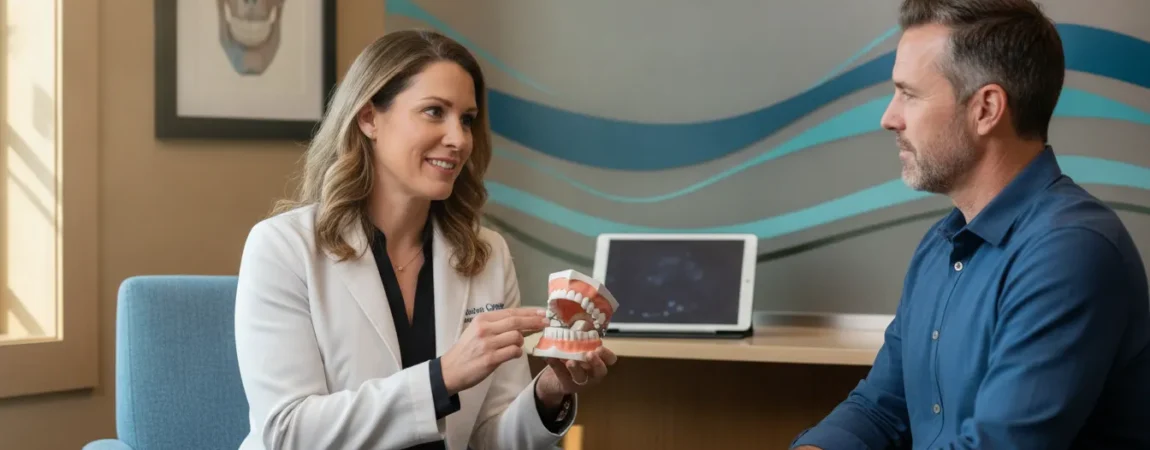
TMJ disorder treatment and management is usually a coordinated, step-by-step process rather than one procedure that works for everyone. A complete plan may include a careful evaluation, conservative care, attention to clenching or grinding, an individualized oral device when appropriate, and follow-up to monitor comfort and jaw function. The goal is to reduce symptoms and support healthy function without promising a universal solution.
Temporomandibular disorders, often called TMD, can involve the jaw joints, chewing muscles, or both. Because facial pain can have more than one cause, a qualified clinician should evaluate your symptoms before you select a device or begin a treatment plan. Spark Sleep Solutions provides specialized care for TMJ disorders and orofacial pain across the Bay Area.
What Does a Complete TMJ Treatment Plan Look Like?
A complete TMJ treatment plan connects diagnosis, symptom relief, behavior and muscle care, device decisions, and follow-up. The plan should reflect your symptoms, examination findings, medical history, jaw function, and goals. It may be adjusted as your response becomes clearer, rather than following a fixed schedule for every patient.
1. A focused evaluation and baseline
Your clinician may ask when the pain began, what makes it worse, whether your jaw locks or clicks, and whether you clench or grind your teeth. The evaluation may include observing how your jaw opens and closes, checking tenderness and range of motion, and reviewing relevant dental or medical history. Imaging is not automatically needed for every patient, but a clinician may recommend it when the findings suggest a joint or structural concern.
Keeping a short symptom record can make the first visit more useful. Note the location of discomfort, morning jaw soreness, headaches, chewing limitations, clicking or locking, sleep changes, and habits such as gum chewing or daytime clenching. This information helps separate a temporary flare from a pattern that needs more structured care.
2. Conservative care before more invasive options
Many management plans begin with reversible measures. Depending on your assessment, these may include a temporary soft diet, avoiding gum chewing, moist heat or cold, gentle jaw exercises, relaxation strategies, physical therapy, or medication discussions with an appropriate medical professional. These steps are not a substitute for an evaluation, and exercises should not force painful movement.
The National Institute of Dental and Craniofacial Research explains that TMD care may include self-management, physical therapy, medicines, and behavioral health approaches. Read the NIDCR overview of TMD for general education, then discuss how the information applies to your symptoms with your healthcare professional.
3. An individualized device decision when appropriate
A device may be considered when your examination and goals support it. The right design depends on what the device is meant to do, your bite and jaw movement, the condition of your teeth, and whether sleep-disordered breathing is also part of the clinical picture. A device should be fitted and monitored by a qualified professional, not selected only by appearance or an online product description.
4. Follow-up and adjustment
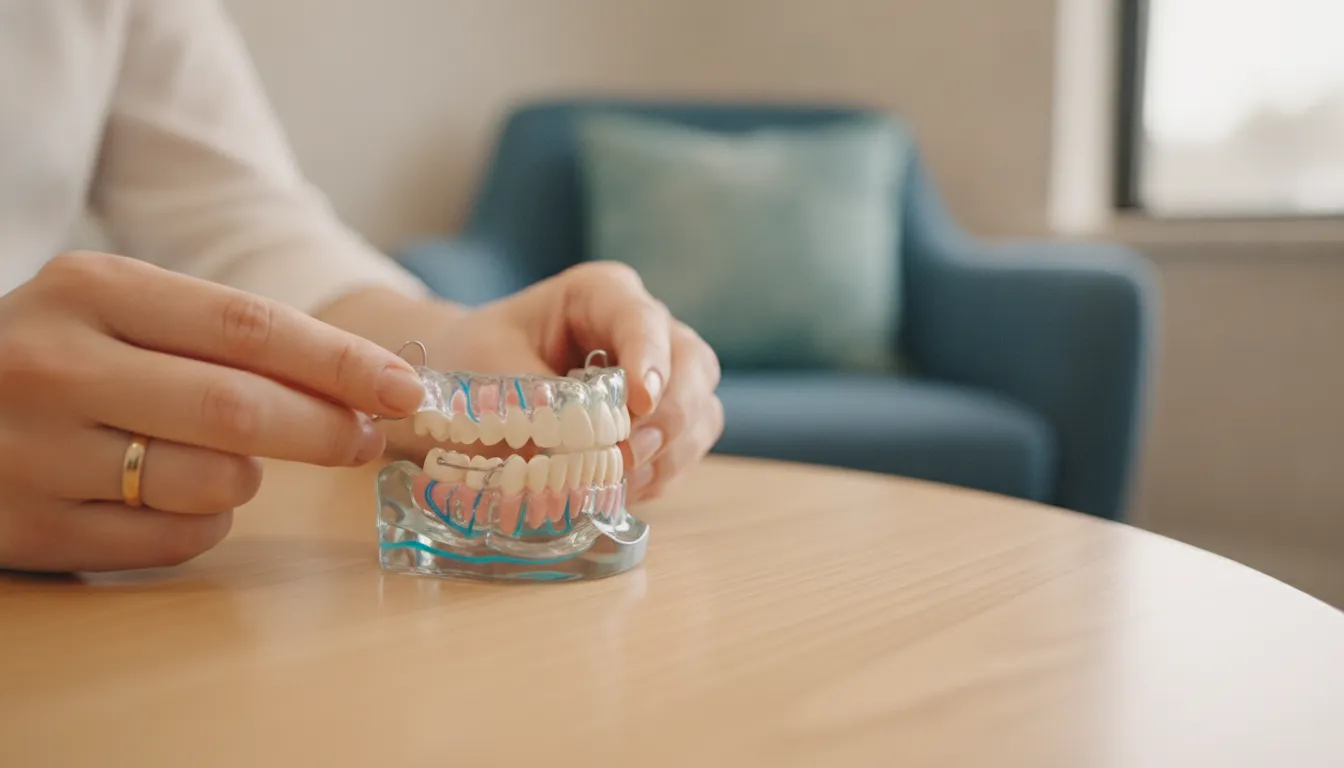
Follow-up is part of treatment, not an optional afterthought. Your clinician may review pain levels, jaw movement, chewing comfort, tooth or bite changes, wear comfort, and any new symptoms. If a device is used, adjustments may be needed. If symptoms do not improve as expected, the plan may need to be reconsidered or coordinated with another healthcare professional.
For a broader overview of available care, see Spark Sleep Solutions’ TMJ disorder treatment options guide. This management article focuses on how care is coordinated over time, while that guide explains the wider menu of possible options.
Bruxism and TMJ Disorder: How Teeth Grinding Complicates Treatment
Bruxism means repeated teeth clenching or grinding, while TMJ disorders describe pain or dysfunction involving the jaw joints and chewing muscles. Bruxism can place additional load on those structures, but it does not prove that every jaw symptom is caused by grinding. A useful plan identifies both conditions and addresses the factors that are relevant to you.
Bruxism can occur while you are awake or asleep. Daytime clues may include holding your teeth together, tightening your jaw during concentration, or noticing muscle fatigue. Sleep-related clues can include morning jaw soreness, tooth wear, a partner noticing grinding, or a device that feels uncomfortable when you wake. These signs are not a diagnosis by themselves.
Management may include awareness training, reminders to keep the teeth apart when the jaw is at rest, stress or sleep support, dental evaluation, and careful consideration of an oral device. If you suspect sleep-related bruxism or have symptoms of sleep apnea, discuss those concerns with your treating healthcare professional. A device intended for TMJ care is not automatically the same as a custom oral appliance used for obstructive sleep apnea.
What Is the Difference Between Bruxism and TMJ Dysfunction?
Bruxism is a behavior or activity involving clenching and grinding. TMJ dysfunction is a broader clinical problem involving jaw pain, limited movement, joint symptoms, or muscle-related discomfort. They can occur together, but one does not automatically establish the other. Distinguishing them helps your clinician choose a safer and more focused management plan.
| Concern | What it describes | Why it matters for management |
|---|---|---|
| Bruxism | Clenching or grinding while awake, asleep, or both | May increase muscle fatigue or joint load and may call for habit awareness, sleep assessment, or a carefully selected device. |
| TMJ dysfunction | Pain, stiffness, limited opening, joint sounds, locking, or chewing difficulty involving the jaw system | Calls for an evaluation of the joint, muscles, bite, movement, and possible contributing factors. |
| Overlap | Bruxism and TMD symptoms may be present at the same time | The plan should address the findings that are actually present rather than assume one cause. |
If you have persistent pain, a changing bite, or repeated locking, do not rely on a generic online explanation to identify the cause. A clinician can determine whether the symptoms fit a muscle pattern, a joint pattern, a dental problem, or a combination that needs coordinated care.
Can an Oral Appliance Help TMJ?
A generic oral guard may help some people, but the term covers many different products and does not describe one standardized treatment. Whether an appliance is appropriate depends on the diagnosis, design, fit, material, bite, and follow-up plan. A generic guard may not address your specific problem, and an appliance that feels comfortable is not automatically clinically appropriate.
| Device or approach | Key question | Management consideration |
|---|---|---|
| Over-the-counter guard | Does it fit without changing comfort or jaw movement? | Use caution with self-treatment. Stop and seek advice if pain, locking, bite changes, or other symptoms develop. |
| Custom device for selected TMJ care | What is the clinical purpose and how will it be monitored? | Design and adjustment should follow a professional evaluation and a defined follow-up plan. |
| Custom oral appliance for obstructive sleep apnea | Has sleep apnea been medically diagnosed and is this device appropriate? | Sleep apnea treatment requires coordination with a sleep physician. This is a different clinical goal from treating jaw pain alone. |
Spark Sleep Solutions uses custom oral devices as part of specialized dental sleep medicine care, but no device is right for every patient. Learn more about custom oral appliance therapy, and ask whether your jaw symptoms, dental health, and sleep concerns should be evaluated together.
Long-Term TMJ Management: Follow-Up and Maintenance
Long-term TMJ management means watching patterns, protecting function, and revisiting the plan when symptoms change. It is not simply wearing a device indefinitely. Follow-up may be more frequent while a treatment is being adjusted and less frequent once symptoms and function are stable, but the schedule should be individualized by your clinician.
- Track pain, stiffness, headaches, chewing comfort, and jaw opening over time.
- Notice whether daytime clenching, poor sleep, stress, or certain foods precede a flare.
- Keep scheduled evaluations if you use a custom device or have recurring symptoms.
- Report a new bite change, tooth sensitivity, device discomfort, or worsening joint symptoms promptly.
- Continue the home-care, exercise, or relaxation plan recommended for your specific findings.
- Ask which symptoms should be managed by a dentist, physician, physical therapist, or another specialist.
Good maintenance also includes knowing when the original plan no longer fits. New trauma, a persistent change in bite, increasing limitation, swelling, fever, or repeated locking deserves timely professional attention. Severe or rapidly worsening symptoms should be assessed promptly rather than managed only at home.
For patients who want to understand the self-care portion in more detail, Spark Sleep Solutions also offers a guide to TMJ disorder home treatment. Use that resource to support, not replace, individualized clinical care.
Setting Realistic Expectations for TMJ Treatment Outcomes
Realistic TMJ treatment goals are improved comfort, better jaw function, easier chewing, fewer disruptive symptoms, and a plan you can follow safely. The timeline varies because TMD can involve different tissues, habits, stressors, and medical or dental conditions. Improvement may be gradual, and a plan may need adjustments rather than a single final step.
Be cautious of any claim that one product will permanently resolve every TMJ problem. Evidence and clinical recommendations differ by diagnosis and by whether pain is acute or chronic. The American Academy of Family Physicians describes a conservative, multimodal approach that can include education, jaw rest, physical therapy, medication considerations, and selected appliances. Review its clinical overview of diagnosing and treating TMD for general background.
Your expectations should also include shared decision-making. Ask what the proposed treatment is intended to change, how success will be measured, what side effects or warning signs to watch for, and what the next step will be if your symptoms do not improve. These questions make it easier to choose care based on your needs rather than on a generic promise.
When Should You See a TMJ Specialist?
Consider a professional evaluation when jaw pain, facial pain, stiffness, chewing difficulty, repeated clicking with discomfort, locking, or suspected bruxism persists or interferes with daily life. An evaluation is especially useful when you are unsure whether symptoms come from the joint, chewing muscles, teeth, sleep, or more than one factor.
Seek timely medical attention for severe swelling, fever, trauma, sudden inability to open or close the jaw, new neurologic symptoms, or rapidly worsening pain. A dental sleep medicine practice can evaluate dental and jaw factors, coordinate with other providers, and help determine whether custom oral-device care is appropriate. Spark Sleep Solutions’ TMJ and orofacial pain center explains the practice’s evaluation and treatment pathway in the Bay Area.
Frequently Asked Questions About TMJ Treatment and Management
TMJ disorder treatment and management is individualized. The answers below explain common planning questions, but they cannot diagnose the cause of your symptoms or replace an examination.
Can TMJ disorder go away permanently?
No single outcome applies to every TMJ disorder. Many patients can improve comfort and function with an appropriate combination of education, conservative care, behavior changes, physical therapy, medication guidance, or a selected device. Your clinician should explain the expected goals and how progress will be monitored.
Is bruxism the same as TMJ disorder?
No. Bruxism refers to clenching or grinding, while TMJ disorders involve pain or dysfunction in the jaw joints and chewing muscles. They can occur together, but bruxism alone does not confirm TMD. A clinical evaluation helps identify which findings are present and relevant to your care.
Should I buy a generic oral guard for jaw pain?
Ask a qualified clinician before relying on an over-the-counter guard for ongoing jaw pain. Different devices have different designs and purposes, and a poor fit or inappropriate design may not address the problem. A professional can determine whether a device is appropriate and how it should be monitored.
How long does TMJ treatment take?
The timeline depends on the diagnosis, symptom duration, contributing habits, treatment selected, and response to care. Some symptoms may settle with conservative measures, while persistent or complex symptoms may require staged care and follow-up. Your clinician can define a reasonable reassessment point for your plan.
Can a sleep apnea oral appliance also treat TMJ disorder?
Not automatically. A custom oral appliance for obstructive sleep apnea has a different primary purpose from a device selected for jaw pain or bruxism. If you have both sleep concerns and TMJ symptoms, tell your sleep physician and dental sleep specialist so the evaluation and device decision are coordinated.
Effective care starts with an accurate evaluation and a management plan that fits your symptoms, goals, and health history. Spark Sleep Solutions specializes in dental sleep medicine, TMJ disorders, and orofacial pain, with care coordinated around each patient’s needs. Dr. Srujal Shah holds dual board certifications in dental sleep medicine and sleep-related breathing disorders, supporting the practice’s specialized approach.