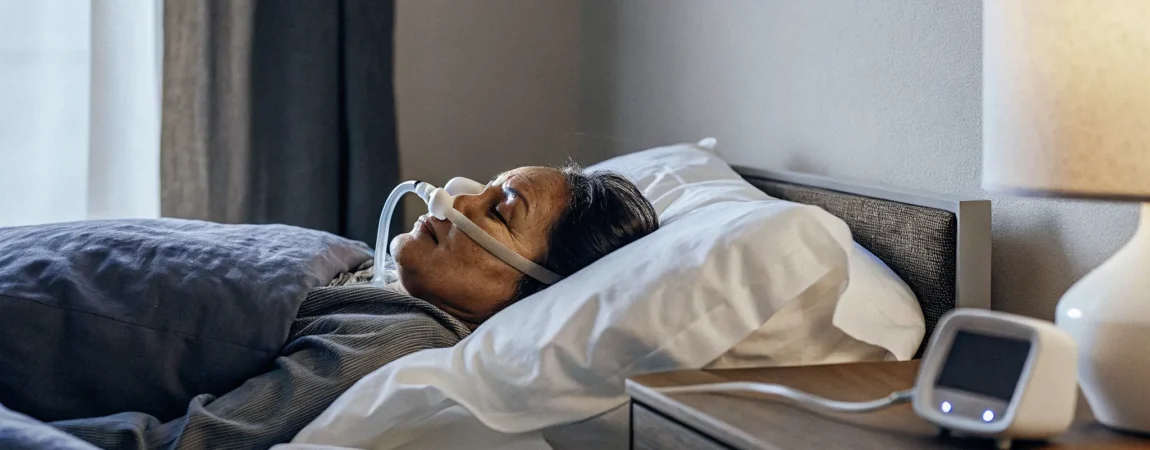
Chronic snoring and gasping for air in your sleep are not merely loud night habits. These symptoms disrupt your rest and can trigger dangerous heart problems if you do not get help.
Knowing sleep apnea symptoms and treatment options is the first step to reclaim your rest and protect your physical health. Common warning signs include loud snoring, waking up gasping for air, and feeling very tired during the day. Although about one billion people worldwide have obstructive sleep apnea, up to nine in ten remain completely unaware they have it. According to research from Johns Hopkins Medicine, leaving this condition untreated can lead to high blood pressure and other serious risks. Fortunately, custom oral appliances offer an easy, medical-insurance-covered way to clear your airway and protect your heart without a CPAP machine.
Schedule a consultation to explore your sleep apnea symptoms and treatment options with a board-certified dental sleep specialist today.
If you are ready to reclaim your health, you must first learn what is happening to your body during the night. Let us begin by defining how this sleep problem impacts your breathing.
Sleep apnea symptoms and treatment options: What Is Sleep Apnea? Understanding the Two Types
Sleep apnea is a common but serious sleep disorder. When you have this condition, your breathing stops and starts many times while you sleep. These pauses in breathing, called apnea events, can disrupt your sleep and lower the oxygen in your body. It is important to know that sleep apnea is a treatable condition, not a curable one. With proper management, you can restore healthy sleep and protect your overall health.
Research shows that about 1 billion people between ages 30 and 69 worldwide have obstructive sleep apnea. During sleep, these breathing pauses last for more than 10 seconds and occur at least 5 times an hour. Yet most people remain undiagnosed because they do not recognize the symptoms.
Obstructive sleep apnea
According to the National Heart, Lung, and Blood Institute, OSA occurs when your throat muscles relax and block your airway during sleep. When these muscles relax, your tongue and soft tissues slide back and stop the flow of air into your lungs. Your body must then wake up briefly to restart your breathing. This struggle often causes loud snoring, gasping, and choking. Many people do not remember these brief wake-ups, but they prevent deep, restorative sleep. If these symptoms sound familiar, learn about the early warning signs of sleep apnea as the first step toward getting help.
Central sleep apnea
According to the National Heart, Lung, and Blood Institute, CSA occurs when the brain fails to signal the muscles that control your breathing. Your airway is open, but your muscles do not make the effort to breathe. Custom oral devices help keep your throat open during sleep, making them effective for OSA but not for CSA. That is why a correct diagnosis from a sleep physician is essential before any treatment begins. At Spark Sleep Solutions, we coordinate directly with Bay Area sleep doctors to ensure you receive the right care for your specific condition.
Compare oral appliance therapy vs CPAP to find the right treatment for your specific type and severity of sleep apnea.
Sleep Apnea Symptoms: Recognizing the Warning Signs
Many people live with poor sleep for years without knowing why. They might feel tired every day or wake up with a headache. Often, the underlying problem is undiagnosed sleep apnea. Learning to recognize the full range of sleep apnea symptoms and treatment options can help you get the care you need before more serious health problems develop.
Nighttime Warning Signs
The clearest signs of sleep apnea happen during the night. A bed partner is often the first to notice these symptoms. They may hear you choke or gasp for air while you are asleep. According to Mayo Clinic, gasping or choking sounds are clear signs of blocked breathing. When your airway closes, your body has to work hard to get air, forcing you to wake up briefly. These brief awakenings can happen dozens of times each hour. You might not remember them in the morning, but they destroy your sleep quality. You may also wake up with a dry mouth, sore throat, or the need to urinate multiple times during the night.
Daytime Sleep Apnea Symptoms
The effects of poor sleep carry into your waking hours. A hallmark sign is excessive daytime sleepiness. You might find yourself drifting off while reading, watching TV, or even driving. This is not ordinary tiredness. It is a deep fatigue that does not improve with naps. Poor sleep quality also affects cognitive function. Many people experience morning headaches, irritability, mood swings, and difficulty concentrating at work. Memory problems and reduced productivity are also common. These mental changes make daily tasks feel far harder than they should.
Snoring vs Sleep Apnea
People often confuse snoring with sleep apnea. According to the National Heart, Lung, and Blood Institute, loud snoring is a major sign of obstructive sleep apnea, but not everyone who snores has the condition. Snoring happens when throat tissue vibrates as air flows past. With sleep apnea, the airway does not just vibrate. It closes fully or partially, cutting off your breath entirely. If your snoring is loud enough to wake others and you also experience daytime fatigue or gasping episodes, you should seek a professional evaluation.
Causes and Risk Factors for Sleep Apnea
While anyone can develop sleep apnea, certain factors significantly raise your risk. Excess weight is the leading cause of airway obstruction. When you gain weight, fat can accumulate in your throat and narrow the airway. Other physical features such as a small lower jaw, a large tongue, or low-hanging soft tissue can also narrow the throat. According to Johns Hopkins Medicine, a neck size greater than 16 inches for women and 17 inches for men is a notable risk factor.
Age and gender also play a role. Your risk of sleep apnea increases as you get older. Men face a higher risk than women, though the gap narrows after menopause. Your daily habits matter too. Smokers are three times more likely to have obstructive sleep apnea than people who have never smoked because smoking causes swelling in the throat. Drinking alcohol or taking sedatives before bed relaxes throat muscles, making airway collapse more likely. If you have family members with sleep apnea, your own risk is higher due to shared anatomical traits like jaw structure.
The encouraging news is that many risk factors are modifiable. Losing weight, quitting smoking, and avoiding alcohol before bed can meaningfully reduce your symptoms. Understanding the health benefits of sleep apnea treatment can motivate you to take these steps and seek professional care.
How Is Sleep Apnea Diagnosed? Sleep Studies and AHI Scores
Getting a clear diagnosis is essential before any treatment can begin. A doctor starts by reviewing your health history and symptoms. According to Mayo Clinic, a sleep apnea diagnosis is based on your reported symptoms, sleep history, and physical examination. To confirm the diagnosis, you must complete a sleep study. According to the National Heart, Lung, and Blood Institute, a sleep study tracks your brain waves, heart rate, oxygen levels, and breathing patterns throughout the night. This can be done in a sleep lab or at home with a portable device.
The key result is your Apnea-Hypopnea Index (AHI) score. This measures how many times your breathing pauses per hour of sleep. According to Johns Hopkins Medicine, doctors use this index to grade your sleep apnea severity.
Your AHI score falls into one of these ranges:
- Normal sleep: AHI less than 5
- Mild sleep apnea: AHI between 5 and 15
- Moderate sleep apnea: AHI between 15 and 30
- Severe sleep apnea: AHI greater than 30
Your AHI score, along with your oxygen desaturation levels, determines the severity of your condition and guides treatment decisions. At Spark Sleep Solution, we work closely with Bay Area sleep doctors to coordinate your care. If your study confirms mild to moderate sleep apnea, or if you have tried CPAP and cannot tolerate it. Custom oral appliance therapy may be the ideal next step for you.
Discover how oral appliance therapy works and whether it is the right treatment for your diagnosed sleep apnea severity.
Health Risks of Untreated Sleep Apnea
Every time your airway closes during sleep, your blood oxygen drops. This triggers the release of stress hormones that raise your heart rate and constrict your blood vessels. According to the National Heart, Lung, and Blood Institute, untreated sleep apnea significantly increases your risk for high blood pressure, stroke, heart failure, and irregular heart rhythms.
Sleep apnea also disrupts your metabolism. The constant physiological stress can make your cells resistant to insulin, raising your risk of type 2 diabetes. It alters hunger-regulating hormones, making weight management more difficult and creating a cycle where weight gain worsens sleep apnea. Your brain suffers too. The frequent awakenings prevent you from reaching the deep sleep stages needed for memory consolidation and cellular repair. Over time, many people with untreated sleep apnea develop depression or worsening anxiety.
The good news is that treatment reverses many of these risks. When you restore healthy sleep, blood pressure often drops, insulin sensitivity improves, and your mood lifts. If you snore, gasp, or feel exhausted during the day, seeking evaluation and exploring sleep apnea symptoms and treatment options can protect your long-term health.
CPAP Therapy: The Gold Standard and Its Limitations
CPAP is the most common and clinically validated treatment for moderate to severe sleep apnea. The machine delivers a steady stream of pressurized air through a mask to keep your airway open throughout the night. It is highly effective when used consistently. However, many patients struggle with the therapy. The Mayo Clinic notes that some people find CPAP therapy cumbersome and uncomfortable. Clinical data shows that between 50% and 70% of sleep apnea patients cannot tolerate their CPAP machine long-term. Common complaints include mask discomfort, claustrophobia, noise from the motor, skin irritation, and difficulty traveling with the equipment.
| Feature | CPAP Therapy | Oral Appliance Therapy |
|---|---|---|
| Comfort | Can feel bulky or restrictive | Comfortable and custom-fitted |
| Compliance | Low compliance due to discomfort | High compliance, easy to wear |
| Portability | Requires power and extra bags | Fits in your pocket |
| Noise Level | Constant motor hum | Completely silent |
| Ideal For | Severe sleep apnea patients | Mild to moderate sleep apnea |
If you have tried CPAP and found it difficult to use consistently, you are not alone. There are effective alternatives that do not require a mask, a hose, or access to electricity. For many patients, a custom oral appliance offers the same therapeutic benefit without the daily frustration.
Oral Appliance Therapy: An Effective CPAP Alternative
Custom oral appliances provide a quiet, compact, and highly effective alternative for patients who cannot tolerate CPAP. These devices fit in your mouth like an orthodontic retainer or sports mouthguard, but they serve a very different purpose. An oral appliance works by gently repositioning your lower jaw forward to keep your airway open throughout the night. This simple forward shift prevents your tongue and soft throat tissues from collapsing backward and blocking your breath.
The National Heart, Lung, and Blood Institute recommends these appliances for mild to moderate obstructive sleep apnea, especially for patients who cannot tolerate CPAP. The American Academy of Sleep Medicine also endorses oral appliance therapy for adults with CPAP intolerance. At Spark Sleep Solutions, Dr. Srujal Shah holds dual board certifications from the American Board of Dental Sleep Medicine (DABDSM) and the American Sleep and Breathing Academy (DASBA). He is one of few dentists in the world with both credentials, ensuring your care is guided by a recognized expert.
Spark Sleep Solutions uses advanced 3D intraoral scanning to capture a precise digital map of your mouth. This process is quick, comfortable, and eliminates messy dental impressions. Our team works with over 100 FDA-approved device designs to match your unique airway and jaw anatomy. These devices are highly portable, completely silent, and require no power source, making them ideal for travel. And because sleep apnea is a medical condition, treatment is billed through your medical insurance, not dental insurance. Our team works with most major medical insurance plans to help maximize your coverage.
Request an appointment at Spark Sleep Solutions to learn if custom oral appliance therapy is the right solution for your sleep apnea.
Additional Treatment Options: Lifestyle Changes and Medical Interventions
While custom oral appliances are highly effective, combining them with healthy lifestyle habits can further improve your sleep quality. Understanding the full range of sleep apnea symptoms and treatment options helps you build a comprehensive approach to your health.
- Maintain a healthy weight: Losing even 10% of your body weight can reduce the severity of sleep apnea by decreasing fatty tissue around your throat. Regular exercise also strengthens your cardiovascular system and improves sleep quality.
- Practice positional therapy: Sleeping on your back often worsens sleep apnea because gravity pulls your throat tissues downward. Side sleeping helps prevent airway collapse. Special pillows or wearable devices can help you maintain side sleeping throughout the night.
- Avoid alcohol and sedatives: Drinking alcohol or taking sedatives within three hours of bedtime relaxes your throat muscles, making airway collapse more likely. Eliminating these substances before bed can produce noticeable improvement in your breathing.
- Consider surgical alternatives: For patients who do not respond to conservative treatments, surgical options such as uvulopalatopharyngoplasty (UPPP) or hypoglossal nerve stimulation (Inspire) exist. However, these procedures carry risks and require recovery time. Many patients prefer non-invasive alternative sleep apnea treatments like custom oral appliances that do not require surgery, implants, or recovery.
Frequently Asked Questions
What is the difference between snoring and sleep apnea?
Snoring is the sound of relaxed throat tissues vibrating as you breathe. Sleep apnea is a medical condition where your airway fully collapses and blocks breathing. According to the National Heart, Lung, and Blood Institute, loud snoring is common, but not everyone who snores has sleep apnea. If you gasp or choke at night, you likely have sleep apnea and should seek a professional evaluation.
Can a dentist diagnose sleep apnea?
No, only a medical doctor or sleep physician can officially diagnose sleep apnea. However, a qualified dental sleep specialist can help identify the right treatment after you receive a diagnosis. At Spark Sleep Solutions, we coordinate directly with Bay Area sleep physicians to ensure you receive proper testing. Once diagnosed, our team can fit you with a custom oral appliance as an effective CPAP alternative.
Is oral appliance therapy an effective CPAP alternative?
Yes, custom oral devices are highly effective for many patients. The American Academy of Sleep Medicine recommends oral appliance therapy for adults with mild to moderate sleep apnea who cannot tolerate CPAP. These custom devices gently position your jaw forward to keep your airway open throughout the night. They are easier to use, travel with, and maintain than a CPAP machine.
Does medical insurance cover sleep apnea treatment?
Yes, medical insurance almost always covers custom oral appliances for sleep apnea treatment. Since sleep apnea is a medical condition, treatment is billed through your medical insurance, not dental insurance. Spark Sleep Solutions works with most major providers, including PPO plans, HMO plans, Kaiser, and Medicare, to help you maximize your coverage.
Ready to Treat Obstructive Sleep Apnea and Snoring?
Ignoring obstructive sleep apnea and snoring can damage your physical health, raise your blood pressure, and lead to severe daily exhaustion. Starting treatment now helps you avoid these serious medical risks and restores the energy you need to live your best life. Our clinical team will work directly with your sleep doctor to verify your medical insurance coverage and select the optimal custom device for your anatomy and breathing needs.
Request an appointment with our team and take the first step toward better sleep. Call us at (408) 490-0182 to schedule your consultation. We are ready to help you find the comfortable, effective CPAP alternative that works best for your lifestyle and health needs.