
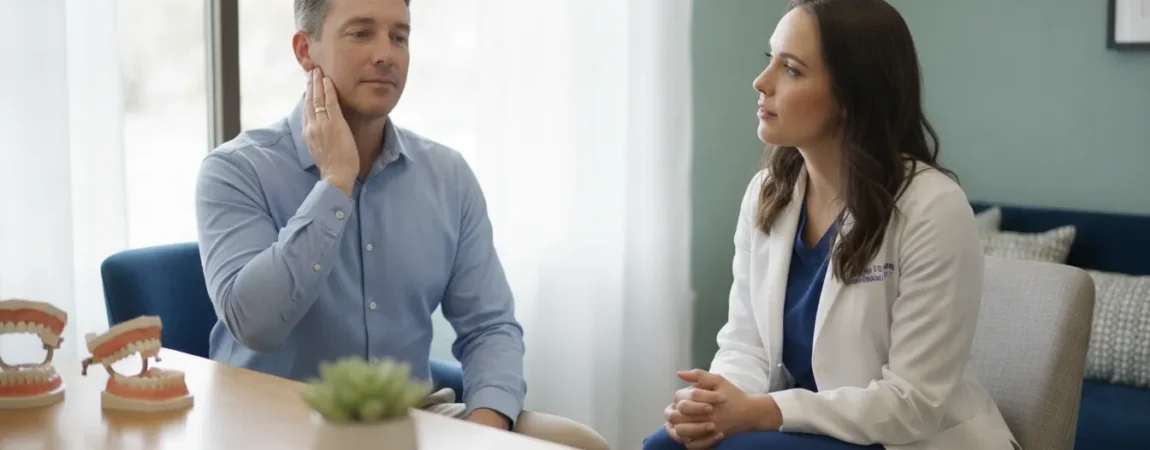
Ringing or buzzing can be distracting, especially when it appears alongside jaw pain, clicking, or difficulty chewing. Noticing both symptoms is a reason to ask questions, but it does not by itself show that one is causing the other.
The tinnitus and TMJ connection is possible, but not certain. Research has found an association between tinnitus and temporomandibular disorders (TMD). Evidence remains limited. It cannot establish the cause of an individual’s tinnitus. A qualified clinician can assess ear symptoms. A jaw-focused evaluation may be appropriate when jaw symptoms are present. See the systematic review and NIDCD guidance.
Learn more about TMJ treatment options. Tinnitus has many possible explanations. Do not assume a jaw disorder is the answer. Do not skip medical assessment. This article explains what research does and does not show.
Why the Tinnitus and TMJ Connection Is Possible but Not Certain
Research links temporomandibular disorders (TMD) and tinnitus in some studies, but this does not mean a jaw disorder causes every person’s ear ringing. Tinnitus has several possible explanations. Two conditions occurring together do not prove one caused the other.
A systematic review of tinnitus, jaw, and neck disorders found a bidirectional association between tinnitus and TMD. Its authors described the evidence as weak. They noted study limitations, including inconsistent methods and possible publication bias. The review supports considering jaw symptoms when someone has tinnitus. It also leaves room for other explanations and uncertainty.
That distinction matters in real life. If your jaw hurts and your ears ring, ask whether the symptoms may be related. An online checklist cannot confirm the cause. A clinician needs to understand your hearing history, other ear symptoms, jaw function, medications, and overall health before suggesting next steps.
The relationship may work in more than one direction. Jaw or neck discomfort can occur alongside tinnitus. Stress related to a persistent sound may also lead some people to clench their jaw. A possible connection is a reason for thoughtful evaluation, not a reason to skip assessment of the ears and hearing.
For a broader overview, see Spark’s TMJ treatment options. A jaw-focused visit can assess jaw symptoms. Discuss tinnitus with a medical clinician or hearing specialist.
How Jaw Movement Can Influence the Perception of Ear Ringing
The temporomandibular joints sit just in front of the ears. They help the lower jaw move for speaking and chewing. This nearby anatomy helps explain why researchers consider possible interactions between jaw and auditory sensory systems. Closeness alone does not show that a person’s tinnitus is coming from the jaw.
Tinnitus movement changes may be called somatosensory tinnitus. The National Institute on Deafness and Other Communication Disorders uses that term for tinnitus altered by some movements or touch. A review also describes changes during jaw, head, and neck movements in some people.
Modulation means a perceived sound changes in loudness or quality for a moment. It does not prove the jaw created tinnitus. Another cause may be present. A clinician may consider movement-related changes with hearing history and other symptoms.
Researchers continue to study possible interactions between jaw, neck, and hearing signals. These explanations do not support self-diagnosis. Avoid repeatedly clenching or straining your jaw to test the sound, especially if it hurts. If you notice a consistent change during ordinary movement, note it and share it with your clinician.
See the National Institute on Deafness and Other Communication Disorders guidance on tinnitus for an overview of possible causes. If you also have jaw discomfort or restricted movement, a TMJ assessment may clarify that part of the picture.
What Clues May Suggest a TMJ Contribution to Tinnitus?
No symptom confirms a TMJ cause for tinnitus. Still, some observations are useful to share during an evaluation. Notice whether ringing or buzzing changes when you move your jaw in everyday activities such as speaking or chewing. This may suggest sensory influence, but it is not a diagnostic test.
Ear ringing with jaw pain, muscle tenderness, clicking, or trouble opening the mouth may be worth discussing. These details can help a clinician decide whether to assess the jaw. They do not rule out hearing-related or other medical causes.
Tinnitus has varied sounds and possible causes. It may be perceived in one or both ears. Its sound alone cannot always identify the cause. Jaw symptoms are only one part of an evaluation.
TMJ disorders can involve the jaw joint and muscles used for chewing. Spark’s overview of common TMJ symptoms and causes can help you describe jaw concerns. It cannot establish why you hear ringing or replace hearing assessment.
A clinician’s assessment of hearing, health history, and jaw function may help identify contributors. Symptom lists alone do not. This careful approach avoids assuming every ear symptom comes from TMJ.
How Does a Clinician Distinguish TMJ-Related Tinnitus from Other Causes?
Tinnitus should not automatically be attributed to the jaw. A medical clinician can review your symptoms and health history. They can consider ear, hearing, medication-related, or other factors. An ENT or audiologist may be involved. Jaw movement and muscle tenderness require a separate assessment.
Tell the clinician when the sound began and whether it affects one or both ears. Note whether it is constant or intermittent. Mention hearing changes, dizziness, ear fullness, or jaw discomfort. If jaw or neck movement changes the sound, share that detail. Do not self-diagnose. Tinnitus has varied causes. A professional can decide what evaluation is appropriate.
Sudden hearing loss is a medical emergency. It may occur with tinnitus or ear fullness. The NIDCD advises seeking a doctor immediately for sudden deafness symptoms. Do not wait for a dental or TMJ appointment.
Spark Sleep Solutions evaluates TMJ and orofacial pain. It does not diagnose ear disorders or replace ENT or audiology evaluation. Learn about Spark’s clinicians and their clinical focus. This can help you decide whether jaw evaluation fits your needs.
When both issues are present, it can help to share findings between the clinicians involved. A balanced assessment keeps attention on hearing health while also considering whether jaw function may be relevant.
How Can TMJ Symptoms Be Treated Without Promising Tinnitus Relief?
If a clinician identifies a TMJ disorder, care focuses on the jaw problem and comfort. It does not mean treatment will stop tinnitus. Providers cannot promise that improving jaw symptoms will remove ringing. Tinnitus may have other contributors. Outcomes vary.
A TMJ assessment may ask about jaw pain, movement, chewing, and symptom timing. It may include a jaw-function exam. Spark Sleep Solutions offers individualized evaluation for TMJ and orofacial pain. Care discussions may include exercises, massage guidance, lifestyle counseling, or a custom TMJ oral device. These options address jaw symptoms, not guaranteed tinnitus relief.
Read about TMJ treatment options and TMJ treatment and management at Spark. Do not begin exercises, use a device, or change treatment based only on an article. A clinician can explain what may fit your symptoms.
The National Institute on Deafness and Other Communication Disorders outlines management options for tinnitus. These include sound therapy devices, behavioral therapies, and medications. A medical professional can discuss what fits your needs. TMJ, ENT, and audiology clinicians may coordinate when jaw and hearing concerns coexist.
A careful plan reflects your findings and sets realistic expectations. Jaw care may help jaw pain or limited function. Its effect on tinnitus remains uncertain. Keep these outcomes separate when considering care.
When Should You See an ENT and a TMJ Specialist?
If you have persistent tinnitus, discuss it with a qualified medical clinician. They may recommend an ENT or audiologist to evaluate hearing and possible ear-related causes. Share any hearing changes. Sudden hearing loss needs immediate medical attention, not a routine dental appointment.
When ringing occurs with jaw pain, clicking, or limited movement, ask whether a TMJ evaluation may be useful. Mention if ordinary jaw motion changes the sound. A jaw visit assesses joint function. It cannot diagnose an ear condition or determine why tinnitus is present.
Both evaluations may help. A medical clinician can assess tinnitus and hearing. A TMJ clinician can assess jaw symptoms. Sharing findings helps providers consider the whole picture without assuming one cause.
If jaw symptoms affect daily activities, explore TMJ treatment options. Discuss whether an evaluation is appropriate. Keep working with a medical professional for tinnitus or hearing concerns. Jaw care does not replace that assessment.
Frequently Asked Questions
Can TMJ cause tinnitus?
Research links TMD and tinnitus, but this does not prove that TMJ causes an individual’s tinnitus. Several factors may contribute. Medical assessment remains important.
What are signs tinnitus may be related to jaw movement?
Some people notice brief sound changes during ordinary jaw or neck movement. Mention jaw pain, clicking, or restricted movement to a clinician. These clues do not confirm a cause or replace hearing evaluation.
Can treating TMJ stop tinnitus?
There is no guarantee that TMJ care will stop tinnitus. A TMJ clinician can discuss care for jaw symptoms. A medical clinician or hearing specialist can assess tinnitus and discuss management.
Should tinnitus be checked by an ENT?
Discuss persistent tinnitus with a medical clinician. They can determine whether an ENT or audiologist should be involved. Sudden hearing loss with tinnitus requires immediate medical attention.
Quick Comparison: TMJ Clues and Tinnitus Evaluation
Use this summary to discuss observations with your clinician.
| Observation | Possible meaning | Next step |
|---|---|---|
| Sound changes with ordinary jaw movement. | Possible sensory influence, not proof of cause. | Tell a medical clinician. |
| Jaw pain, clicking, or restricted movement. | May warrant TMJ assessment. | Ask a qualified TMJ clinician. |
| Persistent ringing or hearing concerns. | Needs assessment beyond the jaw. | Discuss with clinician, ENT, or audiologist. |
| Sudden hearing loss. | Potential medical emergency. | Seek immediate medical care. |
Schedule a TMJ Evaluation for Jaw Symptoms
Jaw discomfort or limited movement with tinnitus may warrant TMJ evaluation. This assesses jaw symptoms, not the cause of tinnitus. Continue hearing assessment with an ENT or qualified medical clinician.
Request an appointment online as a secondary option: Request an Appointment.