

If you are asking what is ahi sleep apnea score after receiving a sleep study, the answer starts with the Apnea-Hypopnea Index, or AHI. It helps your sleep physician describe how often your breathing is interrupted during each hour of sleep.
To answer what is ahi sleep apnea score simply: your AHI is the average number of apnea and hypopnea events you experience per hour of sleep. An apnea is a pause in breathing, while a hypopnea is a partial reduction in airflow. The score helps classify obstructive sleep apnea severity, but it is only one part of diagnosis and treatment planning.
Your result should be considered alongside symptoms, oxygen levels, overall health, and your ability to tolerate treatment. Your treating sleep physician makes the diagnosis, while a dental sleep medicine provider can help evaluate oral appliance therapy for appropriate obstructive sleep apnea cases. For more context, explore our Sleep Apnea and Snoring Education resources and understanding your sleep apnea score guide. First, let us clarify exactly what the AHI measures.
What Is the Apnea-Hypopnea Index (AHI)?
Your AHI is a number from your sleep study that describes how often your breathing is disrupted while you sleep. It represents the average number of apnea and hypopnea events recorded per hour of sleep. Clinicians use this measurement as a key way to assess the severity of obstructive sleep apnea (OSA), a condition in which the airway becomes blocked during sleep.
What does an AHI score measure?
Two types of breathing events are counted when your AHI is calculated:
- Apnea: a complete pause in breathing that lasts at least 10 seconds.
- Hypopnea: a period of significantly reduced, shallow airflow that occurs when the airway is only partly blocked.
- Sleep time: the calculation uses the hours you actually slept, not simply the time spent in bed.
- Event total: apneas and hypopneas are counted together for the index.
- Hourly average: the final number describes the average events per hour, not every breathing change across the night.
For example, if a sleep study records 80 combined apnea and hypopnea events over eight hours of sleep, the AHI would be 10 events per hour. The score is an average, not a count of every breathing change across the entire night. It also does not tell the whole story by itself. Your sleep specialist considers the complete study, your symptoms, and other findings when evaluating your health.
Q: What is AHI in sleep apnea?
A: AHI is the average number of apnea and hypopnea events you experience per hour of sleep. An apnea is a complete breathing pause lasting at least 10 seconds, while a hypopnea is a period of substantially reduced airflow caused by partial airway blockage. The American Academy of Sleep Medicine definition is summarized in this clinical review published in PubMed Central.
Because obstructive sleep apnea involves airway blockage, repeated events may interrupt sleep and affect breathing throughout the night. Your sleep study report may also include oxygen data, because reductions in blood oxygen levels can occur during apnea and hypopnea events. That information is recorded during a sleep study and helps your medical team interpret the results alongside the AHI.
AHI is therefore best understood as a starting point for a broader clinical conversation. A physician must diagnose sleep apnea, and your results should be reviewed with the doctor who ordered or interpreted your study. If obstructive sleep apnea is diagnosed, a dental sleep medicine specialist can coordinate with your physician when evaluating appropriate treatment options.
For additional background on how AHI is used to describe sleep apnea severity, see Harvard Sleep Medicine’s explanation of AHI and sleep-related breathing.
Mild, Moderate, and Severe Sleep Apnea: AHI Ranges Explained
Your apnea-hypopnea index, or AHI, is the average number of breathing interruptions recorded during each hour of sleep. It includes apneas, when breathing stops, and hypopneas, when airflow is partly reduced. A sleep specialist uses this number to describe the severity of obstructive sleep apnea, but your AHI is only one part of the overall clinical picture.
The standard ranges below come from Harvard Sleep Medicine. A result of 5 or more events per hour falls within the sleep apnea range. A result below 5 is generally considered normal or minimal.
| Severity | AHI Range | What It Means |
|---|---|---|
| Normal or minimal | Less than 5 events per hour | Few or no breathing interruptions by AHI criteria. |
| Mild | 5 to less than 15 events per hour | Breathing interruptions occur several times per hour. |
| Moderate | 15 to less than 30 events per hour | Breathing interruptions occur more frequently. |
| Severe | 30 or more events per hour | Frequent breathing interruptions during sleep. |
Your report may also show oxygen saturation, which measures how much oxygen is carried in your blood. At sea level, normal saturation is usually 96% to 97%. Drops to no lower than 90% are generally considered mild, readings from 80% to 89% can be considered moderate, and readings below 80% are considered severe.
These oxygen ranges are helpful context, but Harvard Sleep Medicine notes that there are no universally accepted classifications for the severity of oxygen desaturation. Oxygen levels can also be affected by altitude, lung conditions, heart conditions, sensor accuracy, and the type of sleep study used. For that reason, do not interpret an AHI or oxygen reading in isolation. A physician should review your complete sleep study, symptoms, medical history, and other findings before diagnosing obstructive sleep apnea or recommending treatment.
How AHI Is Measured During a Sleep Study
AHI is not measured from symptoms alone. It comes from breathing data collected while you sleep. A full in-lab polysomnography is the most comprehensive type of sleep study. It uses sensors to monitor airflow through your nose and mouth, breathing effort in your chest and abdomen, blood oxygen levels, heart rate, body position, and sleep activity. These measurements help the sleep team identify pauses in breathing, partial reductions in airflow, and changes that occur as you move through different sleep stages.
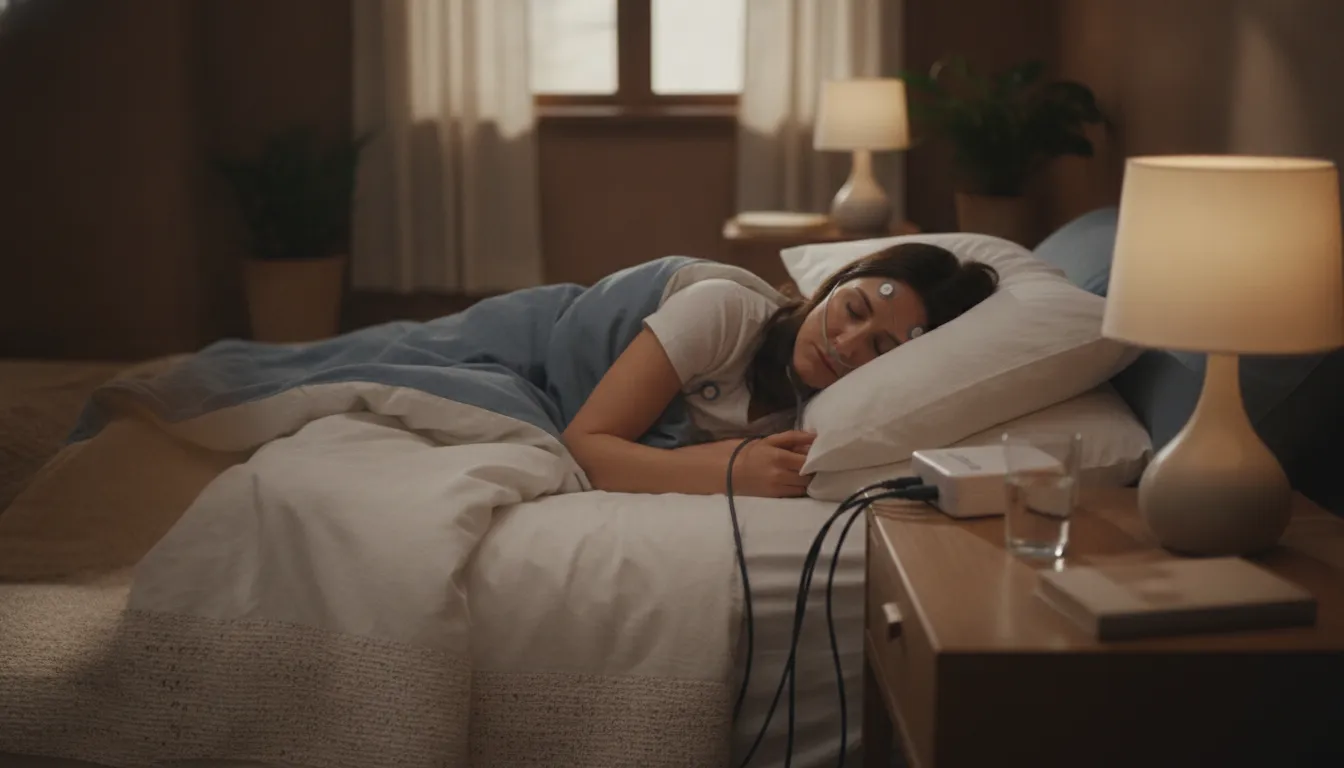
Some patients complete a home sleep test instead. Home testing generally uses fewer channels and may focus on breathing, airflow, and oxygen measurements while you sleep in your own bed. The appropriate test depends on your symptoms, medical history, and the clinician’s assessment. Because home testing may provide less information than an in-lab study, your treating clinician must interpret the results in context.
How breathing events become an AHI score
During the study, a sensor records airflow and identifies periods when breathing stops or becomes substantially reduced. An apnea is a complete interruption in breathing that lasts longer than 10 seconds. A hypopnea is a period of reduced airflow that causes shallow breathing, often because the airway is partly blocked. Oxygen monitoring records whether these events are accompanied by a drop in blood oxygen, known as desaturation. Harvard Sleep Medicine notes that oxygen reductions are recorded during polysomnography or limited-channel monitoring: Harvard Sleep Medicine explains how sleep studies measure breathing and oxygen.
After the recording is reviewed, the number of apneas and hypopneas is totaled and divided by the hours you actually slept. The result is an average number of events per hour, which is your AHI. For example, an AHI of 12 means the study recorded an average of 12 qualifying breathing events during each hour of sleep. The score is useful, but it is only one part of the evaluation. A physician must interpret your complete sleep study and diagnose obstructive sleep apnea. A dental sleep medicine practice can then coordinate with that physician to provide appropriate treatment.
What Is AHI Sleep Apnea Score When the Number Is High?
Not necessarily. A high apnea-hypopnea index is an important part of your sleep study, but it is not the only factor in choosing treatment. Your sleep physician also considers the type of sleep apnea, oxygen changes, symptoms, medical history, anatomy, and whether you can use a treatment consistently. CPAP is a highly effective first-line treatment for many people with obstructive sleep apnea. However, a prescription does not help as much when the equipment is uncomfortable or difficult to use every night.
For people who cannot tolerate CPAP, oral appliance therapy may be a clinically appropriate alternative after discussion with the treating sleep physician. Research describes oral appliance therapy as an effective option, particularly for patients with obstructive sleep apnea who cannot tolerate CPAP, including some patients with moderate-to-severe disease. Review the clinical evidence on oral appliance therapy and CPAP intolerance.
Why consistency matters
A treatment plan has to fit your real sleep routine. CPAP-intolerant patients may report better sleep quality and higher adherence with custom oral appliances, although individual results vary. A board-certified dental sleep specialist evaluates whether your teeth, jaw, airway, and diagnosis make you a candidate. The goal is not to label one treatment as universally better. It is to identify an evidence-based approach that you can use as directed and monitor with your medical team.
Custom oral appliances work by holding the lower jaw, or mandible, forward during sleep. This helps reposition the jaw and tongue to support an open upper airway. They are designed for obstructive sleep apnea, not central sleep apnea, and follow-up testing may be needed to assess treatment effectiveness.
When CPAP causes mouth or dental problems
Some patients using CPAP experience dry mouth, which may contribute to dental problems such as cavities. This may be more likely when a humidifier is not used, or when nighttime brushing and flossing are neglected. If you notice these issues, do not stop CPAP on your own. Discuss the problem with your treating sleep doctor and ask whether you should be evaluated for candidacy for a custom oral device. Especially for mild or moderate sleep apnea or snoring. A physician must diagnose sleep apnea, while a qualified dental sleep medicine practice coordinates with that physician to provide oral appliance treatment.
In short, your AHI helps define severity, but it does not automatically determine that CPAP is your only path. The safest decision comes from reviewing the complete sleep-study findings, your experience with treatment, and appropriate follow-up with your care team.
What Is AHI Sleep Apnea Score and Why It Shapes Your Treatment Plan
Knowing your AHI sleep apnea score is an important first step. It is not the only factor in deciding what happens next. The score helps show how frequently breathing was disrupted during sleep and gives your care team a common way to discuss the severity of obstructive sleep apnea. Your symptoms, oxygen levels, sleep-study findings, medical history, anatomy, and ability to use a treatment consistently also matter.
A physician must diagnose sleep apnea. Once a diagnosis is established, a dental sleep medicine practice can coordinate with your physician and provide treatment for obstructive sleep apnea. This distinction helps ensure that the treatment recommendation is based on a complete clinical evaluation rather than a number viewed in isolation. For more background, visit Spark Sleep Solution’s sleep apnea and snoring education.
Matching treatment to your needs
For some patients, the discussion includes CPAP. For others, particularly people who cannot tolerate CPAP, oral appliance therapy may be an appropriate treatment alternative. Custom oral appliances are FDA-approved devices that work by repositioning the jaw and tongue to help maintain an open airway during sleep. They are designed and fitted for the individual patient, rather than selected as a generic mouthguard.
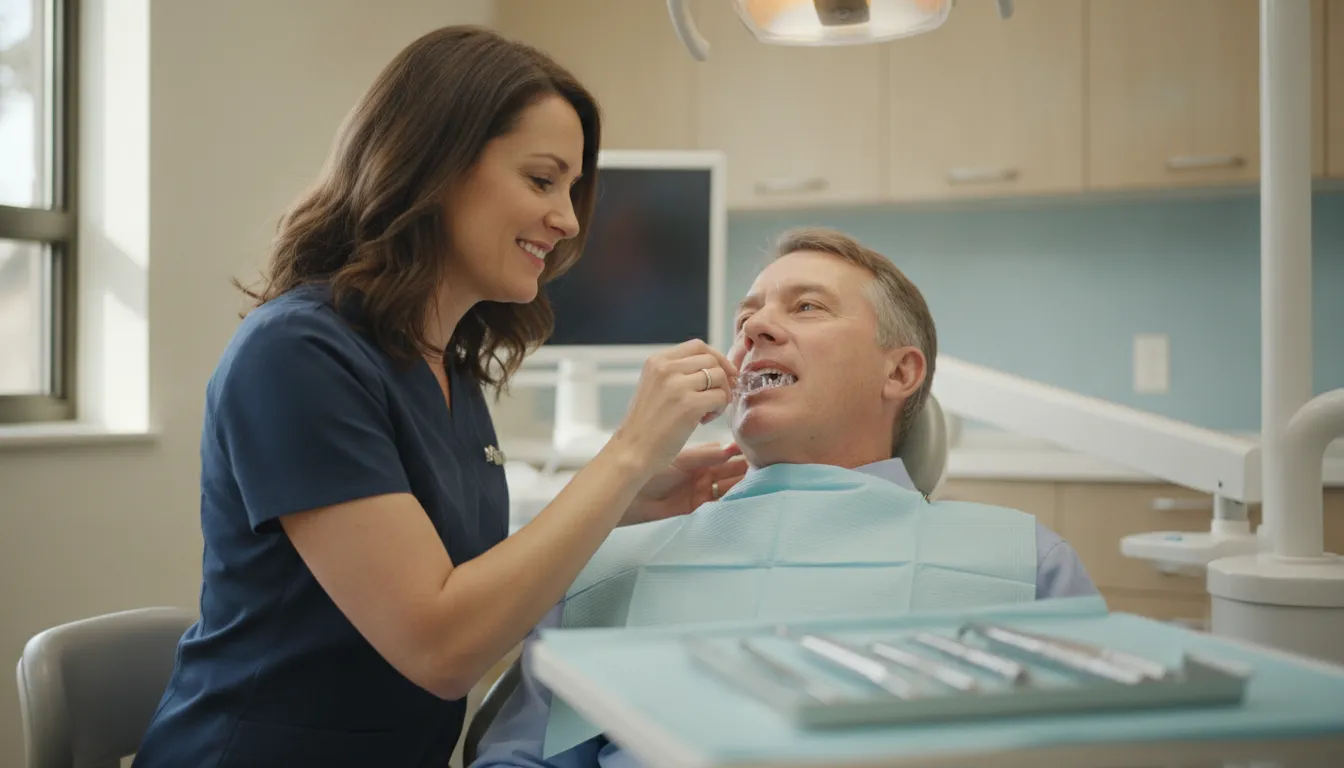
AHI severity helps guide that conversation. A higher score may indicate a greater need for prompt, comprehensive treatment, while a lower score does not automatically mean that symptoms or disrupted sleep can be ignored. Your physician and dental sleep specialist can consider the full sleep-study report and determine whether a custom oral device is appropriate. You can learn more in this guide to oral appliance therapy for sleep apnea and this overview of CPAP alternatives for sleep apnea.
A practical next-step sequence after receiving an AHI result is:
- Review the complete sleep-study report with the physician who ordered or interpreted it.
- Confirm whether the findings indicate obstructive sleep apnea and discuss symptom impact.
- Ask which treatments fit your diagnosis, health history, and ability to use therapy consistently.
- If CPAP is difficult to tolerate, discuss whether oral appliance therapy is appropriate.
- Follow the recommended monitoring plan, which may include repeat testing.
What to expect from a dental sleep consultation
A board-certified dental sleep specialist evaluates whether your oral health, jaw position, and airway-related needs are compatible with a custom appliance. At Spark Sleep Solution, Dr. Srujal Shah holds dual board certifications as a Diplomate of the American Board of Dental Sleep Medicine (DABDSM) and the American Sleep and Breathing Academy (DASBA). This expertise supports careful appliance selection, fitting, and follow-up in coordination with your diagnosing physician.
- Oral appliance therapy treats and manages obstructive sleep apnea; it does not cure the condition.
- Treatment is typically billed through medical insurance, not dental insurance.
- Work with your care team to understand how your diagnosis, AHI, coverage, and treatment goals fit together.
Ask your care team how your diagnosis, AHI, coverage, and treatment goals fit together before choosing a plan.
Frequently Asked Questions
What is the Apnea-Hypopnea Index (AHI)?
AHI is the average number of apnea and hypopnea events you experience during each hour of sleep. An apnea is a breathing pause, while a hypopnea is a period of significantly reduced airflow. Your sleep physician uses this measure to help assess obstructive sleep apnea severity. Learn more about AHI definitions.
What AHI score ranges indicate sleep apnea severity?
An AHI below 5 events per hour is generally considered normal or minimal. An AHI from 5 to less than 15 is mild, 15 to less than 30 is moderate, and 30 or higher is severe. These ranges are commonly used to classify obstructive sleep apnea, but your complete sleep-study report matters too. See the Harvard Medical School range classifications.
Is AHI the only factor used to diagnose sleep apnea?
No. A physician considers your AHI alongside symptoms, oxygen-level changes, medical history, sleep-study findings, and the type of breathing events recorded. AHI helps describe severity, but it does not by itself determine which treatment is right for you. Discuss your results with the sleep physician who diagnosed or evaluated you.
Can an oral appliance help if I cannot tolerate CPAP?
It may be an option for some people with obstructive sleep apnea, particularly those who cannot tolerate CPAP. A qualified dental sleep specialist evaluates your diagnosis, anatomy, and treatment needs before fitting a custom oral appliance. The device works by helping hold the jaw and tongue forward to support an open airway. Review candidacy with your treating sleep doctor and dental sleep specialist.
Ready to Discuss Your Sleep Apnea Treatment Options?
Understanding your AHI can help you have a more informed conversation about the next step in managing obstructive sleep apnea. Your treating sleep physician can review your diagnosis, while a qualified dental sleep specialist can discuss whether oral appliance therapy may fit your needs.