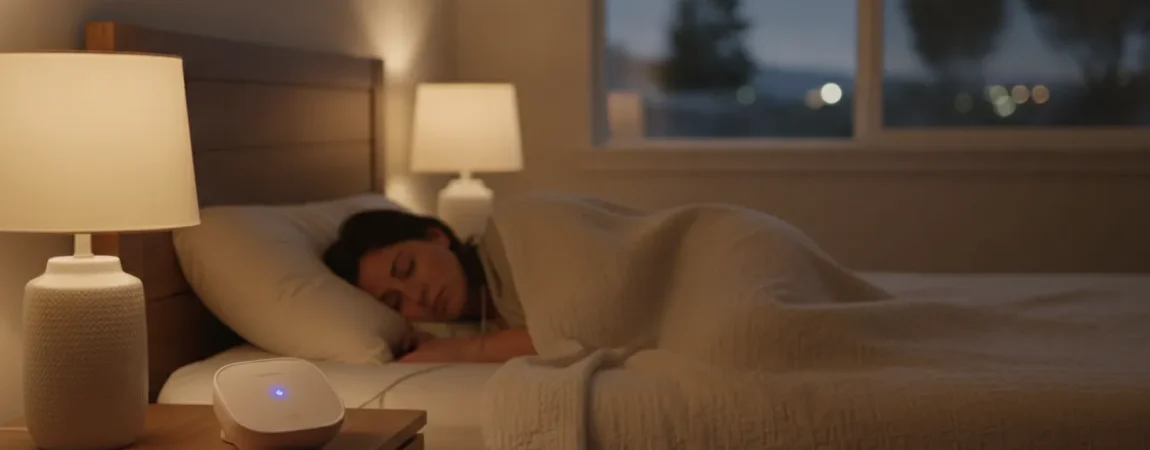
Sleep apnea home monitoring is a physician-ordered recording of your breathing, oxygen, and related signals while you sleep in your own bed. It can help a sleep physician look for obstructive sleep apnea, and it can be used again later to check whether treatment is doing its job. A monitor does not diagnose you, and a consumer app is not the same thing as a prescribed test.
Request an appointment if you want Spark Sleep Solutions to coordinate the next step with your sleep physician.
This guide explains what a home monitor records, how to get through one night, and what a later recording can and cannot prove. For the first testing decision, read how a sleep study is used to diagnose sleep apnea. Spark Sleep Solutions is a Bay Area dental sleep medicine practice. We do not diagnose sleep apnea. A sleep physician orders and interprets the test, and we help with oral appliance care after that diagnosis.
What Sleep Apnea Home Monitoring Actually Records
A home monitor is a small kit your clinician sends home with you or fits in the office. You wear it for a usual night of sleep, then return it so a qualified provider can review the file. A technically adequate home test may be used for uncomplicated adults at higher risk of moderate to severe obstructive sleep apnea. That is the position in the AASM diagnostic testing guideline. In-lab polysomnography remains the standard when the picture is more complex.
Most home devices used for this purpose are limited cardiopulmonary recorders. They do not measure brain waves, so they cannot map full sleep stages the way an overnight lab study can. That difference is why a quiet night at home is useful only when the ordering physician already thinks the question is straightforward obstructive sleep apnea.
Typical channels include:
- Airflow through a nasal cannula or a similar sensor, which shows pauses and shallow breaths.
- Respiratory effort from a belt around the chest or abdomen, which helps separate an obstruction from a central pause.
- Blood oxygen from a finger or wrist sensor, including drops during the night.
- Pulse rate, and on some devices body position or a simple movement signal.
The report often includes an apnea-hypopnea index, oxygen summaries, and a note on whether the recording was long enough to interpret. What an AHI score means is a separate question your physician answers in context. A number by itself is not a treatment plan.
Medicare treats several types of sleep testing as reasonable and necessary when a treating physician uses them to diagnose obstructive sleep apnea in a symptomatic patient. That includes attended lab testing and certain unattended home devices that record enough respiratory channels. Coverage still depends on your plan, a physician order, and medical necessity. It is not a reason to buy a kit on your own.
A watch, a ring, or a phone app that tracks “sleep score” is not sleep apnea home monitoring in this clinical sense. Those tools can hint that sleep was restless. They do not replace a prescribed study, and the AASM recommends against diagnosing obstructive sleep apnea from questionnaires or prediction tools alone.
Who Home Monitoring Fits, and Who Needs a Lab
Home monitoring fits best when a clinician already suspects uncomplicated obstructive sleep apnea. Loud snoring, witnessed pauses, gasping, and unrefreshing sleep can support that suspicion. So can high blood pressure or a bed partner who hears the pattern night after night. Sleep apnea symptoms in adults can help you list what to mention, but symptoms alone never confirm the diagnosis.
The same AASM guideline recommends a lab study, not a home test, when another condition could change the result or the risk. Examples include significant heart or lung disease, neuromuscular weakness, awake hypoventilation, suspected sleep-related hypoventilation, chronic opioid use, a history of stroke, or severe insomnia. In those cases the extra signals from a lab night matter.
A single negative, inconclusive, or technically inadequate home test is not the end of the evaluation. The AASM recommends polysomnography in that situation. A short recording, a sensor that slipped off, or a night that was nothing like your usual sleep can all leave the question open. Tell the ordering physician if you barely slept. Do not assume a “low” printout means you are clear.
| Question | What home monitoring can show | What it cannot settle alone |
|---|---|---|
| Is this uncomplicated OSA? | Breathing pauses, effort, oxygen drops, and pulse on a usable night. | Whether a different sleep disorder explains the symptoms. |
| Was the night good enough? | Recording length and whether sensors stayed in place. | A diagnosis after a failed or atypical night. |
| Is treatment working later? | A repeat physician-ordered study, and wear time if the device records it. | Not the right jaw position, and not a promise that symptoms will stay gone. |
| Should I buy a consumer kit? | Nothing a physician can treat from. | Not the diagnosis, the device choice, or insurance approval. |
If you are comparing the two settings before the first test, Spark already has a short overview of home sleep study versus lab sleep study. This article stays on what you do with monitoring once a clinician is involved.
How to Prepare for One Night at Home
Setup is simple, and small mistakes are the usual reason a night cannot be read. Follow the instruction sheet that came with your specific device. Brands differ. These steps match what most prescribed kits ask you to do.
- Use the device on a night you expect to sleep in your own bed for your usual hours. Skip it if you are sick, traveling, or planning a very short night.
- Charge or check the batteries before bed. Confirm the sensors click or tape on the way the sheet shows.
- Place the airflow sensor as directed, snug but not painful. A cannula that sits off to the side can look like you barely breathed.
- Fasten the effort belt so it stays put when you roll. Too loose is a common reason the file is inadequate.
- Put the oxygen sensor on a clean, warm finger or the site the kit names. Nail polish and a cold hand can spoil the trace.
- Keep your usual evening routine unless the physician told you otherwise. Do not add alcohol to “sleep better” for the test.
- In the morning, turn the device off the way the sheet says and return it on time so the file can be scored.
Write down anything odd: a long awake stretch, a sensor you reattached at 2 a.m., or a night that felt nothing like normal. That note helps the physician decide whether the file answers the question. If the kit fails before you sleep, call the office that issued it. Do not swap in a drugstore oximeter and treat that file as the study.
Home monitoring is one night, or sometimes a few nights, of data. It is not a treatment. Feeling less sleepy the next morning does not erase a recording that showed many pauses. Feeling awful after a “mild” night does not prove the test was wrong either. The physician reads the file with your history.
Using Home Monitoring After Treatment Starts
The first study answers whether obstructive sleep apnea is present. Later monitoring answers a different question: is the treatment you are using now actually controlling it? How you feel is part of that story. It is not the whole story. People can snore less and still have oxygen drops. Others feel tired for reasons a breathing test will not explain.
For oral appliance therapy, the AASM and the American Academy of Dental Sleep Medicine suggest that a sleep physician order follow-up sleep testing to confirm or improve efficacy. They also note that how you feel is not enough to pick the best jaw position. Repeat symptoms, a large weight change, or a new related diagnosis are other reasons a physician may order another study. That follow-up may be a home test or a lab study, based on the same clinical rules as the first test.
Some custom oral appliances can also record hours worn. That wear record is useful. It shows whether the device was in the mouth long enough to judge. It does not show whether breathing and oxygen improved. A night of full wear with ongoing pauses is a reason to talk with the sleep physician and the dentist, not a reason to keep advancing the jaw on your own. Spark reviews appliance fit and dental changes in the office. The physician still owns the diagnosis and the efficacy study.
CPAP machines often store their own usage and residual-event estimates. Those downloads are a form of home monitoring too. If you are comparing paths, start with CPAP versus oral appliance therapy and let your physicians decide. An oral appliance is not automatically better than CPAP. It is one prescribed option for the right patient, including many adults who cannot stay with CPAP.
Bring three things to a follow-up visit:
- The latest study report, or the date it was returned, so nobody is guessing from memory.
- A short note on snoring, witnessed pauses, morning headaches, and daytime sleepiness since treatment started.
- Any wear, mask, or comfort problem that changed how many hours you actually used the therapy.
Daytime sleepiness can linger even when breathing looks better, and it can also be the clue that control is incomplete. Excessive daytime sleepiness and sleep apnea walks through what to tell your clinician. Do not change a prescribed setting because a consumer ring looked “off” for a week.
What Bay Area Patients Should Line Up Before the Visit
Spark Sleep Solutions sees adults across San Jose, Los Gatos, Santa Cruz, San Ramon, Sunnyvale, and Monterey. A useful monitoring conversation is local only in the practical sense. You need a physician who can order the test, a plan for returning the device, and a dental sleep visit if an oral appliance is the prescribed treatment.
Before you call, gather the last sleep study if you have one, a medication list, and your insurance card. Medical insurance, not dental insurance, is the usual path for oral appliance therapy when a physician has documented obstructive sleep apnea. Plans differ on which test they cover and whether they want a failed CPAP trial first. Spark’s team coordinates that paperwork with your medical providers. We do not quote a price in this guide, and a blog post cannot tell you what your plan will pay.
At the dental visit, expect a review of the physician’s diagnosis, an oral and airway exam, and a discussion of whether a custom appliance is appropriate. Not everyone is a candidate. Too few healthy teeth, active gum disease, a jaw joint that cannot tolerate advancement, or central sleep apnea as the main problem can rule a device out. If an appliance is prescribed, follow-up includes fit, bite changes, and a plan for the physician’s efficacy test. Oral appliance therapy describes that care path in more detail.
Home monitoring fails its purpose when the report sits in a portal and nobody acts on it. Ask who will read the night, how you will hear the result, and what happens if the file is inadequate. If symptoms return months later, say so. A normal result from last year does not automatically describe tonight.
Call Spark Sleep Solutions at 408-490-0182 or use the contact page to ask how a physician-ordered study fits with oral appliance care.
Frequently Asked Questions
Is sleep apnea home monitoring the same as a home sleep apnea test?
For diagnosis, people usually mean a home sleep apnea test: one or a few nights on a prescribed device that records breathing and oxygen. Home monitoring can also mean later checks, including a repeat study or a wear-time recorder on an oral appliance. A sleep physician orders and interprets the medical test. A wellness gadget is not either of those.
Can I diagnose myself with a store-bought oxygen monitor?
No. A single oxygen trace misses airflow and breathing effort, and it cannot rule obstructive sleep apnea in or out. The AASM recommends a full evaluation plus polysomnography or a technically adequate home sleep apnea test. Bring concerning symptoms to a qualified clinician instead of treating a consumer reading as a diagnosis.
What if my home test is negative but I still gasp at night?
Contact the ordering physician. A negative, inconclusive, or technically poor home test should be followed by polysomnography when obstructive sleep apnea is still a concern. Describe how you slept and whether sensors stayed on. Do not ignore witnessed pauses because one printout looked reassuring.
Will Spark give me a monitor and a treatment plan in one visit?
No. Spark does not diagnose sleep apnea and does not replace the sleep physician who orders testing. If you already have a physician diagnosis, the team can review whether oral appliance therapy is appropriate and how follow-up testing will be coordinated. If you do not have a study, the first step is a medical evaluation.
How often is home monitoring repeated?
There is no single calendar for every patient. After an oral appliance is fitted, guidelines suggest follow-up sleep testing to confirm efficacy, then periodic visits with the dentist and the sleep physician. Another test is also reasonable if symptoms return, weight changes a lot, or a new related condition appears. Your physicians set the timing.