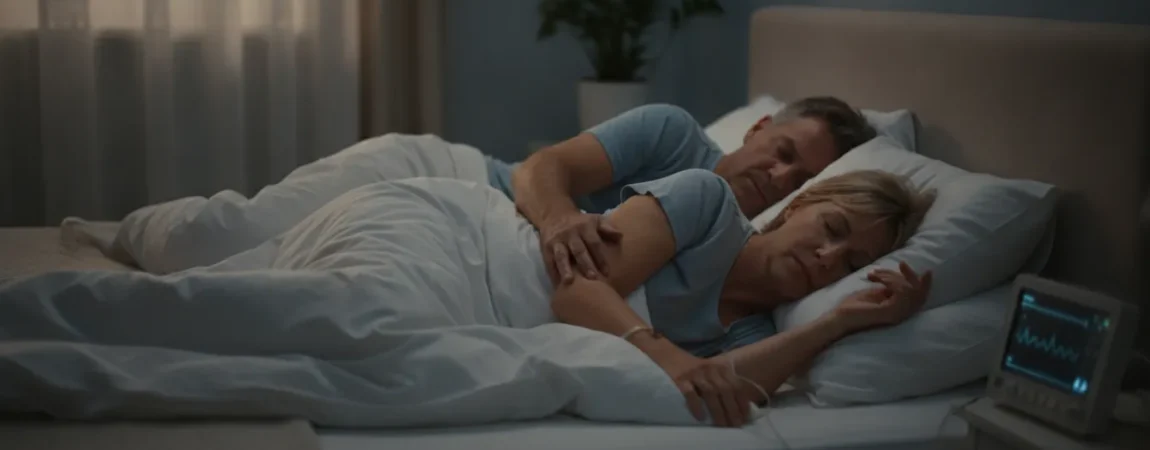
Sleep can be disrupted long before you recognize a problem. A partner may notice loud snoring or pauses in breathing, while you may wake unrefreshed and struggle to stay focused during the day.
Common sleep apnea symptoms in adults include breathing that starts and stops during sleep, loud snoring, gasping for air, and daytime sleepiness. These signs can point to obstructive sleep apnea, in which the upper airway repeatedly narrows or collapses, interrupting restorative sleep. Only a qualified healthcare provider can diagnose the condition, often with a sleep study. Learn more about sleep apnea symptoms and diagnosis.
Symptoms can appear at night, in the morning, or throughout your day, and not everyone experiences them in the same way. Understanding the most common patterns can help you decide when to speak with your healthcare provider.
The Most Common Sleep Apnea Symptoms in Adults
Sleep apnea symptoms can appear during sleep, after you wake, or throughout the day. Because many signs are not directly visible to you, a sleep partner or family member may notice them first. These symptoms do not confirm a diagnosis, but they are useful reasons to speak with a healthcare provider.
What you or a partner may notice while asleep
- Breathing that starts and stops: Pauses in breathing may be visible to someone sharing your room. The National Heart, Lung, and Blood Institute lists “breathing that starts and stops” as a symptom while asleep.
- Loud, disruptive snoring: Frequent loud snoring is commonly associated with sleep apnea. However, snoring alone does not establish that you have the condition, and not everyone with sleep apnea snores noticeably.
- Gasping or choking for air: You may wake briefly with a sensation of gasping for air. These awakenings can be so short that you do not remember them the next morning.
- Witnessed apneas: A partner may describe watching you stop breathing, followed by a snort, gasp, or change in breathing pattern. The NCBI overview identifies loud, disruptive snoring, witnessed apneas, and excessive daytime sleepiness among the symptoms of obstructive sleep apnea.
- Dry mouth on waking: You may wake with a dry mouth or a sticky, uncomfortable feeling in your mouth and throat.
- Frequent nighttime urination: Waking often during the night to urinate, called nocturia, can occur alongside other sleep apnea symptoms.
What you may notice while awake
- Daytime sleepiness or tiredness: You may feel unrefreshed even after spending what seems like enough time in bed. This can affect your energy, motivation, and ability to stay alert.
- Difficulty focusing or reacting: The NHLBI describes daytime sleepiness and tiredness that may lead to problems with “learning, focusing. And reacting.” You might find it harder to concentrate at work, retain information, or respond quickly.
- Morning symptoms: Dry mouth may persist after waking. Some adults also report sexual dysfunction or decreased libido, which can be difficult to connect with a sleep-related breathing problem.
These signs can have causes other than sleep apnea, and some adults have few obvious symptoms. A healthcare provider can determine whether you need a sleep evaluation. If a partner reports pauses in your breathing or you regularly wake gasping, share those observations during your appointment. A sleep physician may recommend testing before any treatment decision is made.
Nighttime Symptoms vs Daytime Symptoms
Sleep apnea symptoms in adults can be easy to miss because the condition begins during sleep, while many of its effects appear after you wake up. Repeated narrowing or collapse of the upper airway can interrupt breathing, trigger brief arousals, and leave sleep fragmented and nonrestorative. You may not remember waking, but you may notice the consequences the next day.
Some signs are visible or audible to a bed partner. Others are subtle and may look like ordinary stress, a demanding schedule, or not getting enough sleep. Looking at both nighttime and daytime patterns can help you describe your concerns clearly to a healthcare provider.
Nighttime signs
- Breathing that starts and stops: A partner may notice pauses or irregular breathing while you sleep. These events can occur without your awareness.
- Loud or disruptive snoring: Frequent loud snoring is a common sign, although not everyone with sleep apnea snores noticeably. The National Heart, Lung, and Blood Institute lists breathing pauses, loud snoring, and gasping for air among possible symptoms.
- Gasping, choking, or snorting: You may wake briefly while trying to resume normal breathing. A partner may hear these sounds even when you do not remember them.
- Repeated awakenings: Airway interruptions can produce fragmented sleep. You might wake often, change positions, or feel as though you slept lightly throughout the night.
- Waking to urinate: Nocturia, or waking up often during the night to urinate, is another reported symptom.
- Dry mouth in the morning: Waking with a dry mouth can accompany nighttime breathing problems, particularly when you breathe through your mouth.
Daytime signs
- Sleepiness or persistent tiredness: Even after spending enough time in bed, you may feel that you could fall asleep during quiet activities, meetings, or travel.
- Reduced focus and slower reactions: The NHLBI notes that daytime sleepiness and tiredness can affect learning, focusing, and reacting. You may lose your train of thought, make more errors, or need extra time to complete familiar tasks.
- Lower productivity: Poor-quality sleep can make ordinary work and household responsibilities feel harder to manage. This does not mean every period of fatigue is caused by sleep apnea, but a persistent pattern deserves attention.
- Feeling unrefreshed: You may wake with the sense that the night did not restore your energy, even if you do not recall frequent awakenings.
These symptoms are not enough to diagnose sleep apnea on their own. If nighttime signs and daytime impairment occur together, share the full pattern with your healthcare provider. The NCBI overview of obstructive sleep apnea explains why repeated airway interruptions can result in fragmented, nonrestorative sleep. A professional evaluation can determine whether a sleep study or another assessment is appropriate.
How Partners Often Notice Sleep Apnea First
Sleep can make important symptoms easy to miss. You may not remember waking up, notice your own breathing pattern, or realize how loudly you snore. A partner, family member, or housemate who shares your home may be the first person to recognize that something unusual is happening during the night. The National Heart, Lung, and Blood Institute explains that people may not know they have sleep apnea symptoms until someone tells them.
What might another person observe? They may hear frequent, disruptive snoring, followed by a sudden silence. They may then notice a gasp, snort, or choking sound as breathing resumes. They may also see periods when your breathing appears to stop. These witnessed pauses are called apneas. They can occur when the upper airway repeatedly narrows or collapses during sleep, although only a qualified healthcare professional can determine whether sleep apnea is present.
Loud snoring is reported more often in men, according to the NHLBI. That difference should not lead anyone to dismiss symptoms in women or people who do not snore loudly. Sleep apnea can present differently from person to person, and a quiet bedroom does not automatically mean breathing is normal. In some cases, the most noticeable clues may be daytime fatigue, morning headaches, or difficulty staying focused rather than a dramatic nighttime sound.
How to raise the concern with care
Starting this conversation can feel awkward. Try to choose a calm time during the day, rather than waking your partner immediately after a frightening episode. Use specific observations instead of criticism: “I have noticed that your breathing sometimes pauses. And then you gasp,” is more helpful than “You sleep badly.” Reassure them that the goal is to understand what is happening and support their health. Not to assign blame.
If you have noticed these patterns in someone you love, encourage them to discuss the symptoms with a healthcare provider. The provider may recommend a sleep study to evaluate whether sleep apnea or another sleep disorder is involved. If a partner has reported pauses in your breathing, gasping, or loud snoring, write down what they observed and share those details at the appointment. A clear nighttime account can help start a productive conversation about next steps.
Sleep Apnea Symptoms That Overlap With Other Conditions
Not every tired morning or restless night points to sleep apnea. Fatigue can follow a demanding schedule, insomnia can develop during stress, and headaches may have many causes. Hormonal changes can also affect sleep, mood, and energy. The overlap can make it difficult to recognize when repeated breathing disruptions are part of the picture.
With obstructive sleep apnea, the upper airway repeatedly becomes partly or completely blocked during sleep. Those events can trigger arousals and fragmented, nonrestorative sleep, even when you do not remember waking up. The result may look like burnout, depression, chronic fatigue, or ordinary difficulty sleeping. The NCBI overview of obstructive sleep apnea describes this pattern of disrupted sleep and its effects.
Symptoms can also present differently by sex. The National Heart, Lung, and Blood Institute notes that women with sleep apnea may be more likely to report fatigue, headaches, and insomnia, while loud snoring is reported more often in men. That does not mean these symptoms identify sleep apnea on their own. It means a quieter or less familiar symptom pattern deserves the same thoughtful evaluation.
| Symptom | Sleep Apnea | Common Misreading |
|---|---|---|
| Daytime fatigue | Sleep may be repeatedly disrupted by airway blockage, leaving you unrefreshed. | Chronic fatigue, overwork, or a demanding schedule |
| Difficulty falling or staying asleep | Repeated arousals may feel like insomnia, particularly when breathing changes go unnoticed. | Primary insomnia or stress-related sleep difficulty |
| Morning headache | Headache may occur alongside other nighttime or daytime symptoms. | Dehydration, migraine, hormonal changes, or tension |
| Low mood or poor concentration | Fragmented sleep can affect alertness, focus, and emotional well-being. | Depression, burnout, or simply not getting enough sleep |
| Dry mouth or nighttime urination | These can occur among other adult symptoms of sleep apnea. | A medication effect, aging, fluid intake, or another health condition |
Keeping a symptom record can help: note snoring, witnessed pauses, gasping, morning headaches, insomnia, fatigue, and how long the pattern has continued. A symptom list cannot diagnose the cause, but it gives your healthcare provider a clearer starting point. Ask whether a sleep evaluation or sleep study is appropriate, especially when symptoms persist or several appear together.
When Symptoms Signal Moderate or Severe Sleep Apnea
Some symptoms deserve prompt medical attention, especially when they occur together or interfere with daytime safety. Frequent gasping or choking during sleep, repeated witnessed pauses in breathing, and sleepiness that feels impossible to control can indicate more than ordinary poor sleep. A partner may notice that your breathing stops, followed by a gasp or snort. You may notice the consequences the next day instead, such as struggling to stay alert, focus, or react quickly.
Nodding off while driving is a serious warning sign. Do not drive when you feel drowsy. Arrange medical evaluation and use safer transportation until you can stay alert. Obstructive sleep apnea has implications for driving safety, cardiovascular health, mental well-being, and quality of life, according to the National Center for Biotechnology Information. This is a reason to seek appropriate care, not a reason to assume the worst.
How sleep apnea severity is measured
Clinicians commonly use the apnea-hypopnea index, or AHI, to describe how often breathing pauses or becomes restricted during an hour of sleep. As a general guide, an AHI of 5 to 15 is considered mild, 15 to 30 moderate, and above 30 severe. These numbers provide a framework for discussing the results, but they do not tell the whole story. Symptoms, oxygen levels, medical history, and overall health also matter.
Most importantly, symptoms alone cannot establish severity. A sleep test, such as polysomnography or an appropriately selected home sleep apnea test, is needed to confirm obstructive sleep apnea and measure breathing disruptions. The National Heart, Lung, and Blood Institute recommends discussing symptoms with a healthcare provider, who can determine whether a sleep study is appropriate.
Why evaluation matters
Ongoing untreated obstructive sleep apnea has been associated with conditions including high blood pressure, heart disease, stroke, and type 2 diabetes. The relationship is clinically important, but it should be discussed in measured terms. Having these symptoms does not mean you will develop one of these conditions, and not every episode of fatigue is caused by sleep apnea. It does mean persistent warning signs should not be dismissed as stress or a busy schedule.
If you recognize frequent gasping, witnessed apneas, or severe daytime sleepiness, contact a healthcare professional for an evaluation. Diagnosis should come before choosing treatment, and a sleep physician can help determine the next appropriate step.
What to Do If You Recognize These Symptoms
Recognizing possible sleep apnea symptoms in adults is a reason to seek evaluation, not a reason to diagnose yourself. Snoring, witnessed pauses in breathing, gasping, morning dry mouth, or persistent daytime fatigue can have more than one cause. A healthcare professional can determine whether a sleep disorder is present and what kind of care is appropriate.
- Talk with your primary care provider or a sleep physician. Describe what you or your partner have noticed, including breathing pauses, choking or gasping, loud snoring, morning headaches, and daytime sleepiness. Bring a record of how often symptoms occur and whether they affect concentration, work, or safe driving. The National Heart, Lung, and Blood Institute recommends talking with a healthcare provider about symptoms because you may need a sleep study to help diagnose sleep apnea: NHLBI guidance on sleep apnea symptoms.
- Complete the sleep study your clinician recommends. Diagnosis may involve polysomnography, an overnight study performed in a sleep facility, or a home sleep apnea test conducted with professional guidance. These tests measure breathing patterns and other sleep-related signals so your care team can distinguish obstructive sleep apnea from other conditions. The medical reference from the National Center for Biotechnology Information identifies polysomnography and home sleep apnea testing as diagnostic approaches: NCBI overview of obstructive sleep apnea.
- Get an official diagnosis and understand its severity. Ask which type of sleep apnea you have, whether it is obstructive, and what your results mean for treatment. Your clinician may explain an apnea-hypopnea index and other findings from the study. This information matters because treatment should match your diagnosis, symptoms, anatomy, and overall health. Do not begin dental treatment for suspected sleep apnea without appropriate medical evaluation.
- Explore treatment with the right specialists. Sleep apnea management can involve coordination among healthcare professionals and may include PAP therapy, oral appliances, or surgery, depending on the diagnosis and individual needs. Spark Sleep Solution coordinates with sleep physicians for diagnosis before providing dental treatment. For people with obstructive sleep apnea who cannot tolerate CPAP, or for appropriately selected patients with mild-to-moderate OSA, custom oral appliance therapy may offer a non-invasive CPAP alternative. Learn more about oral appliance therapy, CPAP vs oral appliance therapy, and sleep apnea treatment without CPAP. You can also review the broader sleep apnea symptoms and treatment options guide before discussing next steps with your care team.
If these symptoms sound familiar, a consultation can help you learn whether oral appliance therapy might be a comfortable CPAP alternative after a proper diagnosis.
Frequently Asked Questions
What is the most common symptom of sleep apnea?
Loud, disruptive snoring is one of the most commonly recognized symptoms, especially when it occurs with gasping, choking, or witnessed pauses in breathing. Snoring alone does not confirm obstructive sleep apnea, so discuss persistent or concerning symptoms with a healthcare provider. NCBI describes loud snoring and witnessed apneas as symptoms of OSA.
Do people with sleep apnea always snore?
No. Some people with sleep apnea do not snore, or their snoring may not be obvious to others. Pay attention to other signs, including waking up gasping, morning dry mouth, frequent nighttime urination, or ongoing daytime sleepiness. A partner or family member may notice breathing pauses that you do not remember.
What happens if sleep apnea is not treated?
Untreated obstructive sleep apnea can affect sleep quality, daytime alertness, and driving safety. It is also associated with health complications such as high blood pressure, heart disease, stroke, and type 2 diabetes. These risks do not establish a diagnosis, but they are reasons to seek medical evaluation rather than dismissing persistent symptoms. NCBI summarizes broader health and safety implications of OSA.
How is sleep apnea diagnosed and treated?
Diagnosis requires evaluation by a healthcare professional and may involve an in-lab polysomnogram or a home sleep apnea test. Once the type and severity are established, treatment may include PAP therapy, a custom oral appliance, surgery, or another clinically appropriate approach. Spark Sleep Solution coordinates with sleep physicians for diagnosis before providing dental sleep treatment.
Ready to Explore Your Next Step?
Recognizing possible sleep apnea symptoms is a useful reason to seek professional guidance. A consultation can help you discuss your concerns and learn whether oral appliance therapy may be appropriate after diagnosis by a sleep physician.